
There's a particular kind of person who keeps a journal.
Not the "today I had a salad, and it was fine" kind. Not the gratitude list or the morning pages or the therapy homework. The real kind. The kind where you write what you actually think, what you actually feel, the things you'd never say out loud because they're too raw or too embarrassing or too honest for the version of yourself you present to the world.
Catarina Bonita kept that kind of journal.
And when she ended things and disappeared from his life, she left it to Sam.
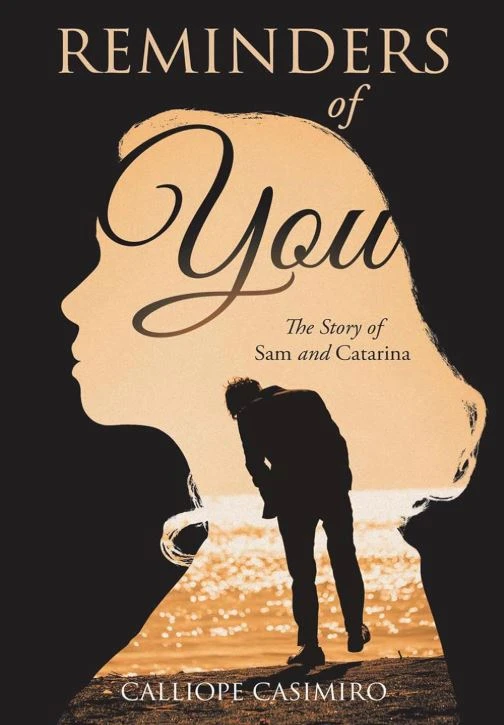
That single decision leaves your most private self to the person you loved most and lost hardest, and it is the engine that runs Reminders of You, the debut novel from Calliope Casimiro. And once you understand what that journal actually contains, you understand why the book works as well as it does. Because it's not just a love story, it's an autopsy of one. Careful, intimate, and sometimes brutal in what it uncovers.
Sam Aitken is not a young man when the novel opens. He's someone who has already put considerable distance between himself and the summer that changed everything, a summer in London's West End in the late 1990s, when he was young and reckless and completely unprepared for Catarina Bonita. He thought he understood what happened between them. He thought he knew the whole story. Then he opened the journal, and he realized he'd only ever had his half of it.
What Casimiro does inside that structure is where the book gets genuinely interesting.
Most dual-timeline romances use the past to heighten the present's emotional impact. The flashbacks exist to show you what was lost so you feel the loss more keenly in the present day. It's a formula that works because it's designed to work, like a key cut for a specific lock. Reminders of You does something harder and more interesting: it uses the past timeline to actively complicate what Sam believes about his own story. Catarina's journal entries don't just recreate the London summer. They correct the record. They show him thoughts she never voiced, feelings she never admitted, and moments that, from the outside, looked like something entirely different from what they were.
He is, in real time, revising his understanding of everything.
That's an unusual thing to put a character through and an even more unusual thing to structure a novel around. Usually, the dramatic irony in romance points one direction; the reader knows what the characters don't. Here, Sam and the reader are learning together, at the same pace, from the same source. You turn the pages alongside him. You feel the weight of each new revelation the same way he does. It creates this strange intimacy between character and reader that's hard to shake even after you've closed the book.
The London timeline itself is everything a summer romance should be: loud and vivid and alive in that specific way that places feel when you're young and away from home and surrounded by people who will matter to you for the rest of your life. Casimiro populates it with a cast of friends who feel genuinely real, the kind of characters who make you wish the novel had a spinoff. The West End theater world gives the whole thing a slightly theatrical energy that suits the story perfectly. These are people performing, in some way, all the time, which makes the moments of actual honesty hit that much harder.
Catarina herself is one of the book's great strengths. She could have been a mystery, the beautiful, unknowable woman whose sudden disappearance from his life sends the male protagonist on a journey of self-discovery. Casimiro refuses that. Catarina has a voice, a perspective, a wicked sense of humor, and very specific reasons for every wall she builds. Her journal entries make her three-dimensional in a way that many romance novels never do with their female leads. You don't just understand why Sam loved her. You understand her.
Which is what makes the question at the center of the book so devastating.
Was their ending actually inevitable? Or was it just a series of ordinary human failures, fear, miscommunication, bad timing, pride that two people told themselves was fate because fate is easier to accept than the alternative?
Sam reading that journal and slowly realizing the answer is what gives Reminders of You its emotional spine. It's not a comfortable book. It doesn't offer the clean resolution that the genre sometimes promises. But it offers something better, the feeling that you've spent time with real people, living through something real, and come out the other side understanding love a little more honestly than you did before.
Catarina left Sam her journal. He got the whole truth. Whether that's a gift or a punishment probably depends on the day you ask him.