Dental bridges are a popular treatment for missing teeth, improving the appearance and functionality of teeth. They can also enhance the quality of life by allowing individuals to regain their ability to speak and chew.
However, it is crucial to consult a dentist before obtaining dental bridge services to ensure oral health and maintain a healthy smile. This article will discuss the various types of tooth bridge services available, their advantages, costs, and maintenance.
By understanding the benefits, expenses, and upkeep of dental bridges, individuals can make informed decisions about their oral health and maintain a confident smile.
By understanding the advantages, costs, and maintenance of dental bridge services, individuals can make informed decisions about their oral health and smile. Come on, let's read with me!
Primary Dental Bridge Types
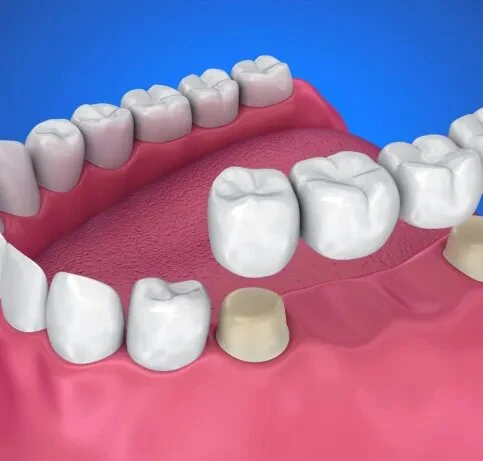
Dental bridges fill the spaces created by lost teeth with pontics and prosthetic teeth. Every pontic is made to feel and appear like a real tooth, guaranteeing a flawless appearance.
Pontics are affixed to dental implants or adjacent teeth. Dental bridges near me are primarily divided into four types:
1. Traditional Bridge: The most prevalent kind of dental bridge is this. They are made up of one or more artificial teeth secured in place by dental crowns affixed to each of the abutment teeth. Traditionally, porcelain fused to metal or ceramics has been used to make bridges.
2. Maryland Bridges: Often used to replace front teeth, these bridges are often referred to as resin-bonded bridges. They are made out of a porcelain or metal framework supporting an artificial tooth.
The backs of the neighboring teeth are where the framework is cemented. Compared to regular bridges, Maryland bridges require less preparation on the neighboring teeth.
3. Implant-Supported Bridges: When more than one tooth is lost, this kind of bridge is utilized. These bridges are supported by dental implants rather than crowns or frames.
Every lost tooth requires the placement of one implant, which holds the bridge in place. Bridges supported by implants feel more like real teeth and are incredibly stable.
4. Cantilever Bridges: Applied when the gap is next to a single natural tooth. On that one natural tooth, a single crown holds the pontic in place.
In general, cantilever bridges are not advised for parts of the mouth that experience significant pressure, since they are uncommon.
Are Dental Bridges Necessary?
A dental bridge is not appropriate for every individual. It's crucial to speak with your dentist to find out if getting a bridge is the best choice for you. A dental bridge might be a viable option for you if you:
- Have one or more permanent teeth missing.
- Possess bones that are strong enough to sustain the bridge.
- Do not suffer from any severe illnesses, infections, or other medical conditions
- are generally in good health -
- Practice proper oral hygiene
Dental Bridge Advantages
Dental bridges near me provide several benefits, such as:
Restoring Your Smile: You may look better and regain your natural smile with a dental bridge.
Improving Speech: Clarity of speech might be impacted by missing teeth. You may talk more clearly by filling in the gaps with a dental bridge.
Maintaining Facial Structure: Loss of jawbone resulting from missing teeth can change the contours of your face. Your face's natural contour can be preserved with the use of a dental bridge.
Improving Chewing Ability: It might be challenging to chew food correctly if teeth are missing. You may resume chewing and eating a wide range of foods with the help of a dental bridge.
Preventing Teeth from Shifting: Bite issues might arise from the remaining teeth shifting into gaps in your teeth. This is something that can be avoided with a dental bridge.
Upkeep Of Your Dental Bridge
Because they cannot be taken out like dentures, dental bridges services are referred to as "permanent" dental implants. But they're not here to stay.
A dental bridge in Ontario lasts five to seven years on average. Some bridges have a ten-year lifespan or longer with the right upkeep. The resilience and endurance of dental bridges are growing as a result of advancements in dental materials and methods.
Final Thoughts
There are several advantages to discussing dental bridges with a dentist. A dental bridge service can be a dependable, long-term alternative to replace lost teeth with good oral hygiene and routine care.
Your dentist may advise you on the sort of dental bridge that would be most suitable for your needs, taking into account several different criteria.
Making an informed choice regarding your oral health is possible if you are aware of the many kinds of dental bridges, their advantages, and proper maintenance. With the correct dental care and direction, achieving a beautiful, healthy smile is possible.