
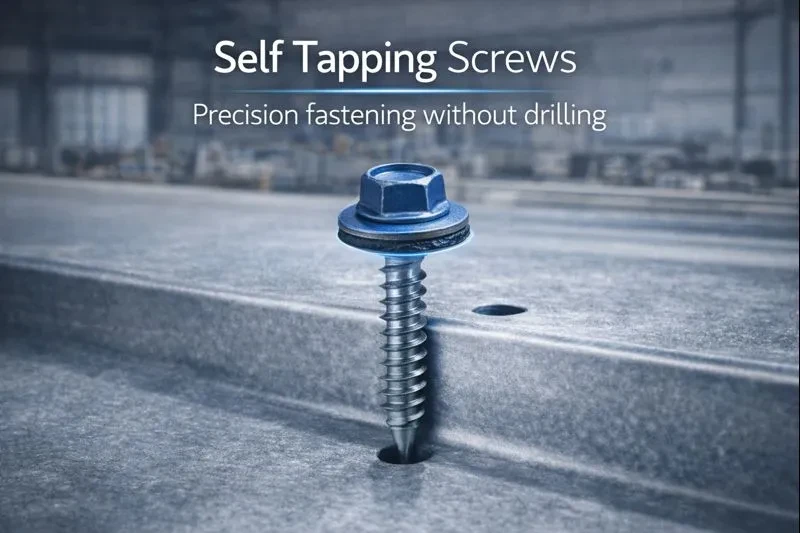
In construction and light fabrication, not every fastening job requires aggressive drilling power. Many installations depend on controlled thread formation to secure components without damaging the base material. This is where Self Tapping Screws become highly effective.
Used across sheet metal work, wood installations, board fixing, and industrial assembly, these fasteners are designed to create internal threads as they are driven into a pre-prepared hole or softer substrate. When selected correctly, they deliver precise engagement, reduced material stress, and reliable long-term holding strength.
This guide explains their working principle, major application types, real-world usage, and a practical selection framework to help installers and procurement teams make better decisions.
What Are Self Tapping Screws?
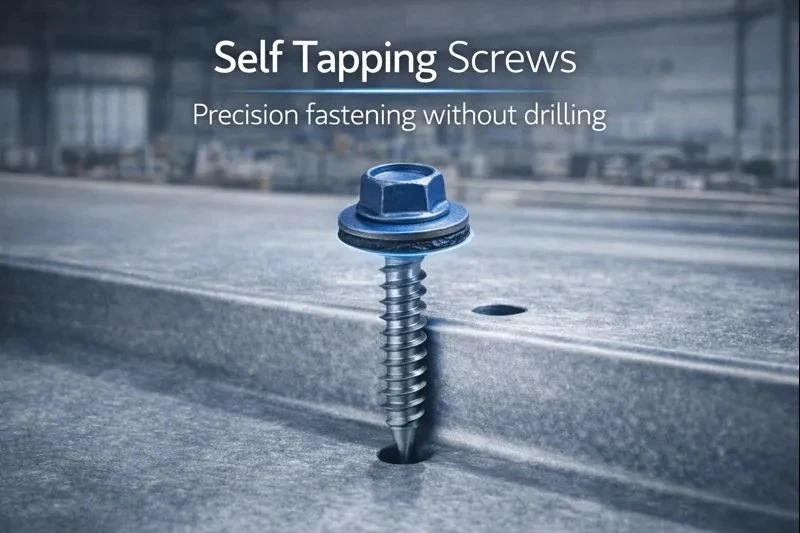
Self Tapping Screws are fasteners engineered to form mating threads inside a material as they are driven in. Unlike drill-point screws, they do not create their own hole in hard materials. Instead, they rely on a pre-drilled pilot hole or a softer base material to cut and shape threads during installation.
Their thread profile is specifically designed to:
- Cut into the substrate
- Displace material in a controlled manner
- Form matching internal threads
- Create a tight mechanical grip
This design makes them ideal for situations where material thickness is known, alignment must be precise, and excess deformation must be avoided.
Key Characteristics
- Require a pilot hole in metal and dense boards
- Sharp or blunt point (not a drill-bit style tip)
- Designed primarily for thread forming
- Offer cleaner fastening in delicate materials
They are commonly used in thin metal sheets, plywood, fiber boards, plastic components, and light framing structures.
Major Types Based on Application
Selecting the correct screw type depends largely on the material being fastened. Thread geometry, head style, and surface finish all influence performance.
1. For Thin Metal Sheets
In sheet metal work, accuracy is critical. These screws typically feature fine, sharp threads that allow controlled engagement without distorting the sheet.
Common applications:
- HVAC ducting systems
- Electrical enclosures
- Appliance housings
- Light steel fabrication
A pre-drilled pilot hole ensures alignment and reduces installation torque, preventing sheet warping.
2. For Wood & Timber
Wood applications typically require coarse threads that offer strong pull-out resistance. The deeper thread pattern grips wood fibers effectively.
Common applications:
- Wooden battens
- Plywood and MDF boards
- Furniture fittings
- Interior partitions
In hardwood or dense timber, pilot holes are recommended to prevent splitting and maintain structural integrity.
3. For Boards & Panels
Boards such as gypsum and fiber cement are brittle and require controlled torque during installation. Fine threads and countersunk heads are commonly used to achieve a flush surface finish.
Common applications:
- Drywall systems
- Cladding panels
- False ceilings
- Prefabricated partitions
Correct pilot hole sizing is essential to prevent cracking or edge damage.
4. For Plastic & Soft Materials
Plastics require reduced insertion torque and wider thread spacing to minimize stress cracking.
Common applications:
- Plastic enclosures
- Cable trays
- Utility brackets
- Electrical housings
Using metal-optimized screws in plastic components often leads to material fatigue over time.
Where They Are Commonly Used
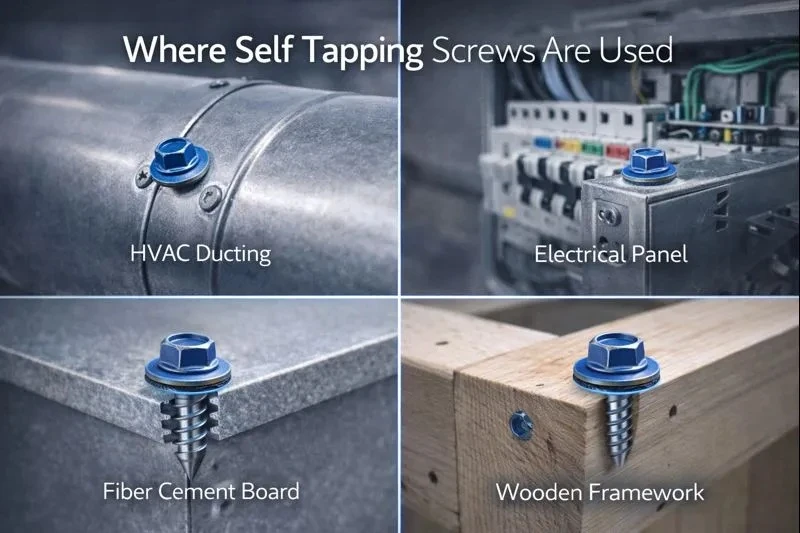
These fasteners are found across industries where controlled fastening is preferred over rapid drilling.
Construction & Interior Works
- Sheet metal panel assembly
- Board and partition installations
- Timber framework connections
- Cladding and façade panels
Electrical & Utility Installations
- Junction boxes
- Cable management systems
- Mounting brackets
- Conduit supports
Industrial & Automotive Assembly
- Equipment casings
- Machinery covers
- Sheet metal components
- Vehicle interior parts
Their predictable torque response makes them suitable for repetitive, controlled production environments.
How to Choose the Right Option
Choosing the correct fastening solution depends on evaluating several factors before installation.
1. Material Type & Thickness
Different materials respond differently to thread pressure and torque. Fine threads are better for metal and boards, while coarse threads provide better grip in wood.
2. Screw Length
The fastener should penetrate the base material at least 2–2.5 times the thickness of the top material being fixed. This ensures proper holding strength without over-penetration.
3. Head Type
- Countersunk heads: Ideal for flush finishes
- Pan or wafer heads: Suitable where load distribution is required
4. Environmental Exposure
Outdoor or semi-exposed applications demand corrosion-resistant coatings to prevent rust and thread degradation.
5. Vibration & Load Conditions
Applications exposed to vibration require proper thread engagement depth and correct torque during installation.
Making decisions based on application rather than convenience significantly improves long-term performance.
Common Installation Mistakes to Avoid
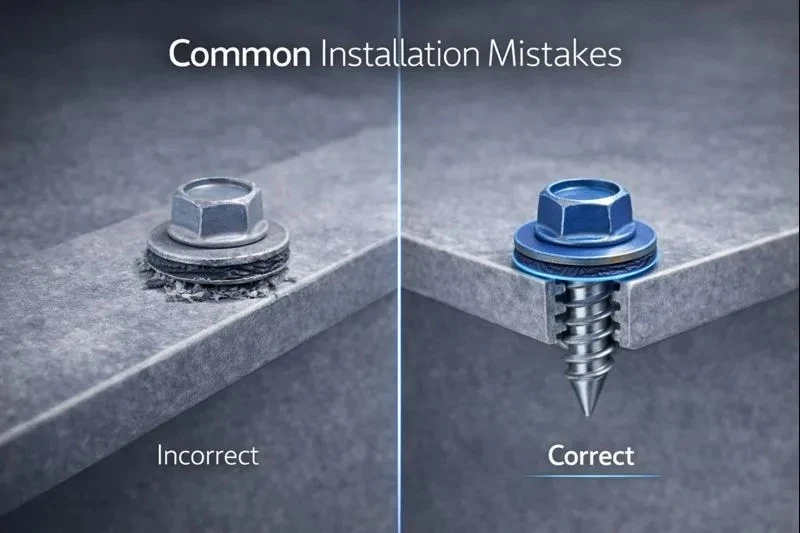
Even well-designed Self Tapping Screws can fail if installed incorrectly. Most fastening problems are linked to installation practices rather than product quality.
Skipping Pilot Holes
Failing to drill pilot holes in dense materials often causes cracking, misalignment, or excessive torque.
Over-Tightening
Driving the screw beyond its seating point can crush boards, strip threads, and weaken holding strength.
Incorrect Length Selection
Short screws reduce grip, while excessively long ones may distort or damage the base material.
Using the Wrong Thread Type
Matching thread design to material is critical for maintaining structural integrity.
Ignoring Environmental Factors
Indoor-grade fasteners used outdoors can corrode prematurely, leading to failure.
Self Tapping vs Drill-Point Fasteners
While often confused, these two fastener types are designed for different installation conditions. Thread-forming screws require a prepared hole, making them suitable for applications where precision and material control are essential.
Drill-point variants eliminate the need for pilot holes and are typically used for thicker steel sections and rapid site installations.
The distinction lies primarily in hole creation, not necessarily in holding capacity.
Why Precision Matters
Fastening performance depends on:
- Correct thread geometry
- Proper pilot hole sizing
- Accurate torque control
- Appropriate coating selection
When selected thoughtfully, these screws provide reliable fastening without damaging the base material.
Conclusion
Though small in size, fastening components play a major role in structural reliability. The performance of Self Tapping Screws depends heavily on choosing the correct type for the material, ensuring proper installation, and considering environmental exposure.
From metal sheet fabrication to board installations and timber work, these fasteners deliver controlled thread formation and consistent holding strength. When application, design, and installation are aligned, they offer dependable long-term performance across construction and industrial environments.
For projects where precision and material protection are priorities, a well-selected thread-forming fastener remains a practical and efficient solution.