Introduction
Confidence and self-worth form the foundation of a fulfilling life, yet many people in Singapore quietly struggle with feelings of inadequacy, doubt, and low self-esteem. These challenges often develop over time due to past experiences, social expectations, or ongoing stress. The good news is that support exists. Through self esteem therapy Singapore, individuals can learn to replace self-criticism with self-acceptance and build confidence that lasts.
Therapy sessions provide a safe space to understand underlying beliefs, challenge unhelpful thoughts, and strengthen a healthier relationship with oneself. By engaging in self esteem counselling Singapore, many people rediscover their voice, set healthier boundaries, and cultivate positive thinking patterns that improve both personal and professional life.
Why Self Esteem Matters
Low self-esteem is not just about lacking confidence in specific situations. It can deeply affect overall wellbeing:
- Difficulty expressing opinions or needs
- Persistent self-criticism or feelings of inadequacy
- Avoidance of new challenges due to fear of failure
- Struggles in relationships caused by insecurity
- Increased risk of anxiety and depression
When left unaddressed, these patterns can limit opportunities and diminish quality of life. Therapy provides tools to break this cycle and build lasting confidence.
What Is Self Esteem Therapy?
Self esteem therapy Singapore focuses on identifying and reshaping unhelpful thought patterns that undermine confidence. It combines evidence-based psychological techniques with supportive counselling to help clients:
- Recognise negative self-talk
- Reframe limiting beliefs
- Strengthen self-worth and resilience
- Improve assertiveness in communication
- Develop healthier coping strategies
Therapy is collaborative, meaning the client and therapist work together to set goals and track progress. Over time, individuals learn to replace automatic self-doubt with constructive and compassionate thinking.
Approaches to Self Esteem Counselling in Singapore
Different therapeutic methods are available to support confidence building and self-worth development. Some common approaches include:
1. Cognitive Behavioural Therapy (CBT)
CBT helps individuals identify negative thought cycles and replace them with healthier patterns. For example, shifting from “I will fail” to “I can prepare and give my best effort.”
2. Acceptance and Commitment Therapy (ACT)
ACT encourages acceptance of thoughts and feelings without letting them control behaviour. It helps clients align actions with personal values, fostering a stronger sense of purpose.
3. Person-Centred Therapy
This approach places emphasis on empathy, respect, and unconditional acceptance, creating a safe environment for personal growth.
4. Mindfulness-Based Techniques
Mindfulness helps clients remain present and reduce rumination. It enhances self-awareness and promotes a calmer response to stress.
5. Group Counselling and Workshops
Participating in group sessions can provide reassurance that others share similar struggles. Group discussions often enhance motivation and reduce feelings of isolation.
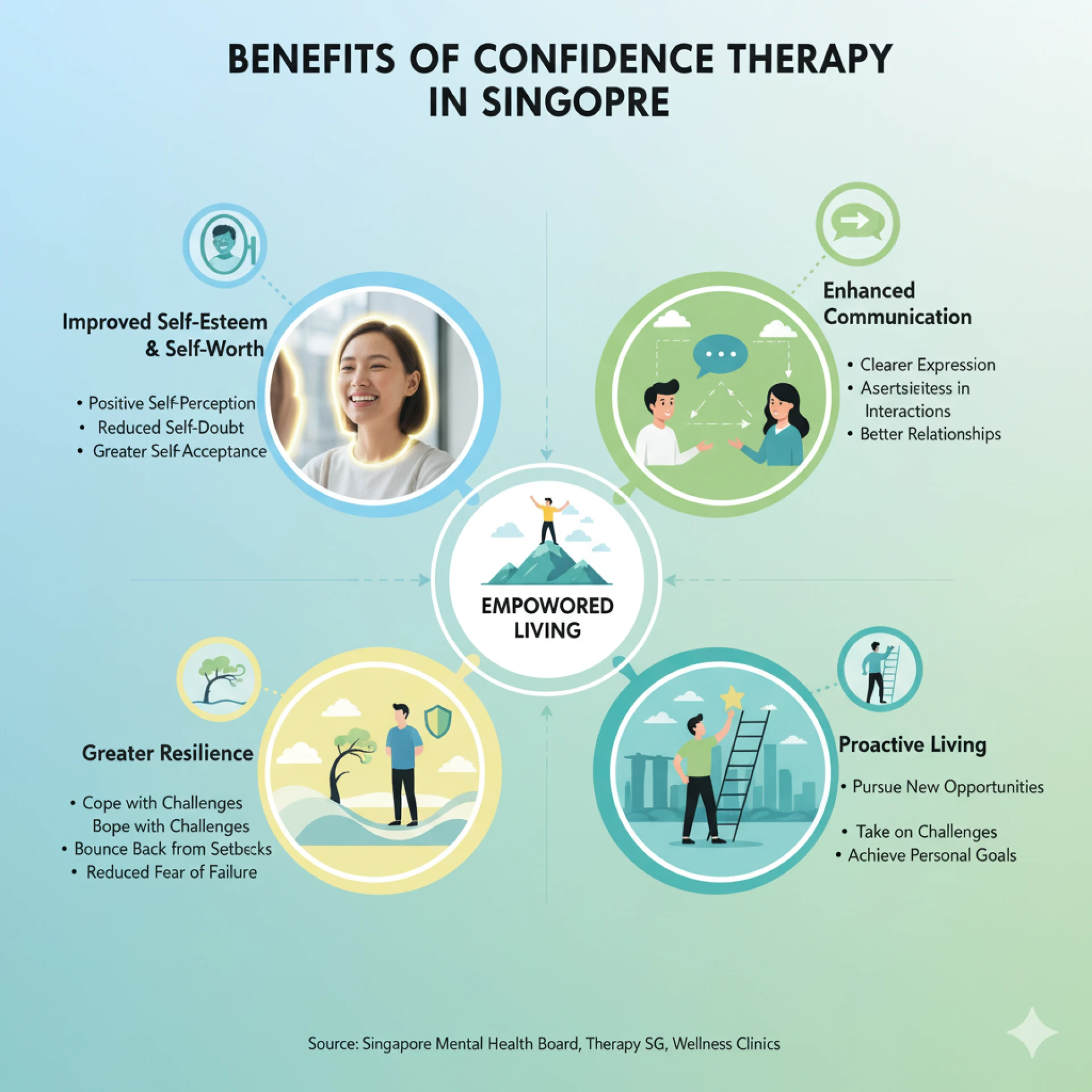
Benefits of Confidence Therapy Singapore
Engaging in confidence therapy Singapore can bring about positive shifts across different areas of life:
- Personal Growth – Improved self-awareness, acceptance, and resilience.
- Workplace Success – Greater confidence in presentations, teamwork, and leadership roles.
- Relationships – Healthier boundaries and improved communication.
- Emotional Wellbeing – Reduced anxiety, improved mood, and greater satisfaction with life.
The journey is gradual, but many clients report noticeable improvements within weeks of starting therapy.
Self Worth Counselling Singapore: Building a Stronger Foundation
At the heart of self-esteem work lies the concept of self-worth. Self worth counselling Singapore focuses on helping individuals recognise their inherent value beyond achievements or external validation. By nurturing self-worth, clients often experience greater emotional stability and a healthier sense of identity.
Practical techniques include:
- Journaling positive experiences and achievements
- Challenging comparisons with others
- Developing daily affirmations grounded in reality
- Practising gratitude to shift focus from lack to abundance
What to Expect in a Therapy Session
A typical self esteem counselling Singapore session begins with open conversation about challenges and goals. The therapist may guide the client through reflective questions, role-playing exercises, or mindfulness practices. Sessions usually last 50–60 minutes and may be weekly or biweekly.
The process is confidential, non-judgmental, and structured around the client’s pace. Progress often unfolds through small but meaningful shifts in thinking and behaviour.
Finding Self Improvement Therapy in Singapore
Singapore offers diverse pathways for self-improvement:
- Private Clinics and Therapy Centres – Provide specialised counselling for self-esteem and confidence issues.
- Community and Non-Profit Organisations – Offer accessible or subsidised services.
- Online Therapy Platforms – Convenient options for those who prefer flexibility and privacy.
- Workplace Wellness Programs – Some companies provide mental health support, including counselling sessions.
When choosing a therapist, consider their qualifications, approach, and whether you feel comfortable sharing openly with them.
Practical Steps to Support Therapy Progress
Therapy is most effective when paired with consistent self-care practices. Clients can reinforce progress by:
- Practising self-compassion daily
- Setting realistic goals instead of perfectionist standards
- Engaging in physical activity to improve mood and confidence
- Spending time in supportive social circles
- Limiting exposure to negative environments or toxic comparisons on social media
These habits strengthen the work done during counselling and help maintain long-term progress.
Frequently Asked Questions (FAQs)
1. What is the difference between self esteem therapy and confidence therapy in Singapore?
Self esteem therapy addresses deeper issues of self-worth, while confidence therapy often focuses on building specific skills such as public speaking or decision-making. Both are interconnected and often overlap.
2. How do I know if I need self esteem counselling Singapore?
If you frequently feel inadequate, struggle with negative self-talk, or avoid opportunities due to fear of failure, therapy may help improve your confidence and wellbeing.
3. Can therapy really improve self-worth?
Yes. With consistent sessions and practice, many individuals report stronger self-acceptance, reduced anxiety, and improved relationships.
4. Is self improvement therapy only for people with low self-esteem?
Not at all. Many people seek therapy for growth, clarity, and confidence-building, even if they are not struggling with severe self-esteem issues.
5. How long does it take to see changes through self esteem therapy Singapore?
The timeline varies, but many notice improvements within a few sessions, while lasting change often requires ongoing practice and commitment.
Final Thoughts
Low self-esteem can feel like a hidden burden, affecting both private and professional life. Through self esteem therapy Singapore, individuals gain the tools to quiet self-doubt, strengthen self-worth, and build lasting confidence. Therapy, combined with supportive habits, creates opportunities for genuine growth and positive thinking.
Seeking support is not a sign of weakness—it is an investment in mental wellbeing and a stronger sense of identity. With the right guidance, anyone can learn to shift from self-criticism to self-compassion and step into a more confident version of themselves.