
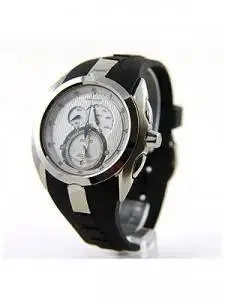
Seiko's solar watch technology converts both natural and artificial light into electrical energy stored in a rechargeable cell, powering the movement without battery replacement. The Seiko solar watch catalogue spans simple time-only references through to solar chronograph models across the Seiko Solar, Prospex Solar, and Astron GPS Solar families.
Quick Answer
Seiko Solar uses photovoltaic cells beneath the dial to convert light to electrical energy, stored in a rechargeable cell. A fully charged Seiko Solar cell can run the watch for six months in complete darkness. The range spans dress, sport, and dive configurations; solar chronograph references add stopwatch complication alongside the solar movement. The Astron GPS Solar family extends this to GPS time synchronisation — a separate tier from the standard Seiko Solar range.
How Seiko Solar Technology Works
Seiko developed its first solar watch in 1977. The current system uses a solar cell positioned behind the dial, converting photons from sunlight or artificial light into electrical current that charges a rechargeable lithium-ion cell inside the case. Most Seiko Solar watches carry six months of power reserve on a full charge in darkness. Seiko indicates charge level through a specific hand position on most references.
The Seiko Solar Watch Families
Seiko Solar is the entry family — dress and sport configurations with time-only or day-date movement content. Case sizes run from 29mm ladies' references through to 43mm men's sport references.
Seiko Solar Chronograph adds stopwatch functionality alongside the solar movement. The combination removes battery replacement concerns from a complication-equipped quartz watch — the main practical advantage of the configuration.
Prospex Solar applies Seiko Solar technology to Prospex sport and dive watch positioning. Prospex Solar diver references carry 200m water resistance with solar movement architecture.
Astron GPS Solar is a distinct premium tier — GPS satellite time synchronisation combined with solar power. The Astron adjusts to the correct time zone and maintains atomic-clock accuracy. This is a fundamentally different proposition from standard Seiko Solar.
Solar Versus Automatic: The Practical Comparison
The Seiko solar watch and Seiko automatic watch propositions serve different buyer priorities. Solar quartz delivers better accuracy specification — ±15 seconds per month versus the ±15 seconds per day of even well-regulated automatics — and requires no manual winding or power reserve management. The automatic watch proposition delivers the mechanical movement experience — the rotor winding, the sweep seconds hand — that solar quartz cannot replicate.
Who Should Buy a Seiko Solar Watch
The Seiko Solar range suits buyers who want a reliable, accurate quartz watch without recurring battery replacement, buyers who travel and want a low-maintenance sport or dress watch, buyers wanting a solar chronograph where battery replacement in a complication-equipped watch would be a maintenance burden. The range may not suit buyers who specifically want a mechanical automatic movement.
Buying Strategy
Within the Seiko solar range on creationwatches.sg, identify use case first: dress or sport, time-only or chronograph, standard solar or Prospex dive application. The Astron GPS Solar is a separate consideration for frequent international travellers but represents a distinct price commitment above the standard solar range.
FAQ
How long does a Seiko Solar watch last without light?
A fully charged Seiko Solar watch typically runs for six months in complete darkness. Regular light exposure during normal wear keeps the cell continuously charged under typical usage conditions.
Do Seiko Solar watches need batteries?
Seiko Solar watches use a rechargeable cell rather than a conventional replaceable battery. The rechargeable cell is charged by the solar panel beneath the dial and is designed to last the lifetime of the watch under normal use.
Does Seiko make a solar chronograph?
Yes. Seiko produces solar chronograph references across the standard Seiko Solar and Prospex families — combining solar power generation with stopwatch functionality, eliminating battery replacement concerns.
What is the difference between Seiko Solar and Seiko Astron?
Seiko Solar is the brand's light-powered quartz movement range. Seiko Astron adds GPS satellite time synchronisation — the Astron adjusts automatically to the correct local time and maintains atomic-clock accuracy. Astron is a premium tier above standard Seiko Solar.
Are Seiko Solar watches accurate?
Seiko Solar movements are quartz-based and deliver typical quartz accuracy specifications — generally within ±15 seconds per month. This is meaningfully more accurate than automatic movements which typically run within ±15 seconds per day even when well regulated.
Verdict
The Seiko solar watch range delivers a credible alternative to both conventional battery quartz and automatic mechanical watches — solar power generation removes the battery replacement burden, quartz accuracy outperforms automatic specifications, and the Prospex Solar Diver extends the proposition into dive watch territory. For buyers who prioritise maintenance simplicity and accuracy over the mechanical watch experience, Seiko's solar range covers the requirement from dress to dive.