
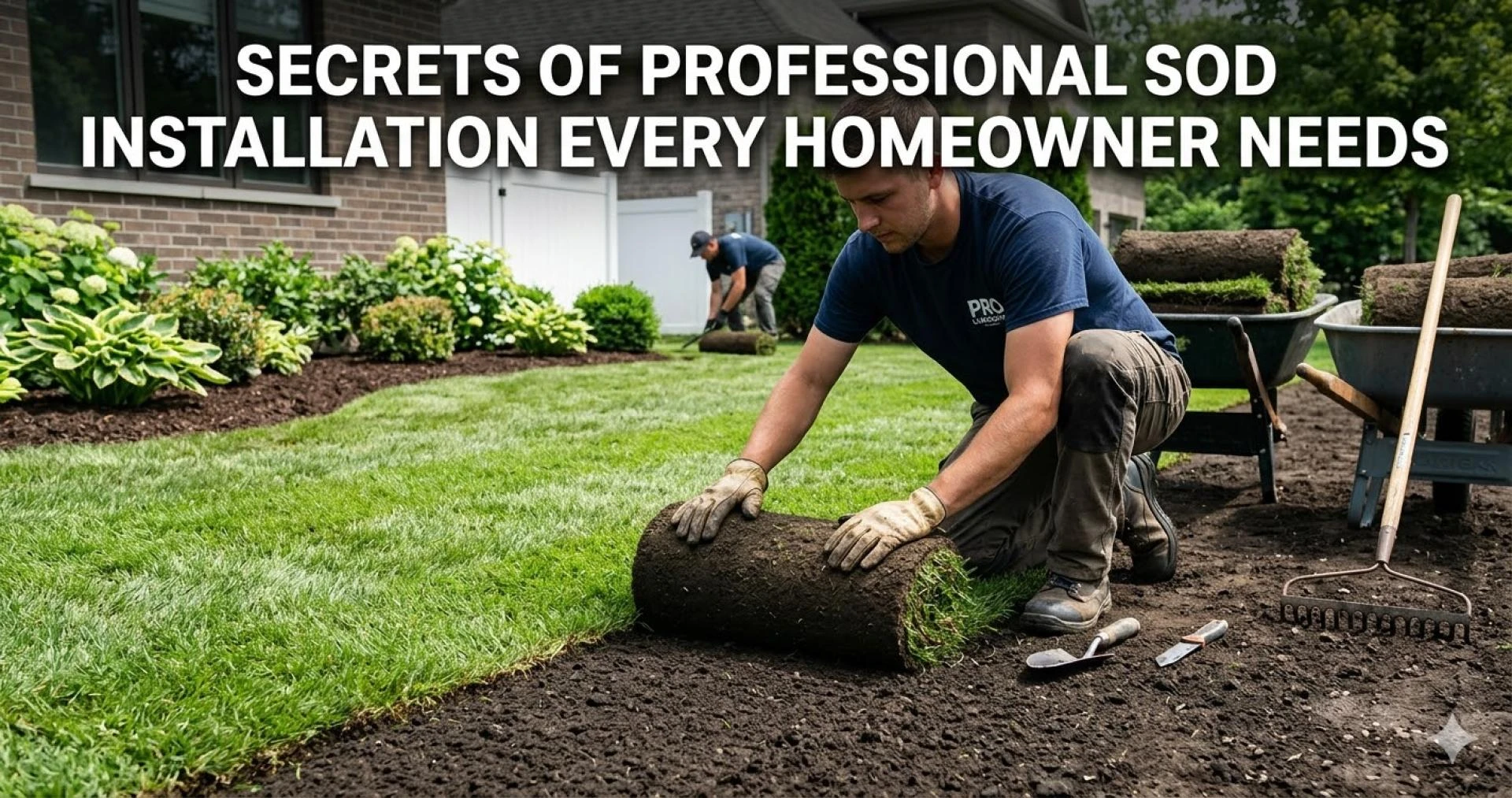
Achieving a lush, velvet-green lawn in British Columbia isn't just about rolling out grass like a carpet. In the Pacific Northwest, where heavy rainfall meets clay-heavy soils, the margin for error is razor-thin. Whether you are a homeowner in a quiet cul-de-sac or managing a luxury estate, the difference between a thriving ecosystem and a muddy disappointment lies in technical precision. Most people see the green top; experts see the biology beneath.
The local climate in Surrey and Vancouver presents unique challenges, from acidic soil profiles to the persistent threat of European Chafer beetle infestations. A generic approach to landscaping often leads to root rot or uneven settling. To get the results that mirror a golf course fairway, you must understand the logistical and biological "secrets" that elite crews use to ensure long-term viability.
The Foundation of Professional Sod Installation
Professional results start six inches underground. Most DIY attempts fail because they overlook soil compaction and drainage. When you opt for professional sod installation, the process begins with a comprehensive site analysis. This involves checking for "hardpan" layers—compacted soil that prevents roots from penetrating deep enough to survive a dry BC summer.
Grading and Drainage Dynamics
Surface water management is the most critical factor for property owners in Surrey. Without a proper 1% to 2% slope away from permanent structures, standing water will drown new root systems before they can establish. Professionals use laser levels to ensure that the sub-grade is perfectly pitched.
Soil Composition for the Pacific Northwest
Our local soil is notoriously high in clay. Before laying a single piece of turf, experts focus on how to prepare your soil for instant success by incorporating organic matter and sand. This improves porosity, allowing oxygen to reach the roots—a vital component often ignored by amateurs.
Timing the Market: When to Lay Turf in BC
In British Columbia, timing is everything. While sod can technically be installed whenever the ground isn't frozen, there are "golden windows" that maximize growth while minimizing water costs.
The Spring Push (March to May)
Spring is ideal because the moderate temperatures and consistent rainfall allow roots to knit into the soil without the stress of extreme heat. However, this is also when moss growth is most aggressive. Professionals often apply a lime treatment during this phase to balance soil pH, making it less hospitable to moss and more welcoming to Kentucky Bluegrass or Fescue blends.
The Fall Recovery (September to October)
Fall is the secret weapon for luxury property owners. The soil is still warm from the summer, but the air is cool. This combination encourages rapid root development without forcing the grass to focus on vertical blade growth. It also helps the lawn survive the "frost heaving" common in Surrey winters.
Turf Selection: Beyond the "Green"
Not all sod is created equal. The specific blend of seeds used in your turf determines its resistance to local pests and its ability to handle shade.
High-Traffic vs. Ornamental Blends
- Perennial Ryegrass Blends: Best for active families and pets. It germinates quickly and has high wear tolerance.
- Fine Fescue: The go-to for properties with significant tree cover. It handles lower light levels better than traditional sun-loving varieties.
- Kentucky Bluegrass: Provides that iconic "estate" look with deep blue-green hues but requires more consistent nitrogen and water.
Disease Resistance and Pest Management
Surrey homeowners frequently battle the Chafer beetle. Professionals prioritize "endophyte-enhanced" turf. These are naturally occurring fungi within the grass that deter leaf-eating insects, providing a biological shield for your investment.
The Logistics of a Flawless Layout
The actual laying of the sod is a race against the clock. Once sod is harvested at the farm, the clock starts ticking on "shelf life." In the heat of July, a pallet of sod can begin to "cook" from the inside out due to nitrogen breakdown in as little as 12 to 24 hours.
The "Brickwork" Pattern
Sod should always be laid in a staggered, running-bond pattern, similar to bricks. This prevents long, continuous seams where water can channel and erode the underlying soil.
Tight Seaming and Trimming
Professionals "butt" the edges tightly together without overlapping. Overlapping creates bumps, while gaps lead to weed encroachment and drying out of the root edges. Every curve around a flower bed or walkway is precision-cut using a sharp utility knife or a specialized sod saw to ensure a seamless transition.
Comparison: DIY vs. Professional Installation
Many homeowners consider doing the work themselves to save on labor. While the upfront cost is lower, the long-term risks are often underestimated.
Critical Post-Installation Care
The first 14 days are the "ICU phase" for your new lawn. Even the best lawn care service vancouver teams cannot save a lawn that has been allowed to dry out in the first week.
The Watering Schedule
For the first week, your goal is to keep the sod and the top inch of soil consistently moist. This often means watering 2–3 times a day for short durations. After day seven, you transition to deeper, less frequent watering to encourage the roots to "stretch" downward in search of moisture.
When to Mow
One of the most common mistakes is mowing too early. You should wait until the grass is roughly 3.5 to 4 inches tall. Before the first cut, perform the "tug test." Gently pull on a handful of grass; if you feel resistance, the roots have taken hold, and it is safe to mow. Always set your blade to the highest setting for the first three months.
Advanced Lawn Maintenance in Surrey
Once established, maintaining that premium look requires a localized strategy. The environmental factors in the Lower Mainland are distinct from the rest of Canada.
Managing Soil Acidity
Due to our high rainfall, nutrients like calcium and magnesium are frequently leached out of the soil. This leads to high acidity. Regular applications of pelletized lime are a staple for any comprehensive lawn care surrey program. This keeps the pH in the 6.0 to 7.0 range, where grass can actually "eat" the fertilizer you provide.
Aeration and Dethatching
In our damp climate, thatch—a layer of dead organic matter—builds up quickly. If it exceeds half an inch, it acts like a waterproof umbrella, preventing water and nutrients from reaching the soil. Annual core aeration is non-negotiable for luxury properties to ensure the soil remains oxygenated.
Frequently Asked Questions (PAA Style)
How long does it take for new sod to take root?
In ideal conditions, you will see thin white "hair roots" within 5 to 7 days. Full establishment, where the sod cannot be easily lifted, typically takes 3 to 4 weeks. During this window, foot traffic should be kept to an absolute minimum.
How much does professional sod installation cost in BC?
Pricing typically varies based on the total square footage, the amount of site preparation required (such as removing old grass), and the type of sod blend selected. For luxury estates with complex grading, costs may be higher than a standard residential replacement.
Why is my new sod turning yellow or brown?
This is usually a sign of either underwatering or "dormancy" due to heat stress. However, if the yellowing is localized in patches, it could be "localized dry spot" where the soil underneath is too compacted to absorb water. It is vital to check the moisture levels of the soil under the sod, not just the grass itself.
Can I install sod over existing grass?
This is a recipe for failure. Laying new sod over old grass prevents the new roots from contacting the soil and creates a layer of decomposing matter that can cause fungal diseases and root rot. Professionals always remove the old turf and prep the bare soil first.
Does new sod require fertilizer immediately?
Most professional sod is fertilized at the farm shortly before harvest. However, applying a high-phosphorus "starter fertilizer" during installation is a common secret to stimulate rapid root growth. Avoid high-nitrogen fertilizers for the first 30 days, as you want the plant to focus on roots, not top growth.
Protecting Your Investment
A beautiful lawn is an asset that increases property value by up to 15%. For enterprise and luxury property owners, the lawn is the "handshake" of the property—the first thing visitors and clients see. Investing in professional installation ensures that this first impression is one of health, precision, and prestige.
The secrets of the pros aren't just about the grass; they are about the engineering of the environment. From managing the acidic soils of Surrey to navigating the moisture-heavy winters of Vancouver, a scientific approach always beats a haphazard one.
If you're ready to transform your landscape from a source of stress into a neighborhood showpiece, the experts at Harry’s Lawn Care are ready to help. We specialize in high-end turf solutions tailored specifically for the unique British Columbia environment.