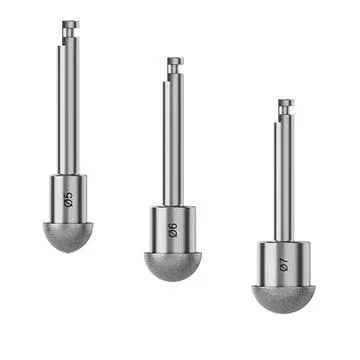
Bottom line: Scallop shaped drills are precision-engineered dental implant drills designed with a contoured cutting profile that mirrors natural bone anatomy. They improve implant positioning accuracy, preserve bone structure, and enhance primary stability—especially in aesthetic zones where precision is non-negotiable.
Quick takeaways:
- Designed to match natural bone contours
- Improve implant seating accuracy
- Reduce bone trauma and heat generation
- Support better osseointegration outcomes
- Ideal for aesthetic and anterior implant cases
What Are Scallop Shaped Drills?
Scallop shaped drills feature a uniquely curved or scalloped cutting edge rather than a flat or uniformly tapered design. This geometry allows the drill to create osteotomies that follow the natural rise and fall of the alveolar ridge.
Unlike conventional drills, which remove bone in a more linear fashion, scallop shaped drills respect anatomical variations. The result? A more tailored implant bed that aligns closely with both functional and aesthetic requirements.
Why Do Dentists Prefer Scallop Shaped Drills?
1. Precision Where It Matters Most
In anterior regions, even a slight deviation can affect the final prosthetic outcome. Scallop shaped drills allow clinicians to:
- Maintain ideal angulation
- Achieve uniform depth control
- Minimize corrective adjustments later
2. Bone Preservation
Traditional drills can sometimes remove more bone than necessary. Scallop shaped designs:
- Follow the natural scalloped ridge anatomy
- Reduce unnecessary bone removal
- Help maintain cortical integrity
3. Improved Primary Stability
Primary stability is the foundation of implant success. These drills:
- Create a snug, anatomically adaptive osteotomy
- Enhance implant-to-bone contact
- Reduce micromovement risks during healing
How Do Scallop Shaped Drills Work?
Step-by-Step Clinical Workflow
- Initial Marking
Use a pilot drill to define the entry point and angulation. - Progressive Osteotomy Preparation
Introduce scallop shaped drills in sequence. Each drill:- Expands the osteotomy gradually
- Maintains anatomical contour
- Depth and Contour Control
The scalloped edges guide the drill along natural bone peaks and valleys. - Implant Placement
The implant fits more organically into the prepared site, improving stability.
Scallop Shaped vs Traditional Drills
FeatureScallop Shaped DrillsTraditional DrillsCutting DesignContoured / scallopedStraight or taperedBone PreservationHighModeratePrecision in Aesthetic ZoneExcellentGoodHeat GenerationLowerHigherImplant FitAnatomically adaptiveStandardized
When Should You Use Scallop Shaped Drills?
These drills are particularly effective in:
Aesthetic Implant Cases
When soft tissue and bone contours directly impact visual outcomes.
Immediate Implant Placement
Helps maintain socket morphology while preparing the osteotomy.
Irregular Bone Topography
Useful in cases where the ridge is not uniform or has resorption patterns.
Clinical Advantages You’ll Notice Immediately
- Cleaner osteotomy walls → better healing response
- Reduced surgical time → fewer adjustments needed
- Enhanced tactile feedback → improved control during drilling
Many clinicians report that once they switch, going back to conventional drills feels limiting.
Common Mistakes to Avoid
Even with advanced tools, technique still matters.
Over-Speeding the Drill
Running at excessive RPM can:
- Increase heat
- Compromise bone vitality
Tip: Maintain controlled गति with irrigation.
Skipping Drill Sequence
Jumping sizes may:
- Reduce accuracy
- Cause microfractures
Stick to the recommended progression.
Ignoring Bone Density
Scallop shaped drills perform differently in D1 vs D4 bone.
Adjust pressure and speed accordingly.
How to Choose the Right Scallop Shaped Drill Set
When selecting a system, focus on:
Material Quality
Look for:
- Surgical-grade stainless steel
- High wear resistance
Compatibility
Ensure the drills:
- Match your implant system
- Integrate with your surgical kit
Design Precision
Not all scallop designs are equal. Opt for:
- Consistent contour geometry
- Proven clinical performance
Are Scallop Shaped Drills Worth It?
If your goal is predictable, aesthetic, and minimally invasive implantology, the answer is yes.
They’re not just another variation—they represent a shift toward anatomy-driven drilling. That shift translates directly into better outcomes, fewer complications, and higher patient satisfaction.
Key Insight from Clinical Experience
The real advantage isn’t just in the design—it’s in how it changes your workflow. You spend less time correcting and more time placing with confidence. That’s where the efficiency gain shows up.
And in implant dentistry, small improvements in precision often lead to big differences in long-term success.