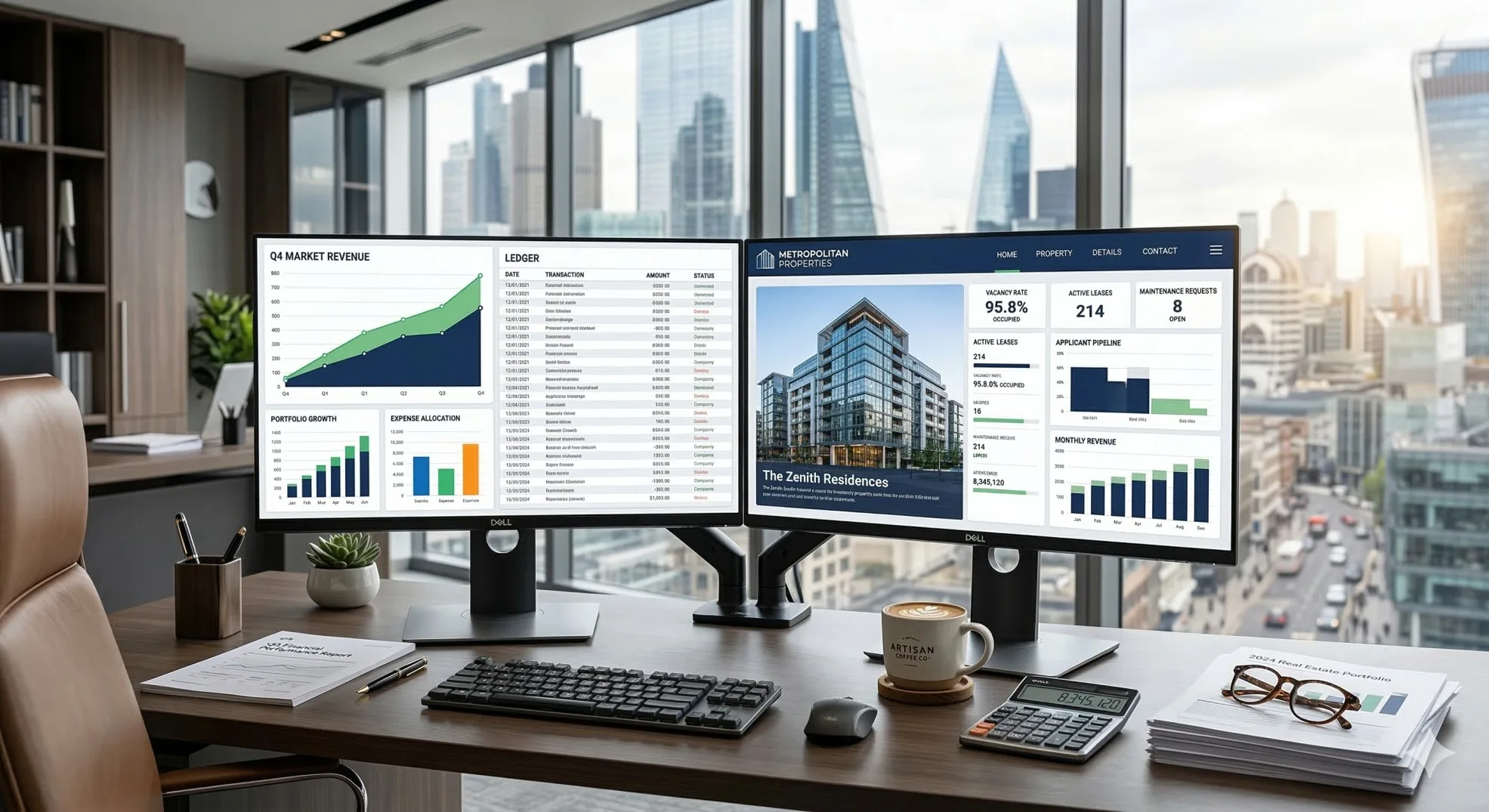
For real estate executives and portfolio directors, the blueprint for success is theoretically simple: acquire high-yield assets, minimize vacancy rates, and optimize Net Operating Income (NOI). However, the practical reality of scaling a real estate portfolio is far more complex.
As you acquire new properties, you simultaneously multiply your back-office administrative burden. Every new door introduces a flood of rent rolls, vendor invoices, security deposit compliances, and daily maintenance work orders. When internal property managers become overwhelmed by data entry, financial reporting is delayed, cash flow visibility drops, and the tenant experience ultimately suffers.
To break through this growth ceiling, industry leaders are fundamentally restructuring their operational models. The strategic decision to outsource property management back-office workflows is rapidly shifting from a simple cost-saving measure to an absolute operational necessity.
The Trap of In-House Administration
The traditional model of scaling a property management firm involves a linear increase in overhead: as your portfolio grows, you hire more domestic administrative staff. However, this model creates severe operational friction. Hiring, training, and retaining back-office talent in a highly competitive market is expensive and time-consuming.
Furthermore, internal teams are often restricted by standard business hours. This means critical work orders, tenant applications, or accounting reconciliations sit idle overnight or through the weekend, slowing down asset disposition and delaying vendor payouts.
The Modern Standard: Outsourcing Property Management
The modern approach to outsourcing property management involves partnering with specialized Remote Capability Centers. This model allows executives to convert fixed, bloated payroll costs into highly flexible, scalable operational expenses.
By delegating high-volume, routine workflows to dedicated offshore professionals, firms achieve a continuous, 24/7 operational cycle. The most effective workflows to transition include:
- Financial and Accounting Services: Daily bank reconciliations, accounts payable (AP) processing, and rigorous, tax-ready executive reporting.
- Tenancy and Lease Administration: Comprehensive background checks, compliance auditing, and proactive lease renewal tracking to prevent revenue leakage.
- Property Preservation: Rapid work order processing, field data entry, and seamless REO vendor coordination.
AI for Speed, Humans for Judgment
Many PropTech companies aggressively push the narrative of a "fully automated" back-office. While AI is an incredible lever for efficiency, real estate remains a deeply physical and human-centric asset class. Algorithms can process an invoice in milliseconds, but they cannot negotiate a complex lease forbearance with a distressed commercial tenant.
The most successful outsourcing models blend these two forces perfectly. They utilize AI at the front of the funnel to filter routine data at high speed, but instantly route complex exceptions to highly trained human experts. This ensures your portfolio benefits from the limitless efficiency of machines while remaining fiercely protected by the strategic intelligence and empathy of humans.
Protecting Your Bottom Line
The true return on investment of a modernized back-office extends far beyond payroll arbitrage. When you remove the burden of data entry from your onshore team, your property managers are freed to do what they do best: build relationships, negotiate deals, and drive the physical value of your assets.
In a volatile real estate market, operational agility is your most powerful competitive advantage. Refusing to modernize your administrative infrastructure means leaving substantial revenue on the table. If your firm is ready to eliminate operational bottlenecks and scale with institutional-grade efficiency, discover how integrating dedicated, global administrative support can transform your operations by exploring comprehensive property management services.