
Comprehensive research on the satellite antenna market reveals a dynamic industry driven by rising demand for reliable satellite communication across defense, aerospace, maritime, and commercial sectors. With increasing investments in satellite constellations and global internet connectivity, the market is undergoing substantial transformation and innovation.
Market Overview
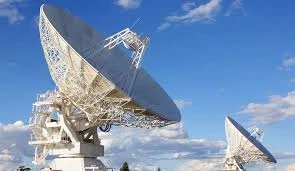
Satellite antennas are essential components in communication systems, responsible for transmitting and receiving data between Earth-based terminals and orbiting satellites. The market encompasses various antenna types, including parabolic, flat-panel, phased-array, and horn antennas, tailored for applications like navigation, broadcasting, remote sensing, and telemetry.
The market has witnessed consistent growth over the past decade, with satellite-dependent industries expanding globally. Key market players are focusing on developing lightweight, high-performance antennas with capabilities for multi-frequency operation, enhanced mobility, and minimal interference.
Key Drivers Identified Through Research
- Rising Global Demand for Connectivity
- The surge in broadband internet demand, especially in rural and remote regions, is a critical driver of satellite antenna demand. Governments and private firms are investing in low Earth orbit (LEO) and medium Earth orbit (MEO) satellite networks to bridge the digital divide.
- Expansion of Defense and Aerospace Applications
- National defense systems rely heavily on satellite communication for secure data transfer, surveillance, and mission coordination. The need for high-throughput, interference-resistant antennas in military operations has pushed manufacturers to develop ruggedized and highly adaptable antenna solutions.
- Proliferation of IoT and Smart Infrastructure
- Satellite antennas are becoming essential for Internet of Things (IoT) connectivity in industries such as agriculture, logistics, oil & gas, and maritime transport. Antennas provide the necessary link for data transmission in remote and offshore environments where terrestrial networks are unavailable.
Emerging Trends and Research Insights
- Miniaturization and Flat-Panel Antennas: Market research highlights a shift toward compact, lightweight antennas suited for mobility applications—especially in aviation, automotive, and consumer electronics.
- Electronically Steered Antennas (ESAs): Unlike traditional mechanical tracking systems, ESAs allow rapid beam steering without moving parts, offering greater reliability, reduced latency, and energy efficiency.
- LEO Satellite Integration: Antennas are being optimized for LEO satellite constellations such as Starlink and OneWeb, which require tracking fast-moving satellites and maintaining consistent connectivity.
- 5G-Satellite Convergence: Antennas are being developed to support hybrid networks combining satellite and 5G technologies, enabling continuous coverage and ultra-low-latency communication for applications such as autonomous vehicles and smart cities.
Regional Insights and Competitive Landscape
According to market research, North America leads in terms of technological innovation and defense investments, followed closely by Europe and Asia-Pacific. In Asia-Pacific, increasing government-backed space missions and rural connectivity projects are accelerating market growth.
Key players include:
- General Dynamics Corporation
- Cobham Limited
- L3Harris Technologies, Inc.
- Honeywell International Inc.
- Viasat Inc.
These companies are actively engaged in partnerships, R&D investments, and acquisitions to expand their portfolios and enter emerging markets.
Market Segmentation
The satellite antenna market research segments the industry based on:
- Antenna Type: Parabolic Reflector, Flat Panel, Horn, and Dipole
- Frequency Band: C Band, X Band, Ku Band, Ka Band
- Application: Communication, Earth Observation, Navigation, Scientific Research
- End User: Defense, Aerospace, Maritime, Commercial, Enterprise, and Government
Each segment is analyzed for growth potential, market share, and projected demand based on historical data and forward-looking trends.
Challenges Identified in Research
Despite its potential, the market faces several challenges:
- High initial investment and installation costs
- Spectrum allocation issues and regulatory barriers
- Environmental limitations such as rain fade and signal obstruction
- Cybersecurity threats to ground-based antennas and communication links
Addressing these challenges through global collaboration and technological innovation will be key to unlocking sustained growth.
Future Outlook Based on Research Projections
The satellite antenna market is projected to grow steadily in the coming years, driven by increasing reliance on space-based communication. The shift toward smart mobility, space tourism, and real-time global monitoring will further expand market scope.
Investments in AI-driven antenna design, automated deployment systems, and multi-orbit integration will redefine performance benchmarks and market expectations.
Conclusion
In-depth research underscores that the satellite antenna market is well-positioned for long-term growth, supported by innovation, government investments, and expanding commercial applications. Industry stakeholders should focus on overcoming current challenges and aligning product development with evolving customer needs to remain competitive and future-ready.