
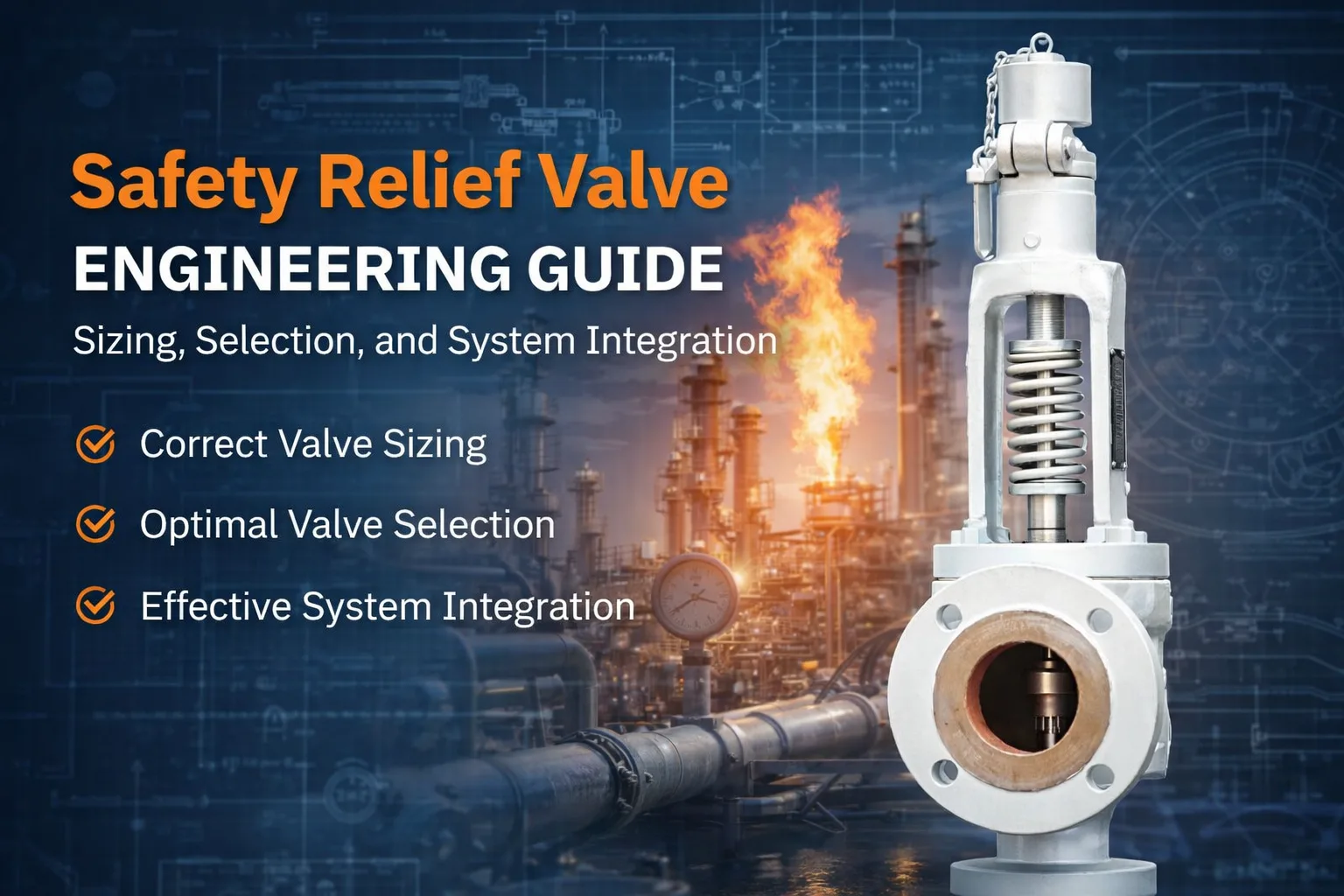
In modern industrial systems, maintaining safe operating pressure is essential for both performance and safety. A safety relief valve is one of the most critical components used to protect equipment from overpressure conditions. Proper engineering of these valves—covering sizing, selection, and integration—ensures reliable operation and long-term system stability.
This guide explains how to design and implement an efficient pressure relief system using best engineering practices.
What is a Safety Relief Valve?
A safety relief valve is a mechanical device designed to release excess pressure automatically when it exceeds a preset limit. Once the system returns to normal pressure, the valve closes, maintaining system balance.
These valves are commonly used in:
- Boilers and pressure vessels
- Oil & gas pipelines
- Chemical processing units
- Power generation plants
Their primary role is to prevent system failure, equipment damage, and safety hazards.
Why Proper Engineering Matters
Engineering a pressure relief system is not just about installing a valve—it requires a deep understanding of system behavior under abnormal conditions.
Poor design can result in:
- Inadequate pressure release
- Valve instability or frequent lifting
- Increased wear and maintenance issues
- Safety and compliance risks
A well-engineered system ensures smooth operation, reduced downtime, and improved safety performance.
Sizing of Safety Relief Valve
Correct sizing is essential to ensure the valve can handle excess pressure under worst-case conditions.
Identifying Overpressure Scenarios
Before sizing, engineers must evaluate situations that can cause pressure buildup, such as:
- Blocked discharge lines
- Fire exposure
- Thermal expansion of fluids
- Equipment or control failure
Each scenario defines the required relief capacity.
Calculating Flow Requirements
The discharge capacity depends on several process factors:
- Nature of the fluid (gas, steam, or liquid)
- Operating temperature and pressure
- Fluid properties like density and viscosity
Accurate calculations help ensure that the valve can safely release excess pressure without system disruption.
Understanding Key Pressure Terms
To size a valve correctly, it is important to define:
- Set pressure – when the valve starts to open
- Relieving pressure – maximum pressure during discharge
- Back pressure – pressure at the outlet side
These parameters influence how the valve performs in real conditions.
Choosing the Right Orifice Size
The orifice controls how much fluid can pass through the valve. Standard sizes are selected based on calculated flow requirements.
A balanced approach is important:
- Too small → insufficient pressure relief
- Too large → operational instability
Proper sizing ensures consistent and reliable valve performance.
Following Industry Standards
Engineering practices should comply with recognized codes such as:
- API standards
- ASME guidelines
These ensure safe design, accurate calculations, and regulatory compliance.
Selection of Safety Relief Valve
Selecting the right valve depends on system requirements and operating conditions.
Types of Valves
Different designs are used for specific applications:
- Spring-loaded valves for general use
- Pilot-operated valves for high-pressure precision control
- Balanced bellows valves where back pressure is a concern
Choosing the correct type improves efficiency and reliability.
Material Considerations
Material selection is critical for durability. Factors include:
- Corrosion resistance
- Temperature tolerance
- Compatibility with process media
Common materials include stainless steel and specialized alloys for harsh environments.
Evaluating Operating Conditions
Each system has unique operating characteristics. Consider:
- Pressure fluctuations
- Temperature variations
- Fluid properties (corrosive, toxic, or viscous)
Matching the valve to these conditions ensures long-term performance.
Certifications and Compliance
A properly selected valve should meet industry certifications such as:
- ASME standards
- ISO requirements
This guarantees safety, quality, and reliability.
System Integration of Safety Relief Valve
Even a correctly sized and selected valve can fail if not integrated properly into the system.
Installation Best Practices
Proper installation ensures optimal performance:
- Install in the recommended orientation
- Keep inlet piping short and direct
- Avoid unnecessary pressure losses
Incorrect installation can reduce efficiency and lead to malfunction.
Inlet and Outlet Piping Design
Good piping design plays a key role in valve performance:
- Minimize inlet pressure drop
- Avoid restrictions in outlet lines
- Design piping to handle discharge safely
Proper piping improves stability and efficiency.
Managing Discharge Safely
The discharged fluid must be handled carefully:
- Safe venting for non-hazardous fluids
- Flare systems for gases
- Containment for liquids
This prevents environmental and safety risks.
Maintenance and Testing
Routine inspection and testing are essential:
- Check valve operation periodically
- Verify pressure settings
- Clean and replace worn components
Regular maintenance ensures reliability and extends service life.
Common Engineering Challenges
Valve Chatter
Occurs due to improper sizing or unstable conditions.
Solution: Ensure accurate calculations and stable system design.
Leakage Issues
Caused by wear or contamination.
Solution: Maintain clean systems and schedule regular servicing.
Back Pressure Effects
Impacts valve performance and efficiency.
Solution: Use appropriate valve designs and optimize outlet piping.
Best Practices for Engineers
- Design for worst-case scenarios
- Use accurate process data
- Follow industry standards
- Ensure proper installation
- Perform regular maintenance
These practices help build a safe and efficient pressure relief system.
Conclusion
Designing an effective pressure protection system requires careful attention to every stage—from sizing and selection to installation and maintenance. A well-planned approach ensures safety, compliance, and operational efficiency.
For reliable and high-performance solutions, Vytal Controls Pvt. Ltd. offers advanced safety relief valve systems designed to meet diverse industrial needs.