Industrial facilities operate under complex conditions where pressure, temperature, and fluid flow must be carefully controlled. In such environments, safety devices play a crucial role in protecting equipment, personnel, and processes. One of the most important protective devices used in pressurized systems is the safety relief valve. Modern industries rely on advanced safety relief valve design and technology to prevent dangerous pressure build-up and ensure reliable system operation.
Understanding the Importance of Safety Relief Valves
A safety relief valve is a mechanical device designed to automatically release excess pressure from a system when it exceeds a predetermined limit. This mechanism protects pipelines, boilers, pressure vessels, reactors, and other equipment from potential damage or catastrophic failure.
Industries such as oil and gas, chemical processing, power generation, pharmaceuticals, and food processing operate with pressurized systems where pressure fluctuations are common. Without proper pressure protection, these systems could experience equipment damage, production downtime, or serious safety hazards.
Safety relief valves act as a critical line of defense by maintaining safe operating conditions and ensuring compliance with industrial safety standards.
Basic Working Principle of Safety Relief Valves
The primary function of a safety relief valve is to monitor system pressure and open automatically when the pressure exceeds the set limit. Once the valve opens, excess fluid, gas, or steam is released from the system until pressure returns to a safe level.
The main components typically include:
- Valve body
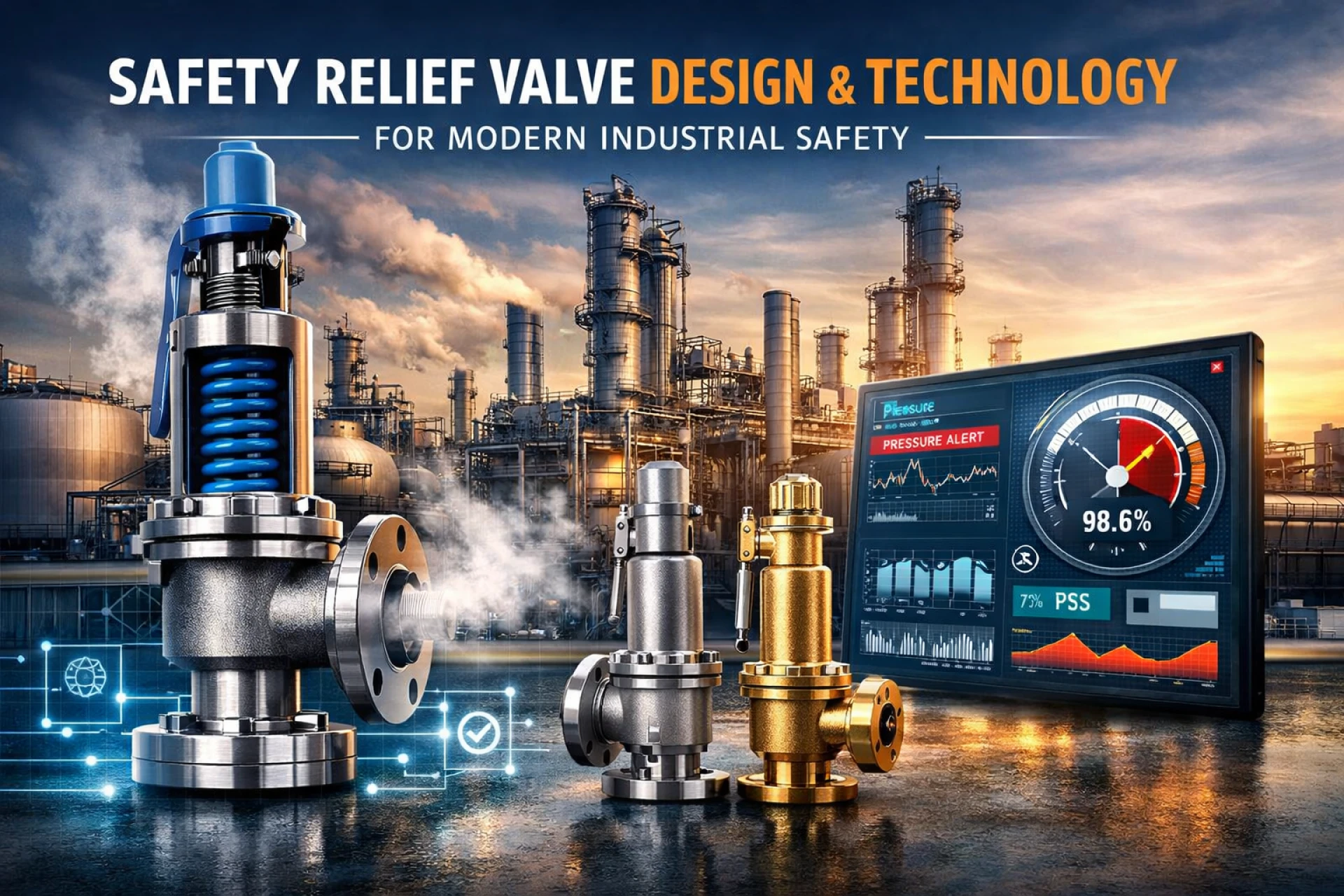
- Spring mechanism
- Disc and nozzle
- Adjustment screw
- Inlet and outlet connections
When system pressure increases beyond the preset level, the force exerted by the pressure overcomes the spring force holding the valve closed. This causes the valve disc to lift and release the excess pressure. Once normal pressure conditions are restored, the valve automatically closes.
This simple yet highly effective mechanism helps prevent system overload and maintains operational safety.
Modern Design Innovations in Safety Relief Valves
Advancements in engineering and manufacturing technologies have significantly improved the performance and reliability of safety relief valves. Modern valve designs incorporate several innovations to enhance precision, durability, and response time.
High-Precision Spring Technology
Modern safety relief valves use high-quality spring materials and advanced calibration techniques to ensure accurate pressure control. These springs are designed to maintain consistent performance even under harsh industrial conditions such as high temperature, vibration, and corrosive environments.
Improved Sealing Mechanisms
Advanced sealing materials and precision-machined components help prevent leakage and ensure tight shut-off when the valve is closed. This improves system efficiency and reduces the risk of pressure loss.
Corrosion-Resistant Materials
Many industries handle aggressive chemicals, high-temperature steam, or corrosive fluids. Modern safety relief valves are manufactured using materials such as stainless steel, alloy steel, and special coatings to enhance durability and corrosion resistance.
Smart Monitoring Capabilities
With the integration of digital technologies, some modern safety relief valves are now equipped with monitoring systems that track performance, pressure levels, and valve activity. These systems support predictive maintenance and allow engineers to detect potential issues before failures occur.
Applications of Safety Relief Valves in Modern Industries
Safety relief valves are widely used across numerous industries where pressure management is essential.
Power Generation:
Steam boilers and turbines require precise pressure control to maintain safe and efficient operations.
Oil and Gas Industry:
Refineries, pipelines, and storage facilities depend on safety relief valves to prevent overpressure conditions during processing and transportation.
Chemical Processing:
Chemical reactors and processing equipment often operate under high pressure, making pressure relief systems essential for plant safety.
Pharmaceutical and Food Processing:
These industries use pressurized systems for sterilization and processing, where reliable safety mechanisms are required to maintain product quality and operational safety.
Water Treatment Plants:
Pressurized filtration and pumping systems require pressure relief protection to avoid equipment damage.
Compliance with Global Safety Standards
Safety relief valves must comply with internationally recognized standards and regulations. These standards ensure that valves are designed, tested, and manufactured according to strict safety guidelines.
Common standards include:
- ASME (American Society of Mechanical Engineers)
- API (American Petroleum Institute)
- ISO (International Organization for Standardization)
Compliance with these standards ensures reliable performance, proper pressure relief capacity, and safe system operation across various industrial applications.
Benefits of Advanced Safety Relief Valve Technology
Modern safety relief valve designs provide several advantages for industrial operations:
- Enhanced operational safety
- Protection of critical equipment
- Reduced maintenance requirements
- Improved pressure control accuracy
- Increased system reliability
- Compliance with safety regulations
These benefits make safety relief valves an essential component in modern industrial infrastructure.
Conclusion
As industrial systems continue to grow more complex, the need for reliable pressure protection becomes even more important. Advances in safety relief valve design and technology have significantly improved the efficiency, durability, and responsiveness of these critical safety devices. By incorporating modern materials, precise engineering, and smart monitoring capabilities, safety relief valves play a vital role in maintaining safe and stable industrial operations. Companies like Vytal Controls are contributing to the development of high-performance valve solutions that help industries maintain safety, efficiency, and long-term reliability.