
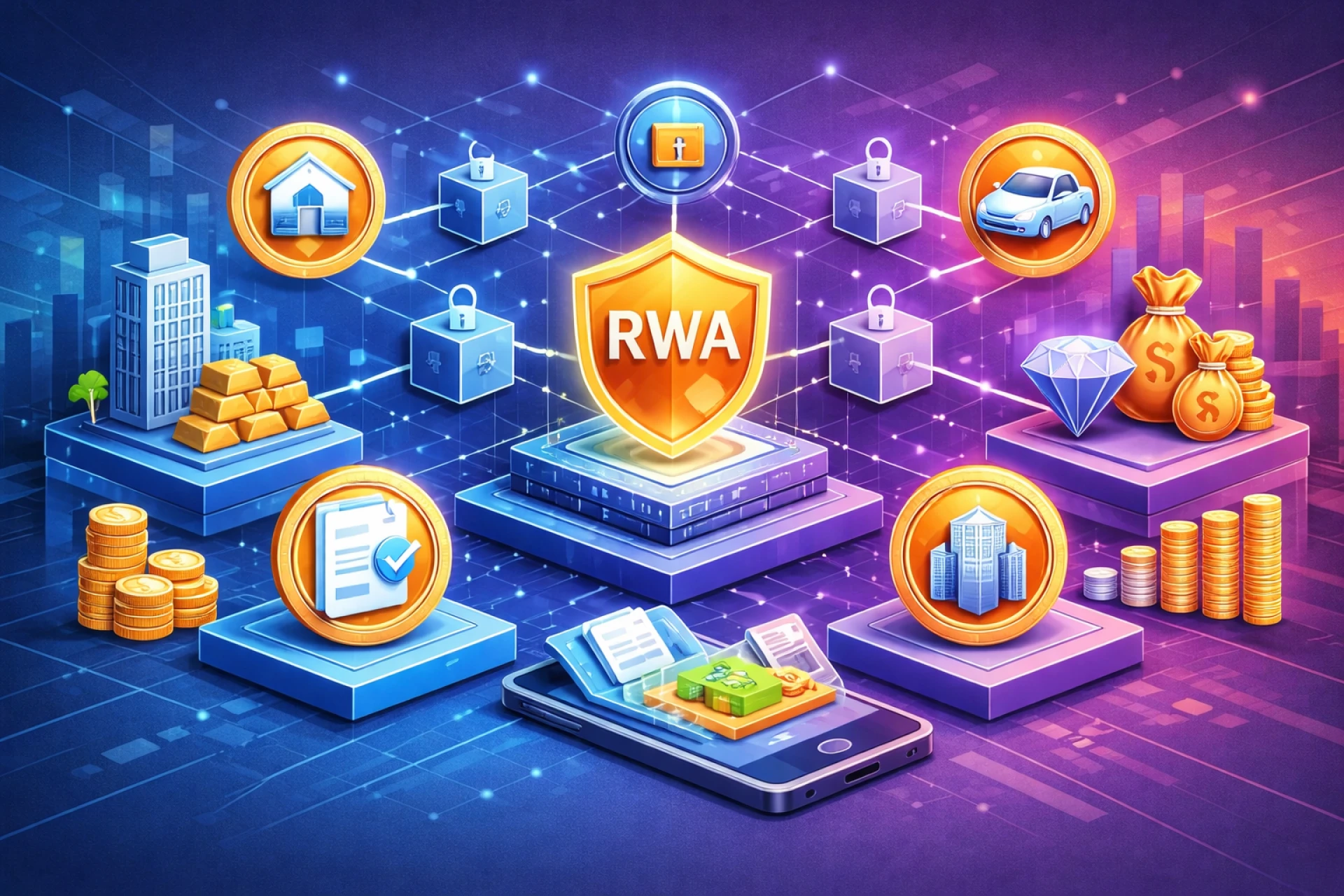
The financial world is undergoing a structural transformation. Traditional assets such as real estate, commodities, bonds, private equity, and invoices are increasingly being represented on blockchain networks. This evolution is commonly known as RWA Tokenization, and it is rapidly reshaping how ownership, liquidity, and compliance are managed in global markets.
At the center of this transformation lies a foundational element that often goes unnoticed by non-technical stakeholders: token standards. While the concept of tokenizing real-world assets sounds straightforward, the technical architecture behind these digital representations determines scalability, interoperability, security, and regulatory alignment.
RWA token standards define how asset-backed tokens are created, transferred, governed, and integrated across blockchain ecosystems. Without standardized frameworks, the vision of seamless Real World Asset Tokenization would remain fragmented and inefficient.
This article explores RWA token standards in depth, explaining their importance, technical foundations, regulatory implications, and future trajectory. It also outlines how enterprises can leverage RWA token development strategically through structured platform development and expert-led implementation.
Understanding RWA Tokenization at a Structural Level
Before diving into standards, it is essential to understand what RWA Tokenization truly represents.
RWA Tokenization refers to the process of converting tangible or financial assets into blockchain-based digital tokens. These tokens represent legal ownership or rights to an underlying asset. The assets can include:
- Commercial and residential real estate
- Debt instruments and bonds
- Private equity shares
- Commodities such as gold or oil
- Carbon credits
- Intellectual property rights
- Infrastructure projects
Real World Asset Tokenization enables fractional ownership, near-instant settlement, enhanced transparency, and global accessibility. However, these benefits only materialize when the token structure aligns with recognized blockchain standards.
This is where RWA token standards become the backbone of asset-backed blockchain systems.
What Are Token Standards and Why Do They Matter
Token standards are predefined technical rules that govern how tokens behave on a blockchain. They define how tokens are issued, transferred, approved, and interacted with by other smart contracts.
In the absence of standards, every token would function differently. That would create chaos in exchanges, wallets, compliance systems, and DeFi integrations.
For RWA tokens, standards are even more critical because they must accommodate:
- Regulatory compliance features
- Identity verification controls
- Transfer restrictions
- Asset redemption mechanisms
- Governance rights
- On-chain and off-chain data linkage
Without standardized structures, large-scale Real World Asset Tokenization would struggle to gain institutional trust.
The Evolution of Token Standards in Blockchain
The journey of token standards began with basic fungible tokens on early blockchain networks. Over time, use cases expanded beyond cryptocurrencies, requiring more advanced capabilities.
On Ethereum, foundational standards like ERC-20 enabled fungible tokens, while ERC-721 introduced non-fungible tokens. However, RWA Tokenization required hybrid models capable of embedding compliance and programmable restrictions.
As a result, new standards evolved to support asset-backed tokens. These standards were designed to bridge traditional finance requirements with blockchain innovation.
Today, a professional rwa tokenization development company evaluates which token standard best aligns with an enterprise’s asset type, regulatory obligations, and market objectives.
Major Token Standards Used in RWA Token Development
ERC-20 and Its Limitations
ERC-20 remains the most widely adopted fungible token standard. It works well for uniform assets such as stablecoins. However, it lacks native compliance controls and asset-specific governance features.
For basic asset-backed tokens that require liquidity but minimal restriction, ERC-20 may suffice. But for institutional-grade Real World Asset Tokenization, more advanced standards are typically required.
ERC-721 for Unique Asset Representation
ERC-721 enables non-fungible tokens, making it ideal for representing unique assets such as specific properties or artworks.
In RWA token development, ERC-721 can be used for representing title ownership or exclusive rights. However, it may not be ideal for fractionalization unless combined with other mechanisms.
ERC-1155 for Hybrid Asset Structures
ERC-1155 allows both fungible and non-fungible tokens within the same contract. This flexibility makes it useful for complex asset structures where different ownership classes exist.
Security Token Standards
More specialized standards such as ERC-1400 and similar frameworks introduce built-in compliance layers. These standards support:
- Transfer restrictions
- Whitelisting of verified investors
- Partitioned ownership classes
- Forced transfers under regulatory mandate
For enterprises seeking institutional-grade Real World Asset Tokenization Services, these security-focused standards are often preferred.
How RWA Token Standards Support Regulatory Compliance
Compliance is not optional in asset-backed blockchain systems. Unlike purely decentralized tokens, RWA tokens represent legally enforceable rights tied to physical or financial assets.
Token standards for RWA must therefore accommodate:
- Know Your Customer procedures
- Anti-Money Laundering rules
- Accredited investor restrictions
- Jurisdiction-based transfer controls
- Reporting obligations
Advanced token standards integrate compliance at the smart contract level. For example, transfer functions can verify whether both sender and receiver meet regulatory conditions before approving a transaction.
A Real world asset tokenization platform company typically integrates identity verification modules directly into the token contract logic, ensuring compliance is automated rather than manually enforced.
This programmable compliance is one of the most powerful advantages of blockchain-based asset representation.
The Technical Architecture Behind RWA Token Standards
RWA token standards do more than define transfer logic. They integrate multiple architectural layers:
Smart Contract Layer
This layer defines token behavior, supply rules, compliance checks, and governance mechanisms.
Asset Custody Layer
Since RWA tokens represent real assets, custody frameworks must be established. This includes:
- Legal ownership documentation
- Trustee arrangements
- Special Purpose Vehicles
- Escrow systems
The token standard must align with legal structuring so that digital ownership corresponds with enforceable rights.
Oracle and Data Integration Layer
To maintain asset transparency, off-chain data such as valuations, rental income, or commodity prices must be integrated into the blockchain.
Token standards must allow secure data feeds without compromising integrity.
Governance and Voting Layer
For fractional ownership models, token holders may require voting rights. Advanced standards enable on-chain governance tied directly to token balances.
An experienced rwa tokenization platform development company ensures that all these architectural components work cohesively rather than independently.
Fractionalization and Liquidity Mechanisms
One of the most transformative aspects of RWA Tokenization is fractional ownership. Token standards determine how fractions are issued, transferred, and redeemed.
For example, a commercial property worth ten million dollars can be divided into ten thousand tokens. Each token represents a proportional share.
Token standards must clearly define:
- Divisibility rules
- Voting rights allocation
- Profit distribution logic
- Redemption procedures
- Secondary market transfer conditions
Without standardized fractionalization frameworks, investor trust diminishes.
This is why structured rwa tokenization platform development emphasizes precision in token logic and governance design.
Interoperability Across Blockchain Ecosystems
Interoperability is crucial for large-scale Real World Asset Tokenization. Enterprises do not want their assets locked into isolated ecosystems.
Token standards that align with widely adopted blockchain protocols ensure compatibility with:
- Exchanges
- DeFi platforms
- Custodial services
- Institutional wallets
- Cross-chain bridges
Interoperable standards allow RWA tokens to participate in decentralized finance ecosystems, increasing liquidity and capital efficiency.
A professional RWA Tokenization Company evaluates interoperability needs before selecting a token framework.
Asset Classes and Their Token Standard Requirements
Different asset types require different structural considerations.
Real Estate
Real estate tokens often require fractionalization, rental income distribution, and governance rights. Security-oriented standards are typically used.
Bonds and Debt Instruments
Debt tokens must include maturity dates, coupon payments, and structured redemption schedules.
Commodities
Commodity-backed tokens require proof of reserves and transparent custody mechanisms.
Private Equity
Private equity tokens require transfer restrictions and accredited investor controls.
Each use case influences the selection of token standards and architectural design. This is where tailored Real World Asset Tokenization Offerings become essential rather than generic templates.
Smart Contract Security and Risk Mitigation
Security is a non-negotiable component of RWA token standards.
Smart contract vulnerabilities can compromise millions in tokenized assets. Therefore, RWA token development includes:
- Code audits
- Formal verification
- Penetration testing
- Governance safeguards
- Emergency pause mechanisms
A trusted RWA tokenization development company implements multi-layered security strategies to protect investor funds and institutional credibility.
The Role of a RWA Tokenization Platform Development Company
Enterprises entering the tokenization space often underestimate technical complexity.
A dedicated rwa tokenization platform development company typically provides:
- Token standard selection
- Smart contract architecture
- Legal alignment frameworks
- Custody integration
- Compliance automation
- Marketplace development
- Investor dashboards
- Secondary trading infrastructure
Real world asset tokenization platform development requires deep expertise across blockchain engineering, finance, and regulatory structuring.
A capable Real world asset tokenization platform company bridges these domains to deliver end-to-end solutions.
Institutional Adoption and Standardization Trends
Institutional players are increasingly exploring asset-backed blockchain solutions. As this trend accelerates, standardization becomes even more important.
Institutions demand:
- Transparent audit trails
- Predictable compliance behavior
- Interoperability with legacy systems
- Scalable transaction throughput
RWA Tokenization Services that rely on recognized token standards are far more likely to attract institutional capital.
The next phase of market growth will likely involve further refinement of standardized frameworks tailored specifically for regulated assets.
Challenges in Designing RWA Token Standards
Despite progress, challenges remain:
- Regulatory fragmentation across jurisdictions
- Legal enforceability variations
- Custody risk management
- Cross-chain complexity
- Data accuracy and oracle reliability
Addressing these challenges requires collaborative efforts between developers, regulators, financial institutions, and platform providers.
Advanced rwa tokenization platform development strategies integrate flexible compliance modules to adapt to evolving legal landscapes.
The Future of RWA Token Standards
The future of Real World Asset Tokenization will likely include:
- Native compliance protocols embedded into blockchain infrastructure
- Cross-border regulatory harmonization
- Automated asset valuation integrations
- AI-driven governance mechanisms
- Institutional DeFi integration
As innovation continues, token standards will evolve from simple technical specifications into comprehensive financial infrastructure frameworks.
Enterprises that invest early in structured RWA token development and partner with a forward-thinking RWA Tokenization Company will be better positioned to capture liquidity, reduce friction, and expand globally.
Conclusion: Token Standards as the Backbone of Asset-Backed Blockchain
RWA Tokenization is not just a trend. It represents a fundamental re-architecture of global asset ownership. However, this transformation depends on more than blockchain enthusiasm. It relies on precise, secure, and compliant token standards.
Token standards define how assets are represented, transferred, governed, and integrated into financial ecosystems. They enable fractionalization, automate compliance, enhance transparency, and unlock global liquidity.
For enterprises considering Real World Asset Tokenization Services, understanding token standards is not optional. It is the foundation upon which scalable, secure, and compliant asset-backed ecosystems are built.
Through strategic rwa tokenization platform development, guided by experienced experts and supported by robust standards, the future of asset-backed blockchain infrastructure is being constructed today.
The organizations that recognize the importance of standardized RWA token development will shape the next generation of global capital markets.