
 When planning a new roof installation, most homeowners focus on the tiles they can see from the street. That matters, but the layers underneath matter as well.
In Melbourne, roof underlayment and sarking play a practical role in helping tiled roofs manage moisture, heat, wind-driven rain, and day-to-day weather exposure.
What roof underlayment and sarking actually do
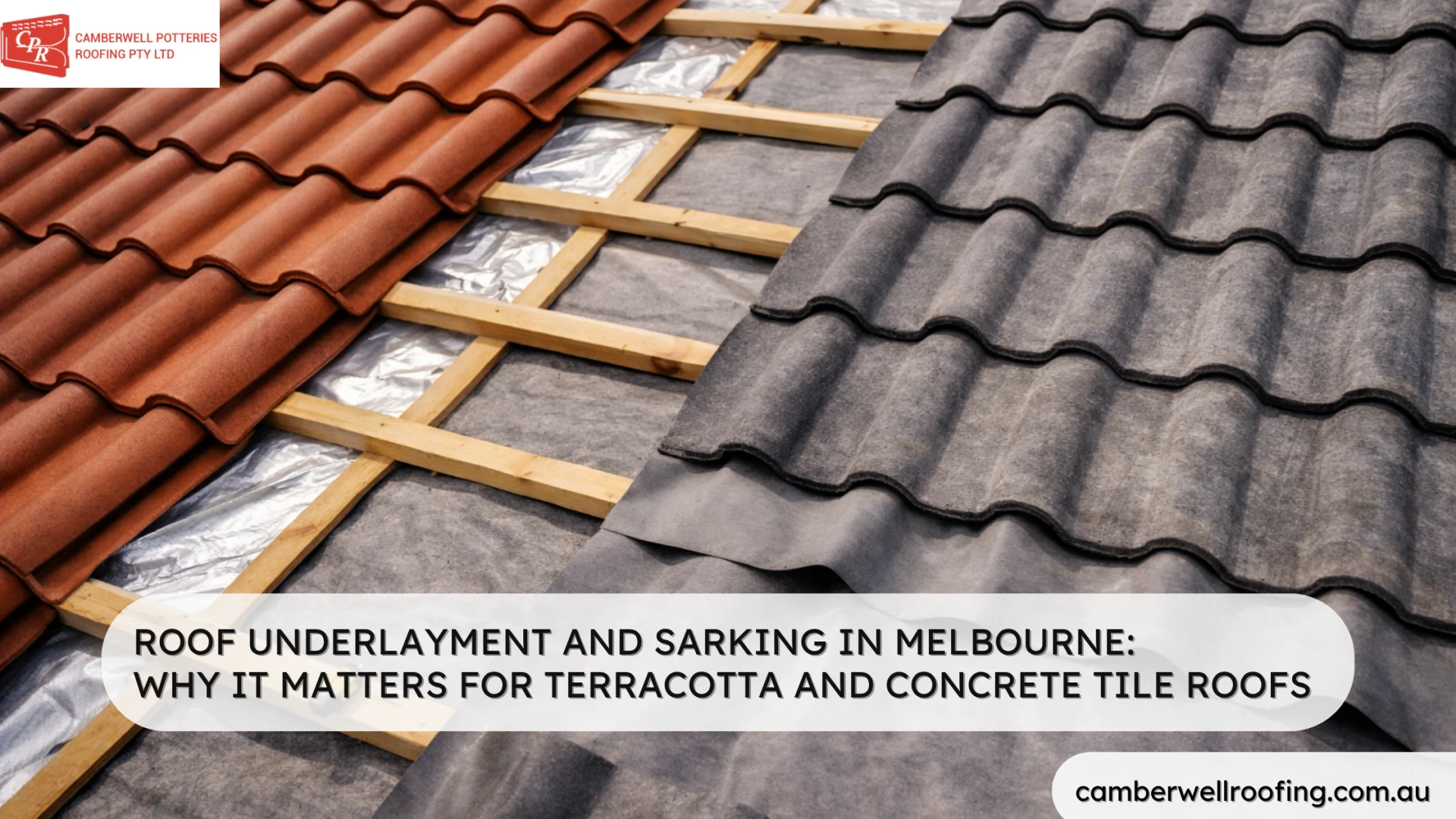
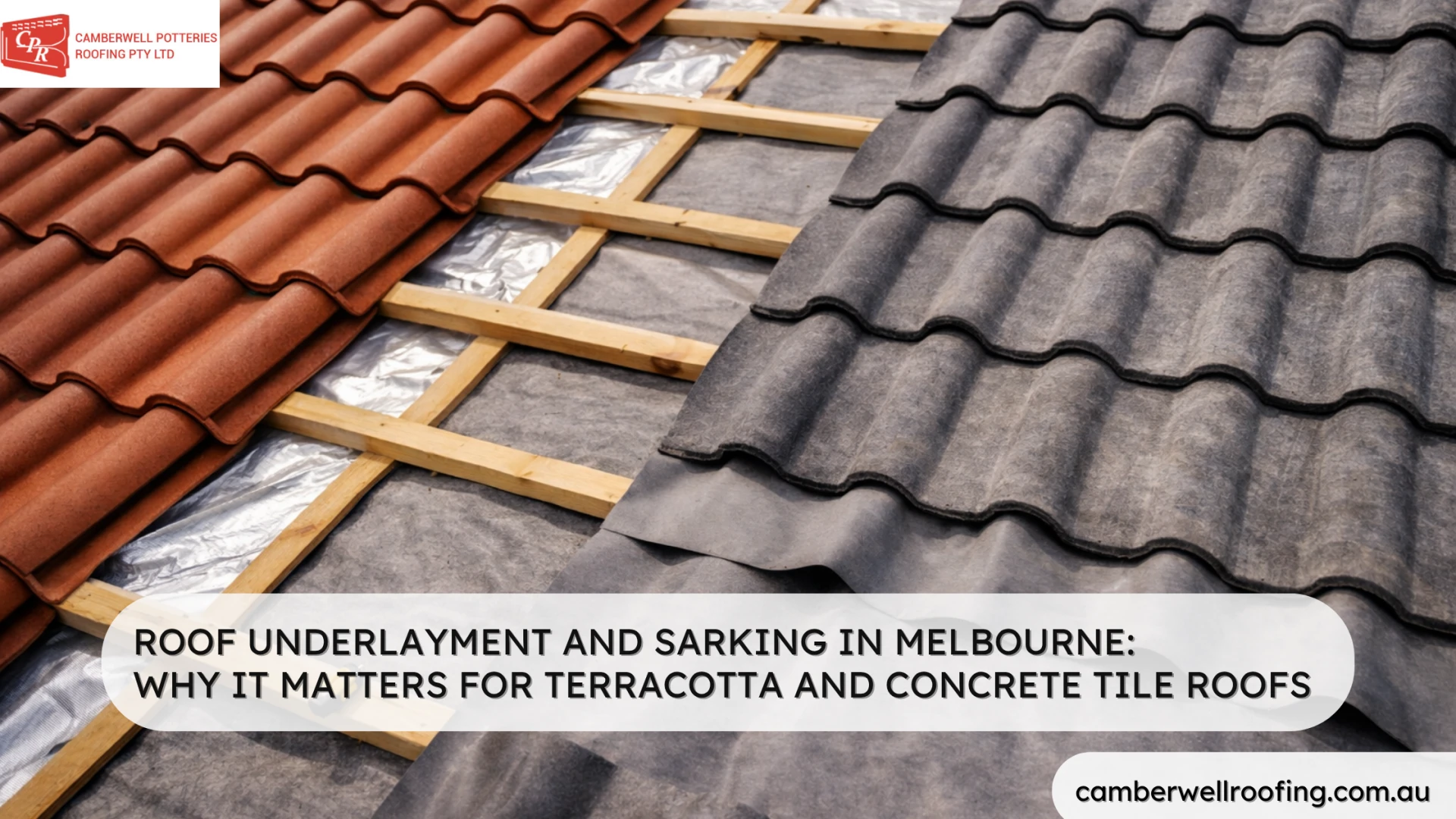
Underlayment sits beneath the outer roofing material and above the roof deck. Its job is to provide an added protective layer under the tiles. If rain is pushed under the tile profile during rough weather, the underlayment helps direct that moisture away from the roof structure.
Sarking is a foil membrane installed under the battens and tiles. Sarking is highly recommended for all roofing types, including terracotta and concrete roof tiles, and that it can reflect up to 95 per cent of radiant heat away from the roof space on a summer day. The same page explains that sarking also helps retain warmth during colder months when used with tiled roofing.
Why this matters in Melbourne
Melbourne roofs deal with changing conditions across the year. A tiled roof needs to handle hot days, cold nights, strong winds, and periods of rain. That is why the visible tile is only one part of the system.
A properly designed tiled roof usually needs:
- The roof deck in sound condition
- A suitable underlayment layer
- Sarking where specified
- Flashing around roof penetrations and edges
- Ventilation that suits the roof design
When these parts work together, the roof has a better chance of performing properly over time. When one layer is missed or handled poorly, problems can show up earlier than expected.
Why tiled roofs need this extra layer of protection
Terracotta and concrete roof tiles are strong roofing materials, but tile roofs are built as systems with overlapping components. Water shedding depends on correct installation, correct pitch, correct flashing, and the protective layers below the tiles.
Terracotta tiles are durable, low maintenance, and suited to harsh Australian conditions, while its concrete tile page highlights modern concrete tile options for Melbourne homes. The business also points out in its blog that terracotta and concrete tiles are both common choices for Melbourne homes. That makes the quality of the base layers especially important for homeowners choosing tiled roofing.
Terracotta and concrete tiles: where underlayment and sarking fit
Here is a simple view of how these layers fit into a tiled roof project.
This matters during new roofing installation because the roof is being built as one complete system. Focusing only on the tiles can lead to weak planning.
For terracotta tile roofs
Terracotta remains a popular option because of its long service life and strong appearance. In fact, CSR Monier terracotta tiles come with a 50 year warranty and colour that lasts a lifetime, and the company has more than 60 years of experience servicing Melbourne.
If you are considering terracotta roof tiles Melbourne, the support layers below them still need careful attention. Sarking helps manage radiant heat and adds moisture protection under the roof space. Underlayment helps back up the tile system during wet or windy weather.
For concrete tile roofs
Concrete tiles are also widely used on Melbourne homes. They are available in modern profiles and are often selected for their consistent finish and practical performance across different residential designs.
If your project involves concrete roof tiles Melbourne, underlayment and sarking still matter for the same practical reasons. They help support the overall roof system, reduce the effect of moisture entry under tiles, and assist with year-round roof space performance.
What homeowners should ask before starting
If you are getting a new roof Melbourne project priced, ask clear questions before the work begins:
- What underlayment will be installed under the tiles?
- Will sarking be included in the roof build?
- How will flashings be handled around valleys, chimneys, and penetrations?
- Does the installation suit the selected tile profile and roof pitch?
These are useful questions for any new roofing Melbourne job because they move the discussion beyond surface appearance and into long-term roof performance.
Final word
For tiled roofs in Melbourne, underlayment and sarking are important parts of the overall build. They support the performance of the roof under the tiles, help manage heat and moisture, and add another layer of protection where weather conditions put pressure on the roof system. If you are planning a tile roof project, it is worth treating these layers as standard parts of the design from the very beginning.