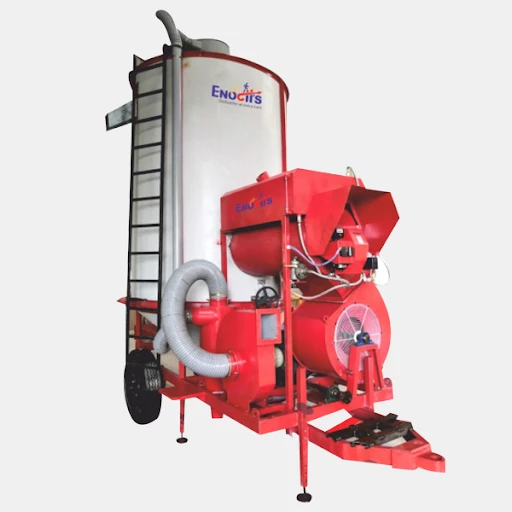
India is one of the world's leading rice producers, with the grain serving as a staple food for a significant portion of the population. From lush fields in Punjab to the river-fed plains of West Bengal, rice cultivation is a lifeline for millions of farmers. However, harvesting rice is only part of the journey—how it's processed after harvest, especially drying, plays a crucial role in determining its quality, shelf life, and market value.
This is where rice mill dryers come into play, and the rise of specialized rice mill dryer manufacturers in India is revolutionizing post-harvest processing. As demand for efficient, scalable, and energy-saving solutions grows, Indian manufacturers are stepping up, offering advanced machinery tailored to the country’s climatic and agricultural conditions.
The Importance of Rice Drying in Post-Harvest Processing
Drying is a critical step in rice milling. Freshly harvested paddy contains high moisture content, typically ranging between 20-25%. If not dried properly, this moisture becomes a breeding ground for fungi, molds, and insects, leading to post-harvest losses and degradation in grain quality.
Traditional sun-drying methods, while still practiced in many rural areas, are time-consuming, weather-dependent, labor-intensive, and often result in uneven drying. This not only affects the yield but also compromises the grain’s appearance and cooking quality.
Modern rice mill dryers address these issues by offering controlled, uniform drying that maintains grain integrity, reduces breakage during milling, and improves overall output. These systems also reduce drying time from days to mere hours.
Growth of the Dryer Manufacturing Sector
Over the last two decades, India's agricultural machinery sector has undergone significant transformation. As awareness about post-harvest technology grows among farmers, millers, and agribusinesses, the demand for mechanical dryers has increased steadily.
Manufacturers across India have recognized this demand and responded with a range of dryer systems designed for varying scales of operation—from small-scale farms to large commercial rice mills. These machines not only cater to local needs but are increasingly being exported to neighboring countries, thanks to India's cost-effective engineering and innovation.
Key Technologies in Indian Rice Dryers
Indian manufacturers offer a wide variety of drying technologies, including:
- Batch Dryers
- Ideal for small and medium-scale operations, batch dryers allow a fixed quantity of paddy to be dried at a time. These dryers are easy to install and operate, making them popular among small mill owners.
- Continuous Flow Dryers
- Designed for large-scale operations, continuous flow dryers offer uninterrupted drying with high throughput. They allow rice to move through the dryer while hot air is blown through it, ensuring efficient moisture removal.
- Steam and Biomass-Fired Dryers
- With energy costs being a major concern, many manufacturers have innovated systems that run on steam or biomass like rice husk. These environmentally friendly options are especially attractive in regions with access to agricultural waste.
- Vertical and Horizontal Dryers
- Depending on space availability and drying needs, Indian manufacturers offer both vertical tower dryers and horizontal flatbed dryers. Each has its own advantages in terms of efficiency, space, and operational cost.
- Hybrid and Solar-Assisted Dryers
- To make drying more sustainable, some manufacturers are integrating solar heating with conventional systems. These hybrid models reduce energy consumption and carbon emissions, aligning with global climate goals.
Benefits of Locally Manufactured Dryers
One of the major advantages of choosing locally manufactured rice dryers is customization. Indian manufacturers understand the nuances of regional climates, crop varieties, and farmer practices. This enables them to offer machines that are not only robust but also compatible with Indian conditions.
Other benefits include:
- Affordable Pricing: Local production reduces costs significantly, making dryers more accessible to small and mid-sized farmers.
- After-Sales Support: Domestic manufacturers offer quicker service and easy availability of spare parts.
- Adaptability: Many manufacturers provide modular designs that can be upgraded as a business grows.
Challenges in Adoption
Despite the availability of quality dryers, adoption rates among smallholder farmers remain low in some areas. Key barriers include:
- Initial Investment: Even the most affordable dryers can be a significant investment for small farmers.
- Lack of Awareness: Many farmers still rely on traditional methods due to lack of exposure to mechanized drying.
- Infrastructure Limitations: Electricity supply and space constraints can hinder the installation and use of dryers in rural regions.
To overcome these challenges, government schemes, cooperatives, and NGOs are increasingly playing a role in financing and promoting post-harvest technologies.
Government Support and Future Prospects
The Indian government, through initiatives like PM FME (Formalization of Micro Food Processing Enterprises) and Sub-Mission on Agricultural Mechanization (SMAM), is actively promoting mechanization in agriculture. Subsidies and financial incentives are available for purchasing post-harvest equipment, including dryers.
Additionally, the push towards doubling farmer incomes has brought greater focus to reducing post-harvest losses, making dryer technology an essential component of rural development strategies.
In the coming years, as climate variability increases and pressure mounts to reduce losses and improve grain quality, rice mill dryers will become indispensable. Indian manufacturers are well-positioned to lead this transformation, not only meeting domestic demand but also becoming global suppliers of post-harvest machinery.
Conclusion
The evolution of rice mill dryer manufacturing in India marks a significant step forward in agricultural modernization. By replacing inefficient traditional drying methods with advanced mechanical systems, these manufacturers are helping improve grain quality, farmer incomes, and food security.
As awareness grows and infrastructure improves, the adoption of dryer technology is expected to accelerate, especially with sustained government support. The future of post-harvest rice processing in India looks promising—and dryer manufacturers are at the heart of this transformation.
URL: For more information, visit Enochsgroup : Rice Mill Dryer Manufacturers in india