Sydney blocks love a good view, but they rarely come flat. Between sloping sites, reactive soils, and sudden downpours, a “simple” retaining wall can become the thing that quietly protects (or compromises) the whole outdoor area.
A retaining wall isn’t just a border you stack up and forget. It’s a working structure that manages pressure, water, and movement, and it needs to match the site you actually have—not the one you wish you had.
If you’re planning a garden makeover, stabilising a driveway edge, or trying to reclaim usable space, the right choices early will save a lot of mess later.
Why Sydney sites make retaining walls tricky
Sydney’s terrain is a mixed bag: sandstone shelves, cut-and-fill blocks, and suburban yards where the “flat” part starts only after you’ve excavated. The wall has to cope with soil pressure, but water is often the real troublemaker.
Heavy rain events can turn a tidy backyard slope into a saturated load pushing hard on the back of the wall. If water can’t escape, pressure builds, and that’s when you start seeing bulging, cracking, or sections that slowly lean.
Access is the other hidden variable. If the only way in is through a narrow side path, the build method and material handling change, and so does the cost and timeline.
Common mistakes that lead to wall failures
Most retaining wall problems aren’t mysterious. They usually come from a few avoidable decisions.
One common mistake is treating drainage as optional. Without proper drainage behind the wall, water builds up and increases pressure, even on walls that look “overbuilt” on the front.
Another is underestimating how much the ground will move over time. Soil settlement, tree roots, and repeated wet-dry cycles can shift what felt solid on day one.
Choosing materials purely on appearance can also backfire. A finish that looks great in a showroom may not be the best match for salt air, shading, or the specific slope and water flow on your block.
Finally, people often start building before the scope is clear: wall height changes mid-job, levels aren’t confirmed, and suddenly you’re redesigning while you’re already paying for labour.
Decision factors that matter before you pick a wall type
Before you compare timber, concrete block, or stone, you’ll get a better outcome by working through the factors that actually decide what’s appropriate.
Height and what the wall is holding back
Higher walls carry more risk and complexity, because the pressure behind them increases quickly as height goes up. This isn’t the place for guesswork. Even modest height changes across a stepped yard can change how the structure needs to be approached.
Soil and slope behaviour
Some blocks stay put. Others shift with seasons, water, and excavation. If your site has a history of movement—cracking paths, doors sticking, uneven paving—treat that as useful information, not an annoyance.
Water paths and drainage options
Look at where water naturally runs during a storm. Does it funnel along a fence line? Pool near the house? Spill from a neighbour’s yard? Your wall needs a plan to move water away, not trap it.
If you’re already seeing leaning, cracking, bulging, or soggy spots that don’t dry out, it may be time to consider retaining wall repair services for North Shore Sydney. The goal is to identify what’s driving the movement (often water pressure, poor backfill, or footing issues) before small defects become a larger rebuild.
Material choice: lifespan, maintenance, and finish
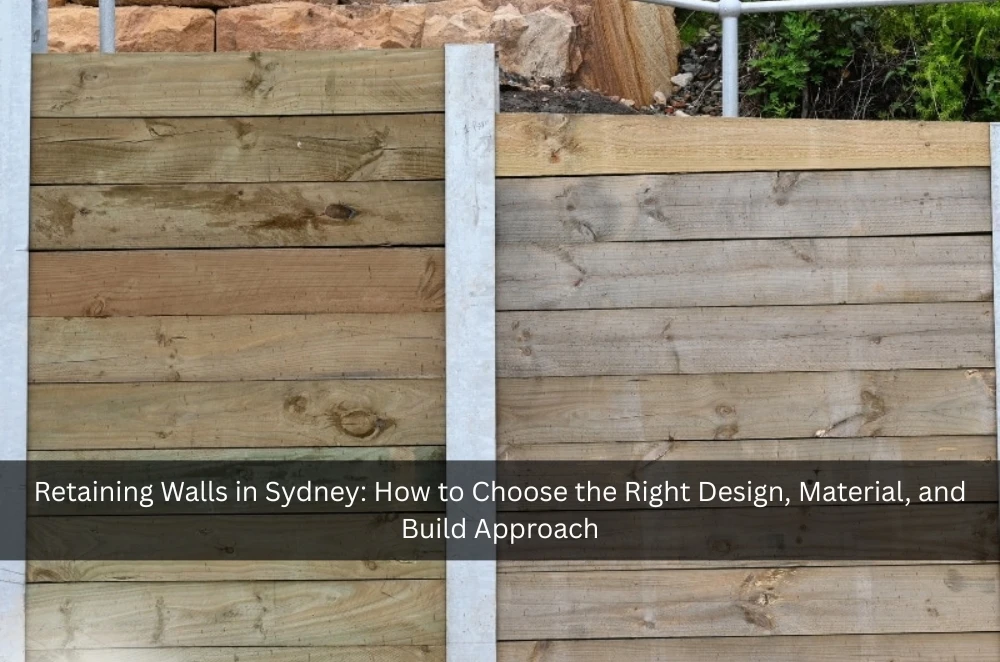
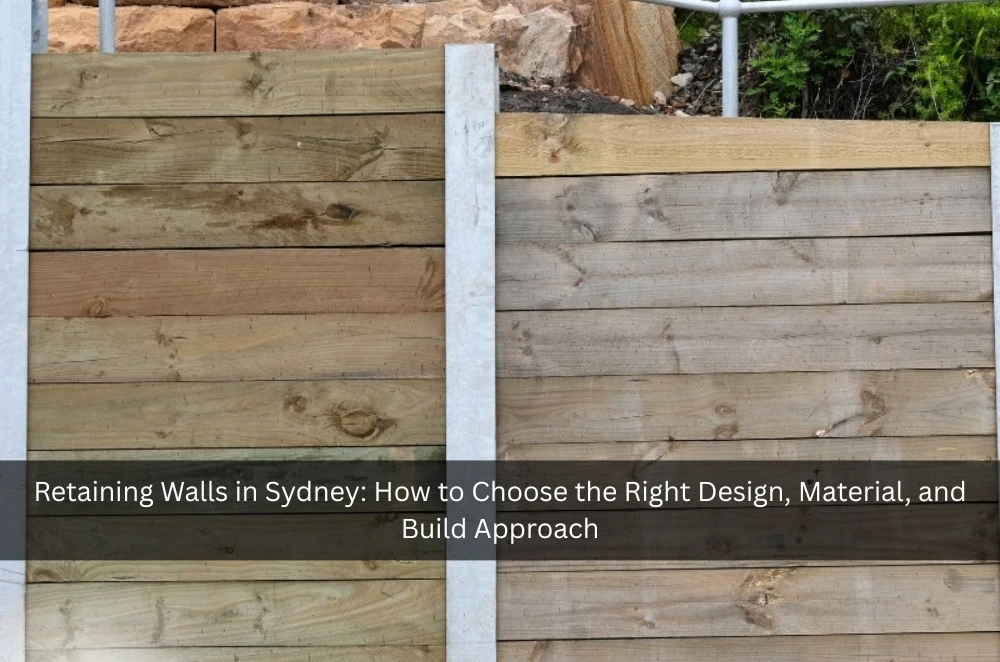
- Timber sleepers can be cost-effective and quick to install, but they’re not always the longest-lasting option, especially where drainage is poor or the wall stays damp.
- Concrete block systems are popular for clean lines and durability, with lots of finish options. They can suit stepped designs and tighter spaces, depending on the system used.
- Natural stone or sandstone can look excellent in Sydney gardens, but it’s not automatically “set and forget”. The build method, base preparation, and drainage still decide the long-term result.
Access and construction method
Can materials be carried in by hand, or do you need machinery? Is there a narrow side passage, stairs, or tight setbacks? Access affects the labour profile, spoil removal, and how practical certain materials are.
Aesthetics and how the wall meets the rest of the yard
Walls rarely live alone. Consider what’s above and below: paving, turf, garden beds, fences, lighting, and steps. A wall that ignores these connections can look like an afterthought, even if it’s structurally fine.
A straightforward process that keeps projects predictable
Retaining walls go better when you treat them like a small project, not a weekend task. A simple process helps you control cost, quality, and downtime.
Start by defining the goal: are you creating a level area, preventing erosion, supporting a driveway edge, or making room for planting? Different goals favour different wall layouts and finishes.
Then confirm levels and boundaries. Even basic measurements and photos of key areas will prevent redesign later. If the wall is near fences or structures, note what can’t be disturbed.
Next, map water movement. Where does runoff come from and where should it go? If you’re adding paving, turf, or garden beds, check how that changes drainage patterns.
After that, choose materials and finishes that match the conditions. This is where “pretty” meets “practical”: shade, dampness, access, and long-term upkeep all matter.
Finally, plan the aftercare. Walls aren’t high-maintenance, but they do need sensible finishing: surface water directed away, planting that won’t destabilise the backfill, and checks after big weather.
Operator Experience Moment
In the field, the biggest surprises tend to come from what’s behind the wall, not what’s visible from the front. I’ve seen walls that looked strong and tidy, but started to lean because the drainage line was never properly thought through. When you take an extra hour to understand where water is coming from and where it can exit, you usually save days of frustration later.
Local SMB Mini-Walkthrough
A small hospitality venue in Sydney wants to tidy the rear courtyard to create more usable seating.
The space slopes toward a boundary fence and gets sheet runoff in heavy rain.
A low retaining wall could gain a flat strip, but only if drainage is redirected away from door thresholds.
Access is through a narrow laneway, so material choice needs to be manageable without heavy machinery.
Finish matters because customers see it up close, so the wall should integrate with paving edges.
The venue schedules work early week to avoid peak trade disruption.
After completion, the team checks runoff behaviour in the first big storm and adjusts surface falls if needed.
Practical Opinions
Prefer drainage clarity over fancy finishes.
Pay for a good scope early to avoid expensive mid-job changes.
Choose a material you can realistically maintain.
A simple first-action plan for the next 7–14 days
Day 1–2: Walk the site after rain (or hose-test) to see real water paths. Note pooling, runoff entry points, and any damp zones that linger.
Day 3–4: Measure the rough wall length and approximate height changes. Take photos from multiple angles, including what’s above and below where the wall will sit.
Day 5–7: Decide what the wall must achieve (create level space, stabilise soil, support access). List any “non-negotiables” like access constraints, fence lines, or a finished look that must match existing materials.
Day 8–10: Shortlist two material approaches that make sense for your conditions and upkeep preferences. Consider how each choice affects steps, paving joins, and garden bed layout.
Day 11–14: Prepare a clean scope summary for quoting: location, approximate heights, drainage observations, access notes, and preferred finish. This is the point where pricing conversations become more comparable and less guess-driven.
Key Takeaways
- Drainage and water pressure are the two main reasons most retaining walls fail.
- Height, soil movement, and access drive the “right” wall approach more than aesthetics do.
- A clear scope and level check early reduces redesign, cost blowouts, and timeline stress.
- Material choice should match site conditions and the maintenance you’ll actually do.
Common questions we hear from Australian businesses
How do I know if I need a retaining wall or just garden edging?
Usually, a retaining wall is needed when you’re holding back soil to create or protect a level change, not just defining a garden bed. A practical next step is to check whether soil is spilling, eroding, or pushing into paths after rain. In Sydney, even modest slopes can behave differently depending on soil and drainage, so observe the area during wet weather.
What’s the biggest factor that affects retaining wall cost?
It depends on height, access, drainage requirements, and material choice more than the length alone. A practical next step is to write down access constraints (narrow paths, stairs, limited entry) and note where spoil can be removed. In many Sydney properties, access limitations are a bigger cost driver than people expect.
Can I build the wall first and “sort drainage later”?
In most cases, that’s where projects get into trouble, because drainage is part of what the wall is designed to manage. A practical next step is to identify runoff paths and plan where water will exit before finalising the wall layout. With Sydney’s intense rain events, retrofitting drainage after the fact can be harder and more disruptive.
What maintenance should I expect once the wall is built?
Usually,y it’s light maintenance: keep surface water directed away, avoid planting that overloads the backfill, and check for early movement after major storms. A practical next step is to inspect the wall line every few months for new cracks, bulges, or persistent damp patches. In Sydney’s coastal and leafy suburbs, moisture and roots are common long-term factors to monitor.