Regulatory Services in Japan
Japan is one of the world's most advanced pharmaceutical markets, offering immense opportunities for companies seeking to expand their global presence. However, entering this highly regulated market requires a thorough understanding of local compliance requirements, regulatory pathways, and approval procedures. This is where Regulatory Services in Japan become essential for pharmaceutical, biotechnology, and medical device companies.
Why Japan Is an Important Pharmaceutical Market
Japan has a well-established healthcare system and one of the largest pharmaceutical markets globally. The country's emphasis on product quality, patient safety, and regulatory compliance makes it an attractive destination for innovative healthcare products. However, navigating the approval process requires expertise in local regulations and documentation standards.
Understanding Regulatory Services in Japan
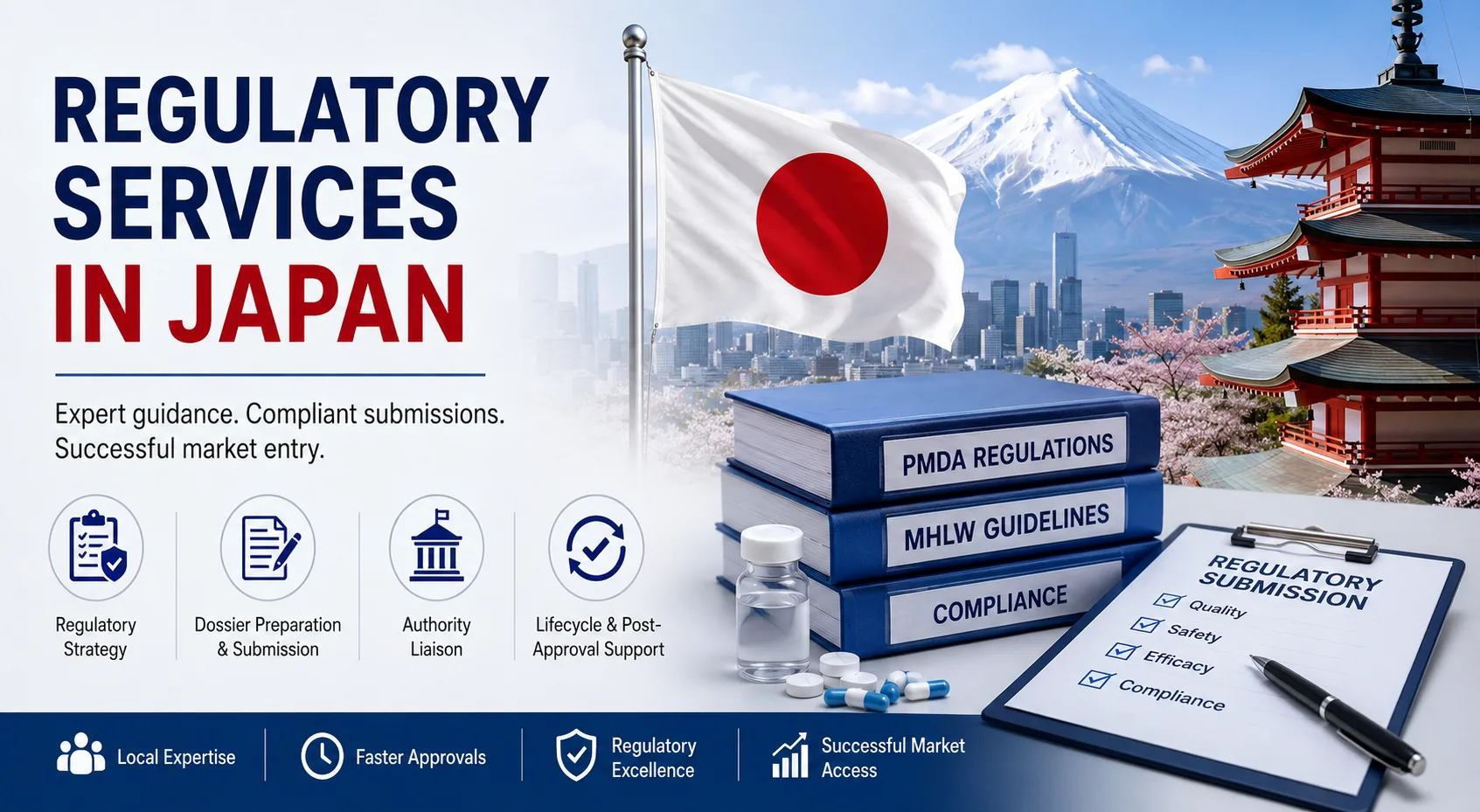
Regulatory Services in Japan encompass a wide range of activities that help pharmaceutical and healthcare companies comply with Japanese regulatory requirements. These services support organizations throughout the product lifecycle, from development and clinical trials to product registration and post-market compliance.
Professional regulatory support minimizes delays, improves submission quality, and helps companies achieve faster market entry while maintaining compliance with Japanese regulations.
Key Components of Regulatory Services
Regulatory Strategy
A well-defined regulatory strategy helps companies determine the most efficient approval pathway based on product type, intended use, and applicable regulatory guidelines.
Product Registration
Preparing and submitting regulatory dossiers is one of the most critical aspects of market authorization. Accurate documentation, technical data, and compliance with Japanese submission standards contribute significantly to successful approvals.
Clinical Trial Support
Companies conducting clinical studies in Japan must comply with local clinical regulations and ethical standards. Regulatory experts assist with documentation, protocol reviews, and communication with relevant authorities.
Regulatory Documentation
Proper documentation is essential throughout the product lifecycle. Regulatory professionals prepare, review, and maintain technical documents, ensuring consistency with Japanese regulatory expectations.
Post-Marketing Compliance
Regulatory responsibilities continue after product approval. Ongoing activities include safety reporting, product variations, renewals, and regulatory updates to ensure continuous market compliance.
Benefits of Professional Regulatory Support
Partnering with experienced regulatory professionals offers several advantages:
- Faster regulatory submissions
- Reduced compliance risks
- Improved documentation quality
- Efficient communication with regulatory authorities
- Better project planning and execution
- Smooth market entry for pharmaceutical products
These benefits allow companies to focus on innovation while experienced professionals manage complex regulatory requirements.
Challenges in the Japanese Regulatory Environment
Japan's regulatory framework is comprehensive and requires careful planning. Some common challenges include:
- Complex regulatory procedures
- Extensive technical documentation
- Changing regulatory requirements
- Language and communication barriers
- Strict quality and compliance standards
- Detailed review and approval processes
Working with experienced regulatory specialists helps organizations overcome these challenges effectively.
Pharmacovigilance Services in Japan
Pharmacovigilance Services in Japan play a vital role in ensuring the continued safety and effectiveness of pharmaceutical products after they enter the market. These services involve monitoring adverse drug reactions, managing safety data, preparing periodic safety reports, signal detection, risk assessment, and maintaining compliance with Japan's pharmacovigilance regulations. As regulatory requirements continue to evolve, pharmaceutical companies rely on experienced pharmacovigilance professionals to establish robust safety monitoring systems, support post-marketing surveillance, and ensure timely reporting to regulatory authorities. Effective pharmacovigilance not only helps organizations maintain regulatory compliance but also strengthens patient safety and enhances confidence in healthcare products throughout their lifecycle.
Choosing the Right Regulatory Partner
Selecting a reliable regulatory partner is an important business decision. Companies should evaluate service providers based on industry experience, regulatory expertise, knowledge of Japanese requirements, project management capabilities, and commitment to quality.
An experienced regulatory partner can simplify complex processes, reduce approval timelines, and support long-term compliance throughout the product lifecycle.
Conclusion
Expanding into Japan presents significant growth opportunities for pharmaceutical and healthcare companies. However, success depends on understanding and complying with the country's regulatory framework. Leveraging professional Regulatory Services in Japan enables organizations to streamline regulatory submissions, maintain compliance, and accelerate market access.
With the right regulatory expertise and strategic planning, businesses can confidently navigate Japan's regulatory landscape while delivering safe, high-quality healthcare products to patients.