
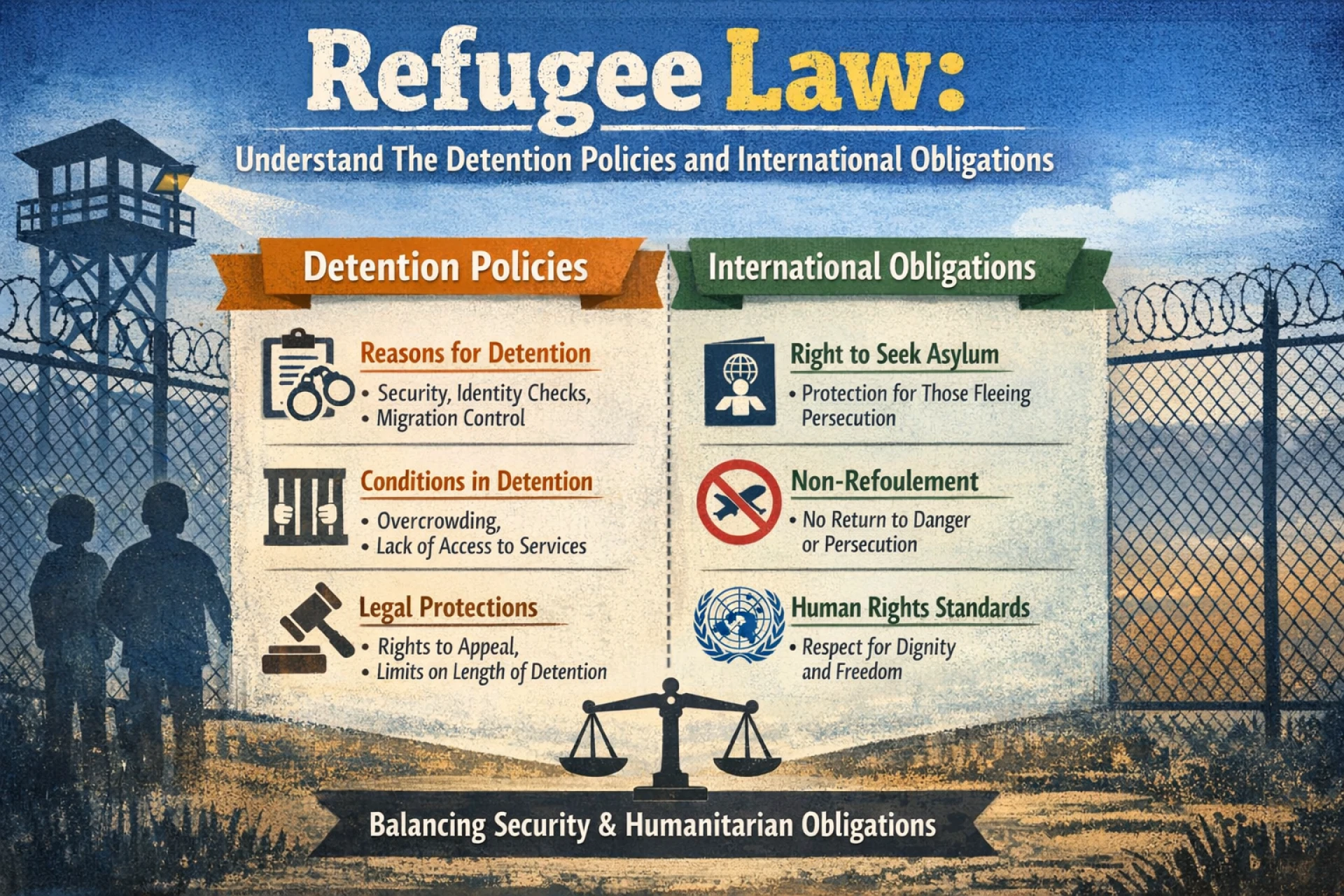
Refugee law is a vital part of global human rights law. It protects people who are forced to leave their countries due to war, persecution, or violence. One key issue with refugee law is detention. Most states in the UK detain refugees due to border control, security, or visa issues. However, an arrest must always follow global legal standards. Understanding the importance of refugee custody and policies of global duty can be a crucial way for students to learn legal principles and human rights. Moreover, it shows the balance between state and protection for refugees. Success in academics nowadays needs digital literacy. At the same time, students ask for law assignment help due to the increase in tough tasks, which means students look for quality help, which is now more critical than ever.
What is Refugee Law and detention?
Refugee law sets rules for the treatment of refugees and those who are seeking asylum. An arrest occurs when refugees are held in police custody, often while their legal status is decided. Although states have the power to control borders, global law can limit how detention centers are used. Detention should be lawful, necessary, and correct. Moreover, it must respect human rights. Therefore, understanding refugee detention can help students learn about state practice. It also shows how international law can protect the vulnerable.
Who Is Considered a Refugee?
A refugee is a person who can not return to their home country due to legal problems. This fear can be depended upon:
- Race
- Religion
- Nationality
- Political opinion
- Membership in a social group
This is from international refugee law. Therefore, once recognized, refugees are protected by the state. The state should not punish them because they want safety. Instead, legal safeguards must apply where needed.
What is Refugee Detention?
"Refugee arrest" refers to the condition of a person's freedom of movement. It usually happens at borders, airports, and detention centers. States can detain people to check their identity or for security reasons. However, detention should not be automated. Moreover, a different process can be applied first. As a result, custody remains a conditional step, not a regular one.
Why do states detain refugees?
States can detain refugees for multiple reasons, such as:
- To verify identity
- Prevent irregular entry
- Ensure national security
However, global law needs clear legal reasons. Therefore, detention must not be on an unclear basis. States must have a reason behind their actions and follow due process in every case.
International Legal Framework Governing Refugee Detention
International law gives strong protection to refugees against lawful problems. Different treaties and the U.N. can guide the state's behavior. These laws make sure that refugees are treated as humans. Moreover, they put stress on detention, and it should be limited to one clear basis. As a result, international treaties can stop states from unlawful detention and give justice to the individual. Understanding this legal framework can help students in the UK to learn whether detention policies work with legal demands.
1951 Refugee Convention and Its Role
The 1951 Refugee Convention is the foundation of refugee law. It stops and punishes refugees for illegal entry into the state. Moreover, it also protects the freedom of movement. Although it does not ban detention completely, it also sets limits. Therefore, states must act within their law. This convention can guide national laws and policies across the world. This is from international refugee law. Therefore, once recognized, refugees are protected by the state. The state should not punish them because they want safety. Instead, legal safeguards must apply where needed.
Human Rights Treaties and Detention
Human rights treaties can also apply to refugees. These can include:
- The right to liberty
- Protection from unlawful jail
- Right to justice
Therefore, refugees need human rights regardless of where they are from. Detention must follow fair laws. As a result, human rights law can give protection to the refugees.
Role of International Courts and Bodies
Global courts set the law for refugee jails and detention. They show whether states can respect legal needs. Moreover, UN bodies can see the rules. Their decision can impact nationwide laws. As a result, international oversight can help refugees from abuse. Furthermore, it also enabled regular shelter for refugees globally.
Challenges and State Practices in Refugee Detention
Despite the legal standards set, refugee detention remains one of the most controversial topics. Most states can struggle to balance border security and human rights. In practice, detention conditions can be poor. Moreover, legal procedures are ignored most of the time. Therefore, challenges can arise in applying the law across states. Understanding these problems can help students know and assess state behavior under refugee laws.
Arbitrary and Prolonged Detention
Unlawful detention occurs at the border and airports the most. Prolonged detention can last longer than needed. Moreover, it violates international law and treaties. Refugees can suffer mental and physical harm. Therefore, during the arrest period, regular case appeals in court and humane treatment of the refugee become crucial. Moreover, for advice through useful resources, such as assignment writing services, to clear any doubts about problems related to your academic exam.
Detention Conditions and Human Dignity
Conditions for detention must be respected, and refugees must be treated with dignity. However, problems can arise:
- Overcrowding on borders
- Lack of medical care and health care
- Limited legal access and issues with money
These conditions can lead to inhuman treatment. Therefore, states must improve their detention centers. Furthermore, fair treatment is a legal right, not a choice.
Alternatives to Detention and Best Practices
Alternatives to detention can offer better solutions. These can include:
- Report the needs of the refugees
- Housing based on community
- Legal release
Such measures can respect freedom while meeting state needs. Moreover, it can reduce costs and harm to people. International treaties promote these practices as the best solutions. As a result, supporting both human rights and managing migration becomes key. States need to adopt these processes to make sure they stay within fair international law.
Conclusion
Refugee law can play a critical role in protecting people who are from a war-torn country. The policy of detention must align with international demands. While states have rights for border control, these powers are not without limits. Detention should always follow a lawful process and give human rights to the individual. Furthermore, international treaties can help courts with legal detention. By understanding treaties and courts' state practice, students can gain insight into refugee protection and basic human rights. Ultimately, fair detention policies can strengthen the rule of law and uphold human dignity across the globe. Success in academics nowadays needs digital literacy. At the same time, students ask for law assignment help due to the increase in tough tasks, which means students look for quality help, which is now more critical than ever.