TL;DR: You cut your starch sugar desalination plant cost by matching stack size to your feed, running electrodialysis below the limiting current density, and building in pretreatment plus automated cleaning. At Laxminarayan Technologies we tune ED and EDBM systems to your syrup, so energy, membrane life, and capital all drop together.
Most plants overpay by design. Not by choice. They size for the worst-case feed, run the stack too hard, then eat the membrane bill later. Here's the blunt truth: your starch sugar desalination plant cost is mostly self-inflicted, and electrodialysis gives you real levers to bring it down. At Laxminarayan Technologies, we've commissioned ED and EDBM lines for glucose, xylose, and xylitol streams, and the biggest savings never come from a cheaper quote. They come from smarter sizing, honest feed data, and controls that keep current efficiency high. This article shows you where the money leaks, and how to plug it without gutting product quality.
What Is Starch Sugar Desalination by Electrodialysis?
Starch sugar desalination is the removal of salts and ionic ash from sugar liquors, glucose, xylose, and xylitol streams, using ion-exchange membranes under a direct-current field. Electrodialysis moves cations through cation membranes and anions through anion membranes, pulling ions from the diluate into the concentrate. Clean, low-ash sugar stays put.
Where Your Starch Sugar Desalination Plant Cost Actually Leaks
Look, cost hides in four places. Energy, membranes, labor, and oversizing. Nail those and the budget shrinks fast.
Energy per kg of salt. Push current density too high and voltage creeps like a stressed pump. According to Strathmann's electrodialysis work, energy demand climbs sharply once you cross the limiting current density.
Membrane replacement. Fouling and scaling kill membranes early. That's opex disguised as capex.
Manual operation. Operators chasing dials burn hours and make errors. Automation pays that back.
Oversized stacks. Sizing for a feed you rarely see means paying for idle membrane area every single day.
Truth is, feed data fixes most of this. Guess the feed, and you guess the cost.
How to Lower Energy Without Losing Recovery
Want the practical version? Here's how we trim kWh on a real line:
Sample the feed and measure conductivity, not assumptions.
Set current density below the limiting value, typically with a safety margin.
Stage the stack so early passes do the heavy lifting at high efficiency.
Recirculate concentrate smartly to hold recovery near 85 to 95%.
Trend voltage live and back off before efficiency drops.
Energy for sugar demineralization commonly lands around 0.5 to 2 kWh per kg of salt removed, feed-dependent. Stay disciplined and you sit at the low end.
ED or EDBM: Pick the One That Pays
Conventional electrodialysis demineralizes. Bipolar electrodialysis (EDBM) goes further, splitting salt into acid and base you can reuse. That choice changes your cost math.
Conventional ED: lower capital, cation and anion membranes only, best for straight low-ash sugar. Cheapest route when you just need clean product.
EDBM: higher stack cost because of bipolar membranes, but it recovers acid and alkali on-site, offsetting chemical purchases and effluent charges.
For a plain ash spec, ED wins on cost. If your removed salt has reuse value, EDBM earns back the premium. We size both and let your numbers decide, not a template.
How an EDBM Stack Splits Salt Into Acid and Base
Brine enters the salt compartment between membrane pairs.
The DC field drives cations to the cathode side, anions to the anode side.
The bipolar membrane splits water into H⁺ and OH⁺.
H⁺ combines with anions to form acid.
OH⁺ combines with cations to form base.
You draw off separate, reusable acid and alkali streams.
Cell-pair voltage sits in the low single volts. Keep it there and efficiency holds.
Use Cases Where Electrodialysis Cuts Cost
Same core tech, tuned per job. A few we build:
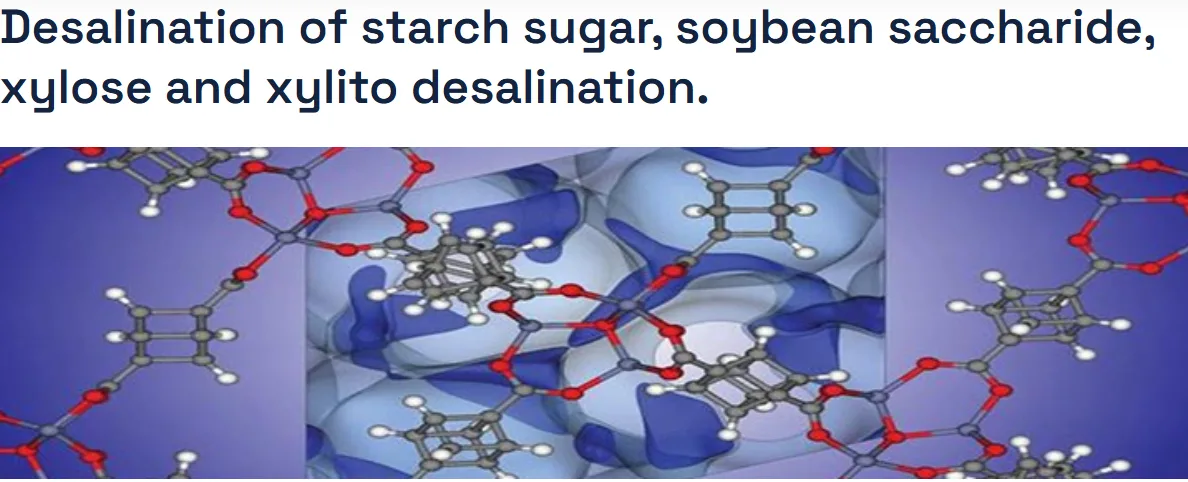
Sugar and saccharide demineralization. Our starch sugar, soybean saccharide, xylose, and xylitol desalination systems strip ash while protecting the sugar, cutting downstream load on chromatography and evaporation.
Acid and alkali recovery. With EDBM we turn salt in inorganic waste streams into usable acid and alkali, trimming both purchase and disposal spend.
Spent acid recovery. We recover acid from aluminum foil pickling lines so plants reuse it instead of neutralizing.
Food and beverage refinement. From fruit-juice desalination and tartaric acid removal in wine to deacidification, ED protects flavor and stability.
Specialty chemistry. In colloidal silica manufacture, controlled ion removal keeps particle chemistry on spec without excess reagent.
One platform, many jobs. The application sets the stack, and the stack sets the cost.
Challenges and How We Keep Costs Honest
No gloss. ED has limits, and pretending otherwise costs you at commissioning.
Membrane fouling. Sugar syrups carry colloids and organics that coat membranes like grime on a clogged filter, raising resistance and energy. We build in prefiltration and automated clean-in-place cycles, and we pick anti-fouling membrane grades matched to your load. Fouling still happens. Good design just makes recovery routine, not a fire drill.
Scaling from divalent ions. Calcium and sulfate love to precipitate near the concentrate. We manage flow ratios and periodic acid CIP to keep the membrane face clear, which stretches membrane life and flattens your opex curve.
Current efficiency drift. As selectivity slips, energy per kg climbs. Our touch-operated controls trend conductivity and voltage live, so operators catch drift early. According to membrane-science literature, holding current density below the limiting value is the single biggest lever for stable, low-cost operation.
Every Laxminarayan Technologies system ships modular, fully automated, and application-tailored, in both pilot and commercial scale, so you test small and scale on data, not hope.
The Real Path to a Lower Cost
Cutting your starch sugar desalination plant cost isn't about the cheapest membrane. It's about right-sizing, disciplined current density, and automation that protects both product and stack. Do that and capital, energy, and replacement costs all fall in line. Send us your feed sample and target ash, and Laxminarayan Technologies will size a modular ED or EDBM system built around your stream. Smaller bill. Cleaner sugar. Fewer surprises.
FAQs
How can electrodialysis reduce starch sugar desalination plant cost?
By sizing the stack to your real feed, running below the limiting current density, and automating cleaning, electrodialysis cuts energy, extends membrane life, and reduces labor. Recovery of 85 to 95% keeps sugar losses low, which protects your product yield and overall economics.
What is a typical energy consumption for sugar demineralization?
It usually falls around 0.5 to 2 kWh per kg of salt removed, depending on feed salinity and target ash. Higher removal and higher current density raise it, so tuning current density is the fastest way to keep energy cost down.
Should I choose ED or EDBM for cost savings?
Choose conventional ED for straightforward low-ash sugar at the lowest capital. Choose EDBM when the removed salt has reuse value, since on-site acid and alkali recovery offsets chemical purchase and effluent costs, often justifying the higher stack price.
How do I stop membranes from fouling and driving up cost?
Add prefiltration, run regular clean-in-place cycles, control flow ratios, and pick anti-fouling membrane grades. These steps slow fouling and scaling, extend membrane life, and keep energy demand stable, which directly lowers long-term operating cost.