
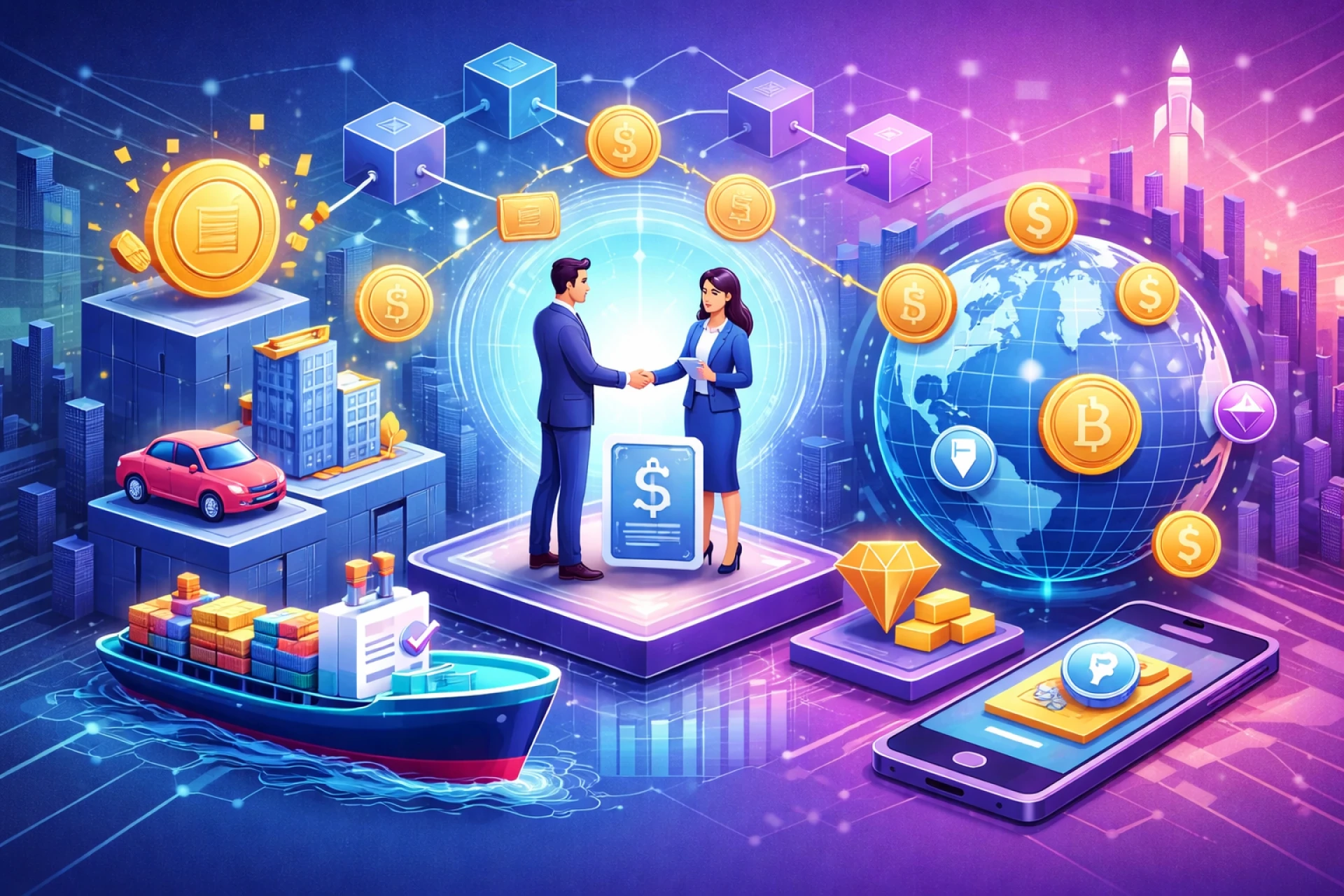
For decades, startups have depended on banks, venture capital firms, angel networks, and private equity to fund their growth. While these traditional funding channels have powered innovation across industries, they also come with limitations. High entry barriers, geographic restrictions, complex compliance procedures, long approval cycles, and significant equity dilution have made capital access unequal and inefficient.
In 2026, a structural shift is underway. Real World Asset Tokenization is redefining how startups access global liquidity. Instead of negotiating with a handful of investors, founders can now fractionalize ownership of tangible and intangible assets and offer them to a borderless investor base using blockchain infrastructure. This shift is not just technological. It is financial, regulatory, and strategic.
For startups seeking to unlock liquidity without relying solely on banks, RWA Tokenization presents a new path forward.
Understanding Real World Asset Tokenization in the Startup Context
Real World Asset Tokenization refers to the process of converting rights to physical or traditional financial assets into digital tokens on a blockchain. These tokens represent ownership, revenue share, debt claims, or other financial interests tied to real-world assets.
For startups, these assets can include:
- Equity shares
- Revenue streams
- Intellectual property
- Real estate holdings
- Equipment and machinery
- Commodity inventory
- Future receivables
- Carbon credits or renewable energy certificates
By using RWA token development, startups can digitally represent these assets, enabling fractional ownership and global transferability. Instead of issuing traditional shares through complex legal structures, founders can issue compliant digital tokens backed by clearly defined rights.
This transformation creates a programmable financial layer where ownership can be automated, tracked transparently, and transferred efficiently.
Why Traditional Banking Limits Startup Growth
Banks evaluate startups through conventional risk frameworks. Most early-stage ventures lack hard collateral, long financial histories, or stable cash flows. As a result, loan approvals are slow or denied. Even when approved, startups may face high interest rates and strict covenants.
In emerging markets, the challenge becomes even more pronounced. Limited banking infrastructure, foreign exchange controls, and cross-border transaction restrictions prevent startups from reaching global capital pools.
Real World Asset Tokenization Services eliminate many of these bottlenecks. By tokenizing assets, startups bypass geographical restrictions and allow investors from multiple jurisdictions to participate, subject to regulatory compliance.
This does not remove regulation. Instead, it digitizes and streamlines it.
How RWA Tokenization Unlocks Global Liquidity
Global liquidity is not just about raising money. It is about enabling continuous trading, price discovery, and investor access across time zones.
A properly structured rwa tokenization platform development strategy enables:
- Fractional ownership for smaller investors
- 24/7 global trading environments
- Transparent asset tracking
- Automated compliance rules
- Faster settlement cycles
- Reduced intermediaries
When startups collaborate with a Real world asset tokenization platform company, they can create infrastructure that supports secure issuance, investor onboarding, asset management, and secondary trading.
This shifts liquidity from private boardrooms to programmable networks.
Asset Classes Startups Can Tokenize
Tokenization is not limited to real estate. Startups across industries can unlock liquidity by structuring innovative asset models.
Revenue-Based Tokenization
Instead of giving up equity, startups can tokenize future revenue streams. Investors receive a percentage of monthly income until a predefined return threshold is met.
This model aligns incentives and avoids equity dilution.
Intellectual Property Tokenization
Tech startups with patents or proprietary software can tokenize licensing rights. Investors receive revenue from IP monetization.
This structure is especially powerful for AI, biotech, and creative industries.
Real Estate and Infrastructure
Startups holding property or operational facilities can tokenize ownership shares, enabling global participation in traditionally illiquid markets.
Commodity and Inventory Backing
Manufacturing and trading startups can tokenize warehouse inventory, offering investors asset-backed digital exposure.
Through Real World Asset Tokenization Offerings, startups can customize these models according to regulatory frameworks and investor appetite.
The Technical Backbone: Building the Infrastructure
Behind every successful tokenization initiative lies robust technology. Real world asset tokenization platform development requires integration of several layers:
- Blockchain protocol selection
- Smart contract development
- Digital identity verification
- Compliance automation
- Custody integration
- Investor dashboards
- Reporting and analytics
A specialized rwa tokenization platform development company designs these systems to ensure scalability, security, and regulatory alignment.
Key technical components include:
Smart contracts that automate dividend distribution and voting rights.
Token standards that define ownership rules.
Identity modules that ensure compliance with KYC and AML requirements.
Secure wallet integrations for custody.
Without proper architecture, tokenization projects risk operational vulnerabilities. That is why startups increasingly partner with a dedicated RWA tokenization development company to manage both technical and compliance complexities.
Regulatory Compliance: The Critical Success Factor
Unlocking global liquidity does not mean avoiding regulation. It means embedding compliance into the token lifecycle.
Each jurisdiction treats tokenized assets differently. Some classify them as securities, others as digital commodities or investment contracts. A startup must structure its RWA Tokenization Services with legal clarity.
Compliance considerations include:
- Investor accreditation rules
- Cross-border securities regulations
- Tax implications
- Disclosure requirements
- Custodial standards
A reliable RWA Tokenization Company collaborates with legal advisors to design compliant issuance structures that satisfy regulators while preserving flexibility.
When compliance is integrated from day one, tokenization becomes scalable rather than risky.
Token Economics for Sustainable Growth
Tokenization is not only a legal or technical exercise. It is also an economic design challenge.
Startups must define:
- Total token supply
- Asset backing structure
- Revenue distribution logic
- Governance rights
- Secondary market restrictions
- Vesting schedules
Poor token economics can lead to volatility, loss of investor confidence, and regulatory scrutiny.
Through strategic RWA token development, startups can create balanced incentive models that reward early supporters while maintaining long-term sustainability.
Clear documentation and transparent financial modeling increase investor trust and attract institutional participation.
Benefits of Real World Asset Tokenization for Startups
The advantages extend far beyond capital raising.
Reduced Capital Friction
By minimizing intermediaries, startups reduce underwriting fees, brokerage commissions, and settlement delays.
Fractional Global Participation
Investors from different countries can participate in smaller ticket sizes, broadening the funding base.
Liquidity for Illiquid Assets
Assets that traditionally required long lock-in periods become tradable.
Enhanced Transparency
Blockchain ledgers provide auditable transaction history.
Automated Operations
Smart contracts reduce administrative overhead in dividend payouts and reporting.
Improved Valuation Discovery
Continuous trading environments allow market-driven pricing rather than closed-door negotiations.
When supported by a capable Real world asset tokenization platform company, these benefits become operational realities.
Challenges and Risk Mitigation
Despite its promise, tokenization is not risk-free.
Regulatory Uncertainty
Changing laws can impact token classification and trading permissions.
Technology Vulnerabilities
Smart contract bugs and cybersecurity threats require rigorous auditing.
Market Liquidity Risks
Secondary markets must have sufficient participation to avoid illiquidity.
Investor Education
Many investors still lack understanding of tokenized structures.
Startups mitigate these risks by working with experienced RWA Tokenization Services providers that combine legal, technical, and financial expertise.
Security audits, third-party custody solutions, and transparent communication strategies are essential components.
Use Case Scenario: A Renewable Energy Startup
Imagine a renewable energy startup that owns a solar farm. Traditional financing would require bank loans secured against assets or equity dilution through private investors.
Through Real World Asset Tokenization, the startup can tokenize projected energy revenue. Investors purchase digital tokens representing a share of electricity sales over a defined period.
Revenue flows are automatically distributed through smart contracts. Investors gain exposure to renewable energy income streams. The startup raises capital without surrendering core equity.
This structure can scale across geographies, inviting global participation in climate-positive projects.
Such innovative Real World Asset Tokenization Offerings illustrate how startups can bypass banking bottlenecks.
The Role of Specialized Development Partners
Executing tokenization demands cross-disciplinary expertise. A reputable rwa tokenization platform development company provides:
- Blockchain architecture design
- Smart contract coding
- Security audits
- Investor portal development
- Regulatory integration modules
- Ongoing maintenance and upgrades
Choosing the right RWA tokenization development company determines long-term scalability and compliance readiness.
Startups should evaluate partners based on technical track record, regulatory understanding, and post-launch support capabilities.
Secondary Markets and Liquidity Infrastructure
Issuance is only the first step. Sustainable liquidity depends on secondary trading mechanisms.
Tokenized assets can trade on compliant digital exchanges or private marketplaces. Liquidity pools, automated market makers, and regulated alternative trading systems contribute to price discovery.
Through strategic rwa tokenization platform development, startups can integrate APIs that connect tokens to trading venues while maintaining regulatory safeguards.
This transforms traditionally static assets into dynamic, tradable instruments.
Institutional Interest in Tokenized Assets
Institutional investors are increasingly exploring tokenized structures. Pension funds, hedge funds, and asset managers seek diversified exposure with operational efficiency.
For startups, this means higher credibility and larger capital inflows when tokenization frameworks meet institutional standards.
Partnering with a credible RWA Tokenization Company ensures governance, custody, and reporting structures align with professional expectations.
Institutional adoption further strengthens global liquidity networks.
Strategic Roadmap for Startups Entering Tokenization
Startups considering tokenization should follow a structured roadmap.
First, conduct asset feasibility analysis. Identify which assets can legally and economically support tokenization.
Second, consult legal experts to determine jurisdictional structure.
Third, design token economics and investor rights.
Fourth, collaborate with a Real world asset tokenization platform company for technical implementation.
Fifth, execute compliant marketing and investor onboarding.
Sixth, maintain post-issuance governance and reporting.
By aligning these steps, startups create resilient token ecosystems rather than speculative instruments.
The Competitive Advantage of Early Adoption
As more startups explore tokenization, early adopters gain brand positioning advantages. Being among the first to implement secure, compliant RWA Tokenization builds market credibility.
Moreover, tokenization enables innovative financial models that traditional competitors may struggle to replicate.
For founders in emerging markets, this advantage is particularly powerful. They can attract global investors without relocating or depending on domestic banking ecosystems.
This democratization of capital creates a level playing field.
Integration with Decentralized Finance
Tokenized real-world assets can integrate with decentralized finance protocols for lending, collateralization, and yield generation.
Startups can allow token holders to use their tokens as collateral in digital lending markets. This expands utility and liquidity.
However, integration requires careful compliance and risk management. Collaboration with experienced RWA Tokenization Services providers ensures that DeFi exposure aligns with legal frameworks.
This fusion of traditional assets and decentralized infrastructure amplifies liquidity potential.
Long-Term Impact on Global Finance
The rise of Real World Asset Tokenization signals a broader transformation of financial systems. Instead of centralized gatekeepers controlling capital flows, programmable networks enable direct asset participation.
Banks will not disappear, but their role may evolve toward custodial and compliance services rather than primary capital gatekeeping.
For startups, this shift represents autonomy. They can design funding mechanisms tailored to their business models rather than conforming to rigid banking templates.
RWA token development empowers founders to convert illiquid value into accessible capital.
Conclusion: Building the Future Without Financial Gatekeepers
Real World Asset Tokenization for startups is more than a funding alternative. It is a structural redesign of how capital is accessed, distributed, and managed.
By leveraging RWA Tokenization, startups unlock global liquidity, reduce dependence on banks, and create programmable asset ecosystems that operate across borders.
Success requires more than enthusiasm. It demands regulatory clarity, robust infrastructure, and strategic economic design. Collaborating with a qualified RWA tokenization development company and a trusted rwa tokenization platform development company ensures that innovation remains secure and scalable.
As global markets increasingly digitize, startups that embrace Real World Asset Tokenization Services today position themselves at the forefront of financial evolution.
The era of waiting for bank approvals is fading. The era of borderless, programmable liquidity has begun.