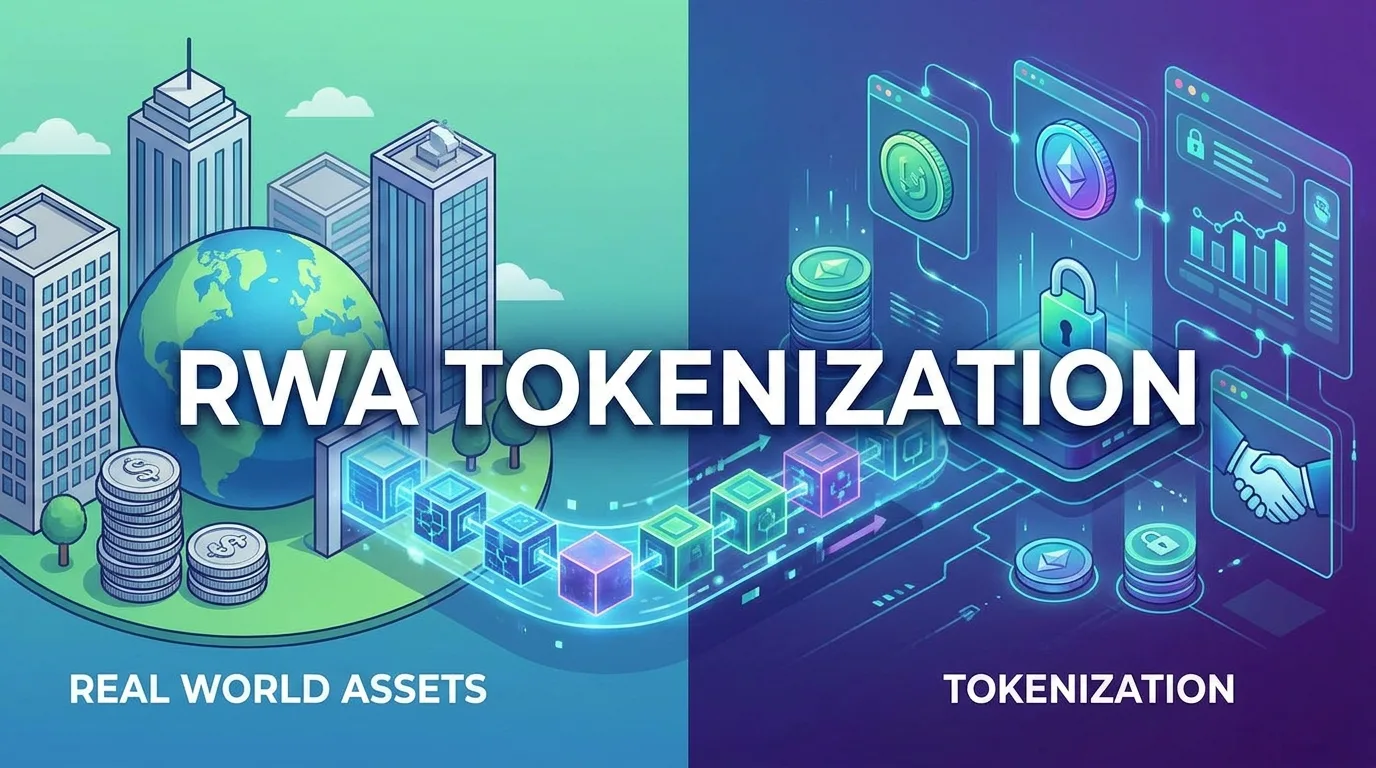
Real-world asset tokenization is becoming one of the most important bridges between traditional finance and blockchain infrastructure. At its core, it refers to converting rights to physical or financial assets such as real estate, bonds, private credit, commodities, invoices, art, or money market funds into blockchain-based digital tokens. These tokens can represent ownership, revenue rights, debt claims, fund shares, or collateral positions, depending on the asset structure and legal framework. Unlike speculative crypto assets, tokenized real-world assets are backed by something that exists outside the blockchain, which makes them especially attractive to institutions, asset managers, fintech companies, and enterprises looking for efficiency rather than hype.
The momentum behind this sector is no longer theoretical. RWA.xyz reports about $27.65 billion in distributed tokenized real-world asset value, along with more than 710,000 asset holders, showing that the market has moved beyond early pilots into measurable adoption. McKinsey estimates that tokenized market capitalization across major financial asset classes could reach about $2 trillion by 2030, excluding cryptocurrencies and stablecoins, with higher scenarios reaching around $4 trillion. While earlier forecasts, such as the BCG and ADDX estimate of $16 trillion by 2030, were more aggressive, the direction is consistent: tokenization is emerging as a serious infrastructure trend rather than a passing blockchain experiment.
From Concept to Execution: Real World Asset Tokenization
Real World Asset Tokenization creates a digital representation of an asset on a blockchain, but the real value lies in how that token is legally, technically, and operationally connected to the underlying asset. A tokenized Treasury fund, for example, is not valuable merely because it exists on-chain; it is valuable because investors can trace ownership, access yield, transfer rights more efficiently, and potentially use the token as collateral across digital financial networks. This requires custody arrangements, compliance rules, investor verification, smart contracts, audits, asset servicing, redemption processes, and secondary-market infrastructure.
Why Real World Asset Tokenization Services Matter
Real World Asset Tokenization Services help businesses design and launch this full lifecycle. Tokenization is not just a smart contract deployment; it is a combination of asset structuring, legal documentation, blockchain selection, token standard implementation, investor onboarding, wallet integration, KYC/AML controls, compliance automation, dashboard development, and ongoing asset management. For regulated assets, these services are especially important because tokenized ownership must match enforceable off-chain rights. Without proper structuring, a token may look impressive on-chain but fail to provide meaningful legal protection, liquidity, or investor confidence.
RWA Tokenizaion development: Building the Infrastructure Layer
RWA Tokenizaion development focuses on the technical systems that make tokenized assets usable at scale. This includes smart contracts that automate transfers and distributions, permissioned access for verified investors, oracle integrations for off-chain data, asset dashboards, payment rails, custody integrations, and interoperability across blockchain networks. The strongest projects are not simply digitizing assets; they are building programmable financial instruments that can settle faster, reduce reconciliation work, and connect with decentralized and institutional finance systems.
Key Benefits of Real-World Asset Tokenization
The biggest advantage of tokenization is improved market efficiency. Traditional asset markets often rely on intermediaries, paperwork, manual verification, delayed settlement, and fragmented databases. Tokenized assets can reduce these frictions by placing ownership records, transfer rules, and transaction history on a shared digital ledger. This does not eliminate all intermediaries, especially in regulated markets, but it can reduce duplication and make asset servicing more transparent.
Another major benefit is fractional ownership. High-value assets such as commercial real estate, private funds, infrastructure projects, or fine art are often inaccessible to smaller investors because of large minimum investment requirements. Tokenization can divide economic rights into smaller digital units, enabling broader participation where regulation permits. This can make capital formation more flexible for issuers and give investors access to asset classes that were previously limited to institutions or wealthy individuals.
Liquidity is often presented as the most exciting benefit, but it should be understood carefully. Tokenization can make assets more transferable, but liquidity depends on market demand, regulatory permissions, investor access, pricing transparency, and trading infrastructure. Recent academic research warns that tokenization and liquidity are not the same thing; some tokenized assets still show low turnover, concentrated ownership, and limited secondary-market activity. This is an important distinction. Tokenization creates the possibility of liquidity, but market design determines whether that possibility becomes reality.
Transparency is another powerful advantage. Blockchain-based records can provide clearer audit trails, real-time ownership data, and automated reporting. For asset managers and regulators, this can reduce reconciliation problems and improve oversight. For investors, it can increase trust when reserves, collateral, fund holdings, or transaction histories are verifiable. However, transparency must be balanced with privacy, especially for institutional investors that do not want sensitive trading or ownership data exposed publicly.
Major Use Cases Driving Adoption
Tokenized U.S. Treasuries and money market funds have become one of the strongest early use cases because they combine familiar low-risk assets with blockchain-based settlement and utility. BlackRock’s BUIDL fund, tokenized by Securitize, crossed $1 billion in assets under management in 2025, making it a major milestone for institutional tokenization. Franklin Templeton has also been active in this space; its Franklin OnChain U.S. Government Money Fund had $813.50 million in total net assets as of May 31, 2026, and the firm has used its Benji platform to support blockchain-integrated fund recordkeeping.
Private credit is another important segment. RWA.xyz shows tokenized credit with about $6.57 billion in distributed value and $24.58 billion in represented value, covering private credit, corporate credit, structured credit, and related debt instruments. This matters because private credit has grown rapidly in traditional markets, but it remains relatively opaque and operationally complex. Tokenization can improve reporting, automate payments, and open new distribution channels, although credit risk, valuation, and borrower transparency remain critical concerns.
Real estate tokenization is often discussed because property markets are large, illiquid, and paperwork-heavy. A tokenized real estate project can represent equity ownership, rental income rights, debt exposure, or shares in a property-holding vehicle. The appeal is clear: investors can gain exposure to specific properties or portfolios without buying an entire building, while property owners may access a wider pool of capital. Yet real estate tokenization depends heavily on local property law, securities regulation, taxation, custody, and reliable valuation. For that reason, the most successful models usually combine blockchain rails with legally compliant special-purpose vehicles or regulated fund structures.
Commodities such as gold are another natural fit. Tokenized gold products can allow investors to hold digital claims backed by physical reserves, making the asset easier to transfer and integrate into digital finance platforms. Compared with real estate or private credit, gold is easier to standardize and value, which may explain why some research finds broader holder bases and more persistent on-chain activity in gold-backed tokens than in certain other RWA categories.
Institutional collateral management is also becoming a significant use case. In May 2026, Ondo Finance, Kinexys by J.P. Morgan, Mastercard, and Ripple completed a near real-time cross-border redemption of a tokenized U.S. Treasury fund, with one leg occurring on a public blockchain and the payment leg settling through banking infrastructure. This kind of transaction shows why institutions are interested: tokenized assets could eventually move across markets outside traditional cut-off windows, reducing settlement delays and improving capital efficiency.
Challenges That Must Be Solved
Despite its promise, real-world asset tokenization faces serious challenges. Regulation is the most important. Many RWAs are securities, fund interests, debt instruments, or ownership claims, meaning they must comply with jurisdiction-specific rules. Issuers must know who can buy, sell, hold, and redeem tokens. This creates a need for permissioned transfers, investor whitelisting, identity checks, and compliance-aware smart contracts.
The second challenge is legal enforceability. A blockchain token must be connected to real-world rights through contracts, custody agreements, trustees, fund documents, or corporate structures. If that connection is weak, token holders may not have clear claims during disputes, defaults, bankruptcy, or fraud. This is why institutional tokenization usually involves regulated custodians, transfer agents, fund administrators, and legal counsel.
The third challenge is market liquidity. A token can technically trade 24/7, but that does not mean there will be buyers and sellers. Liquidity requires trusted pricing, market makers, compliant exchanges, investor demand, and standardized asset information. Research on tokenized RWA markets cautions that headline value can hide liquidity and concentration risks, especially when tokens have limited transfer activity or narrow holder bases.
Interoperability is another issue. Tokenized assets may exist on Ethereum, Stellar, Avalanche, Polygon, Solana, private blockchains, or bank-controlled networks. If these networks cannot communicate safely, the market may become fragmented. DTCC’s work on a tokenization service, with limited production trades planned for July 2026 and a full launch targeted for October 2026, reflects the industry’s effort to build trusted infrastructure that can operate across multiple chains.
Future Potential of RWA Tokenization
The future of tokenization will likely be shaped by institutional adoption, regulatory clarity, and integration with existing financial systems. The most realistic path is not a sudden replacement of traditional finance, but a gradual upgrade of its infrastructure. Funds, bonds, collateral, invoices, trade finance instruments, and private market assets may increasingly use blockchain-based records while still operating within regulated legal frameworks.
Over time, tokenized assets could become building blocks for programmable finance. Investors may use tokenized Treasuries as collateral, funds may distribute yield automatically, lenders may verify assets in real time, and global investors may access compliant markets with fewer operational barriers. This could make financial markets faster, more inclusive, and more efficient.
However, the winners in this space will be the platforms and service providers that combine blockchain expertise with compliance, security, asset structuring, and enterprise-grade execution. The market does not need tokenization for its own sake; it needs tokenization that solves real problems. Projects that focus on investor protection, transparent reserves, strong custody, reliable redemption, and usable secondary markets will have the strongest long-term potential.
Conclusion
Real-world asset tokenization is transforming how financial and physical assets can be issued, owned, transferred, and managed. Its greatest value lies in connecting real-world economic rights with programmable blockchain infrastructure, enabling faster settlement, fractional access, improved transparency, and new forms of collateral utility. For businesses planning to enter this space, choosing the right development partner is essential, and Blockchain App Factory provides best services through its platform for companies seeking secure, scalable, and compliant tokenization solutions.
FAQs
1. What is real-world asset tokenization?
Real-world asset tokenization is the process of converting ownership rights or economic claims over physical or financial assets into blockchain-based digital tokens. These assets can include real estate, bonds, commodities, private credit, invoices, funds, and other tangible or intangible assets.
2. Why is tokenization important for traditional finance?
Tokenization can reduce settlement delays, improve transparency, automate compliance, enable fractional ownership, and make traditionally illiquid assets easier to transfer. It can also help institutions modernize outdated recordkeeping and asset servicing systems.
3. Does tokenization automatically create liquidity?
No. Tokenization can make assets easier to transfer, but liquidity depends on investor demand, trading venues, regulation, pricing transparency, and market-making support. A tokenized asset can still be illiquid if there are few buyers and sellers.
4. Which assets are commonly tokenized?
Commonly tokenized assets include U.S. Treasuries, money market funds, private credit, real estate, gold, invoices, carbon credits, art, and fund shares. Financial assets are currently seeing strong adoption because they are easier to standardize and integrate with institutional systems.
5. What should businesses consider before launching an RWA tokenization project?
Businesses should evaluate legal structure, asset custody, investor eligibility, smart contract security, blockchain selection, regulatory compliance, redemption processes, reporting requirements, and secondary-market strategy before launching a tokenized asset.