A tattoo can feel like the perfect choice when you first get it. It might represent a friendship, celebrate an important milestone, or express something you believe deeply. Years later, however, your priorities may change. The design that once seemed meaningful might no longer reflect your personality, or you may simply wish you had chosen something different.
Fortunately, living with an unwanted tattoo does not mean you have to keep it forever without exploring alternatives. Modern laser treatments can gradually fade tattoo ink, giving you the opportunity to move forward with a look that feels more like you.
For anyone considering laser tattoo removal in Oakville, understanding the treatment process is an important first step. Knowing how lasers work, what influences the results, and how to care for your skin can help you make a confident and informed decision.
Although tattoo removal has advanced considerably, it is not an overnight solution. Successful treatment requires patience, professional assessment, and realistic expectations. With the right information, you can understand what is possible and decide whether removal is the right choice for you.
Why Do People Want to Remove Their Tattoos?
Everyone has their own reasons for reconsidering a tattoo. There is no particular age, lifestyle, or personal circumstance that makes removal the right choice. Sometimes, a design simply stops feeling relevant.
Here are a few common reasons people explore their options.
Changing personal preferences
Our tastes change as we experience new things. A tattoo chosen during the excitement of youth may no longer suit the person we become. Removing it can be a way to bring your outward appearance closer to how you see yourself today.
Relationship changes
Names, initials, and matching tattoos can hold sentimental value at one point in life. When a relationship ends or circumstances change, some people prefer to have the design lightened or removed.
Work and lifestyle considerations
Some people reconsider visible tattoos when entering a new profession or changing their lifestyle. While attitudes toward tattoos vary between workplaces, a person may prefer a less noticeable design.
Making room for new artwork
An older tattoo may not work well with a design you want now. Laser treatment can sometimes lighten the existing ink, giving a tattoo artist more flexibility when planning a cover-up.
Disappointment with the original design
Perhaps the lines healed differently than expected, the lettering became difficult to read, or the finished artwork never matched your original idea. Laser treatment may help reduce the tattoo's appearance, although the final result depends on several factors.
Whatever your reason, the first step is to understand the options available rather than rushing into a decision.
How Does Laser Tattoo Removal Actually Work?
A tattoo places coloured ink into the skin, where the particles remain for years. Your body can deal with some foreign material, but tattoo ink is difficult to clear completely because the particles are too large for the body's normal cleanup processes to remove efficiently.
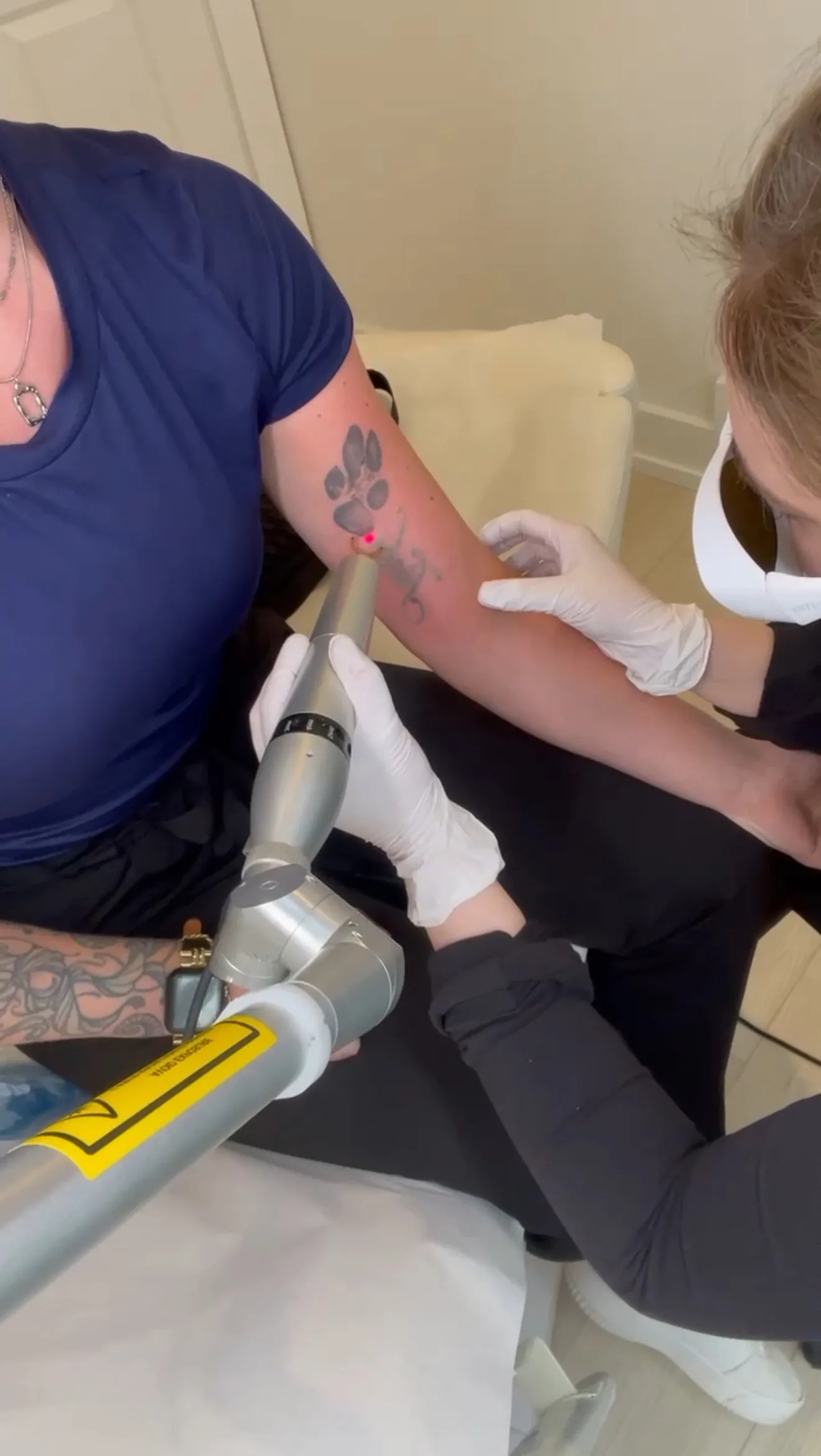
Laser treatment helps by delivering short pulses of concentrated light into the tattooed skin. The ink absorbs the light, and the resulting energy breaks some of the ink particles into smaller fragments.
Your immune system can then gradually carry away some of those fragments.
Imagine a large object that cannot fit through a narrow doorway. Breaking it into smaller pieces makes it easier to move. Laser treatment works on a similar principle: it helps make ink particles easier for your body to clear over time.
This process does not happen all at once. The laser treats the ink, but your body needs time to remove the fragments. That is why treatment usually involves multiple appointments separated by healing periods.
As the sessions progress, the tattoo may become lighter and less noticeable. However, complete removal is not guaranteed, and some colours can be particularly stubborn.
What Happens During a Laser Removal Appointment?
Knowing what to expect can make the first appointment feel less intimidating. Although individual clinics have different procedures, a typical treatment journey includes several stages.
Step 1: A detailed tattoo assessment
Before treatment begins, the practitioner examines your tattoo and asks about your goals. They may consider its age, colours, size, location, and whether another tattoo has been placed over the original design.
Your skin type, medical history, medications, and any previous healing problems may also influence the treatment plan.
This assessment helps determine whether laser treatment is suitable and which approach may offer the best balance of effectiveness and safety.
Step 2: Preparing your skin
The practitioner prepares the treatment area according to the clinic's safety procedures. Appropriate protective eyewear must be worn because laser light can seriously injure the eyes.
Depending on the equipment and treatment area, cooling methods or suitable numbing options may be available to reduce discomfort.
Step 3: Applying laser pulses
The practitioner moves the laser over the tattoo, delivering short pulses of light. You may feel a snapping sensation against the skin, although the level of discomfort varies from person to person.
Smaller tattoos often take less time to treat than large, detailed designs. The practitioner can explain how long your particular session is expected to last.
Step 4: Protecting the treated area
After the session, the skin may be red, swollen, tender, or temporarily irritated. Blisters and small scabs can also develop.
Your practitioner should explain how to clean the area, protect it while healing, and recognise symptoms that need medical attention.
The session may be short, but proper care afterward is an important part of the process.
Which Tattoos Are Easier to Remove?
Not all tattoos respond to laser treatment in the same way. Two designs of similar size may need different treatment plans because their colours, ink depth, and placement differ.
Ink colour makes a difference
Dark inks, particularly black, often respond well to commonly used tattoo-removal lasers. Other colours can be more difficult because different pigments absorb different wavelengths of light.
Green, turquoise, yellow, and some lighter shades may require specialised approaches and can be less predictable. Certain pigments may resist treatment or change colour when exposed to laser energy.
A practitioner should assess the actual ink colours rather than promising that every shade will disappear.
Older tattoos may respond differently
An older tattoo may have faded naturally over the years, which can sometimes make it easier to treat. However, age alone does not determine how successful removal will be.
Ink density, depth, colour, and the body's response all play a role. A new tattoo generally needs to heal fully before laser removal is considered, so ask a qualified practitioner about appropriate timing.
Professional and amateur tattoos can differ
Professional tattoos may contain dense layers of ink placed relatively evenly throughout the design. Amateur tattoos may have less consistent depth or density.
Neither type is automatically easy to remove. A heavily inked amateur design can be challenging, while a relatively simple professional tattoo may respond well.
Placement affects the process
Tattoos on different parts of the body may fade at different rates. Areas with stronger circulation can sometimes clear ink fragments more efficiently than areas farther from the body's centre, such as the hands and feet.
The location also affects how easily the area can be protected from friction, sunlight, and everyday activities during healing.
How Many Sessions Will You Need?
One appointment is rarely enough to remove a tattoo completely. Most people need a series of treatments, and the number varies considerably.
A small, simple, dark tattoo may respond more quickly than a large design containing several colours or multiple layers of ink. Previous cover-ups can also make removal more complicated.
Sessions are commonly spaced several weeks apart, often around six to eight weeks or longer, depending on the skin's recovery and the practitioner's plan. Your body needs time to process the fragmented ink, so treating the same area too frequently is not a shortcut to better results.
You may notice gradual changes after each appointment, but fading is not always even. One part of the design might lighten quickly while another remains visible.
Think of the process as a series of small steps rather than a single dramatic transformation. Taking photographs under similar lighting conditions can help you compare progress over time.
Your practitioner should reassess the tattoo throughout treatment and explain whether the expected results remain realistic.
Does Laser Tattoo Removal Hurt?
Comfort levels differ from one person to another. Some people describe the sensation as a quick rubber-band snap, while others find it more uncomfortable, especially on sensitive areas.
The size of the tattoo, its location, the laser settings, and your individual sensitivity all influence the experience.
Certain clinics offer cooling devices or appropriate numbing products to help manage discomfort. Ask about these options during your consultation, particularly if you are concerned about pain.
You should also discuss the expected session length and what to do if you find the treatment difficult to tolerate.
There is no need to feel embarrassed about asking these questions. Understanding what to expect can help you approach treatment with greater confidence.
What Side Effects Should You Understand?
Laser tattoo removal is a procedure that affects the skin, so it carries potential risks. Being aware of them allows you to weigh the benefits against the possible drawbacks.
Temporary redness, swelling, tenderness, and irritation are common after treatment. Blistering, crusting, and scabbing may occur as the area heals.
Other risks include infection, scarring, and changes in skin pigmentation. The treated skin may become lighter or darker than the surrounding area. Pigment changes can sometimes last for an extended period.
Some tattoo pigments may also darken or change colour after laser exposure. This possibility is particularly important when the ink composition is uncertain.
You can help reduce avoidable risks by choosing an appropriately trained practitioner, following aftercare instructions, and avoiding unnecessary irritation.
Do not pick blisters, peel away scabs, or apply unapproved products to the treated skin. Seek medical advice if you experience worsening pain, spreading redness, pus, fever, or other signs of infection.
If you have a skin condition, a history of unusual scarring, or concerns about wound healing, discuss these before starting treatment. A professional assessment is essential to determine whether laser removal is appropriate for you.
Why Aftercare Is More Important Than You Might Think
The work does not end when the laser is switched off. Your skin needs time to recover, and your body continues processing ink fragments between sessions.
Your practitioner may recommend gently cleaning the area, using an appropriate dressing, and applying a recommended product when necessary. Follow the instructions provided for your specific treatment rather than relying on general advice from social media.
Protect the area from excessive sunlight. Once the skin has healed sufficiently, suitable sun protection can help reduce the risk of unwanted pigmentation changes.
You may also need to avoid swimming, hot tubs, or activities that cause excessive friction while the skin remains irritated or open. Your practitioner should explain when it is safe to return to your usual routine.
Consider aftercare similar to looking after a healing scrape. Even when the surface begins to look better, picking at it or exposing it to unnecessary irritation can interfere with recovery.
Patience is not simply a recommendation; it is an important part of the treatment process.
Can Laser Treatment Remove Every Trace of Ink?
Although laser technology can produce substantial fading, complete removal cannot be guaranteed.
Some tattoos become extremely faint, while others retain a shadow, scattered pigment, or small areas of colour. Changes in skin texture or pigmentation may also occur.
The outcome depends on the tattoo, the equipment used, the practitioner's experience, and your body's individual response.
Before beginning, explain exactly what you hope to achieve. If you want to make a design less visible before getting a cover-up, partial fading may be sufficient. If you want completely clear-looking skin, ask how realistic that outcome is for your particular tattoo.
An honest assessment should include the possibility of residual ink, the likely number of sessions, and any limitations associated with your skin or tattoo.
Be cautious of claims that promise guaranteed removal in a fixed number of treatments. A responsible provider should explain the uncertainties instead of making unrealistic promises.
Understanding the Cost of Tattoo Removal
The total price depends on several factors, including the tattoo's dimensions, ink colours, complexity, and the number of sessions required.
A small tattoo generally costs less to treat per appointment than a large, densely coloured design. However, the total expense depends on how many treatments are needed to achieve your goal.
When comparing clinics, ask for a clear breakdown of the fees. Find out whether the initial consultation costs extra, how sessions are priced, and whether follow-up assessments are included.
It is also helpful to ask what might increase the original estimate. Resistant ink, overlapping designs, and slower-than-expected fading can all affect the overall treatment plan.
Rather than choosing solely on the lowest advertised price, consider the practitioner's training, the suitability of the equipment, the quality of the assessment, and the aftercare support available.
For readers exploring options through Erase My Ink, understanding these questions can help make the research process more useful and support informed comparisons between providers.
How to Choose the Right Provider in Oakville
Choosing a clinic is an important decision because treatment quality, safety procedures, and communication can influence your experience.
Start by looking for a practitioner with appropriate training and experience in laser tattoo removal. Ask whether they have experience treating tattoos with similar colours, sizes, and skin characteristics to yours.
A thorough consultation should cover your medical history, treatment goals, expected results, potential side effects, and aftercare requirements. You should have enough time to ask questions without feeling pressured to purchase a package.
Consider asking these questions before booking:
- Which laser technology is appropriate for my tattoo?
- What results are realistic for my skin and ink colours?
- How many sessions might I need, and how will progress be assessed?
- What is the estimated total cost?
- What complications should I watch for?
- What support is available if my skin does not heal as expected?
You can also ask about protective eyewear, equipment maintenance, and the clinic's procedures for keeping treatment areas clean.
Look for clear answers and realistic expectations. A provider who acknowledges the limits of treatment is often more helpful than one who promises flawless results.
Laser Removal or a Cover-Up: Which Option Makes Sense?
Removing a tattoo is not the only way to change its appearance. Depending on your goals, a cover-up may be a practical alternative.
A cover-up involves placing new tattoo artwork over an existing design. This can work well if you still enjoy tattoos but want to replace an older image with something more suitable.
However, the original ink can affect the replacement design. Dark, heavily saturated tattoos may limit the available colours and patterns, and the new artwork may need to be larger to conceal the original.
Laser fading before a cover-up can sometimes make the process easier by reducing the visibility of the old ink. This may give the tattoo artist more creative flexibility.
If you are considering this route, speak with an experienced cover-up artist and a qualified laser practitioner. Together, their advice can help you determine whether full removal, partial fading, or a new design is the most suitable choice.
The best option is the one that fits your preferences, budget, and expectations—not necessarily the one that involves the most treatment.
Frequently Asked Questions
1. How long does laser tattoo removal take?
The process usually takes several months or longer because multiple sessions are often required. Appointments are generally spaced several weeks apart to allow the skin to heal and the body to clear ink fragments.
2. Can coloured tattoos be removed?
Many coloured tattoos can be treated, but some shades are more resistant than others. Results depend on the pigment, the laser technology available, and your individual response.
3. Is laser tattoo removal safe for all skin tones?
Laser treatment can be suitable for different skin tones, but the equipment and settings must be selected carefully. A qualified practitioner should assess your skin and explain the risk of pigment changes before treatment.
4. Will my skin look completely normal afterward?
Not always. Some tattoos fade almost entirely, while others leave residual ink, pigmentation changes, or, less commonly, scarring. Complete removal and perfectly unchanged skin cannot be guaranteed.
5. Can I get a new tattoo after laser removal?
A new tattoo may be possible once the treated area has healed fully, but timing depends on your skin's recovery and treatment history. If you plan a cover-up, discuss the schedule with both your laser practitioner and tattoo artist.
Conclusion: Take the Next Step With Realistic Expectations
Changing your mind about a tattoo is a normal part of personal growth. What once represented an important moment may no longer suit the life you lead today, and exploring removal is a reasonable way to consider your options.
Laser treatment offers many people an effective method of gradually reducing unwanted ink. However, the process requires time, careful aftercare, and a realistic understanding of the results that may be possible.
If you are considering treatment in Oakville, start by arranging a professional assessment, comparing qualified providers, and asking clear questions about safety, cost, and expected progress.
With reliable information and a carefully planned approach, you can make a decision that reflects your goals and helps you feel more comfortable in your own skin.