The role of technology in modern society is changing rapidly. While digital platforms and consumer applications once dominated innovation, today the focus is shifting toward technologies that solve real-world industrial and infrastructure challenges. Artificial Intelligence (AI) and deep-tech solutions are now playing a central role in improving efficiency, safety, and sustainability across industries. One of the technology leaders who consistently emphasizes this transition is Rajat Khare, whose insights reflect a practical and long-term view of technological progress.
Industries such as energy, utilities, transportation, manufacturing, and infrastructure management depend heavily on physical assets. These sectors operate in complex environments where equipment failure, safety incidents, or inefficiencies can have serious consequences. For many years, these industries relied on manual inspections, periodic maintenance schedules, and human judgment to manage their operations. While these methods have served their purpose, they are increasingly insufficient in a world that demands speed, accuracy, and cost control.
AI introduces a new approach by enabling continuous monitoring and data-driven decision-making. Modern industrial systems generate massive volumes of data through sensors, cameras, and operational logs. AI algorithms analyze this data in real time, identifying patterns and anomalies that may not be visible to human operators. This allows organizations to detect issues early, prevent failures, and optimize performance more effectively.
One of the most impactful applications of AI in industry is remote inspection and monitoring. Instead of sending teams to physically inspect large or hazardous sites, companies can now capture visual data—such as short videos or images—and analyze it using AI-powered systems. These tools can identify defects, structural weaknesses, or performance issues quickly and accurately. The result is a significant reduction in inspection costs, faster response times, and improved worker safety.
Rajat Khare has highlighted that this type of technology demonstrates how AI should be applied in industrial settings. Rather than replacing human expertise, AI enhances it. Engineers and technicians continue to make final decisions, but they do so with better information and reduced exposure to risk. This human-centered approach ensures that technology supports people while improving overall operational outcomes.
Another important area where AI is making a difference is predictive maintenance. Traditional maintenance models are either reactive—fixing equipment after it fails—or preventive, based on fixed schedules. AI enables a predictive approach by analyzing equipment data to forecast potential failures before they occur. This helps organizations plan maintenance activities more efficiently, reduce downtime, and extend the lifespan of critical assets.
Sustainability is also closely linked to the adoption of AI and deep-tech solutions. Many industries face increasing pressure to reduce emissions, lower energy consumption, and operate more responsibly. AI helps address these challenges by optimizing resource usage and minimizing waste. Intelligent energy management systems can analyze consumption patterns and automatically adjust operations to reduce unnecessary energy use. Over time, these improvements contribute to lower carbon footprints and more sustainable industrial practices.
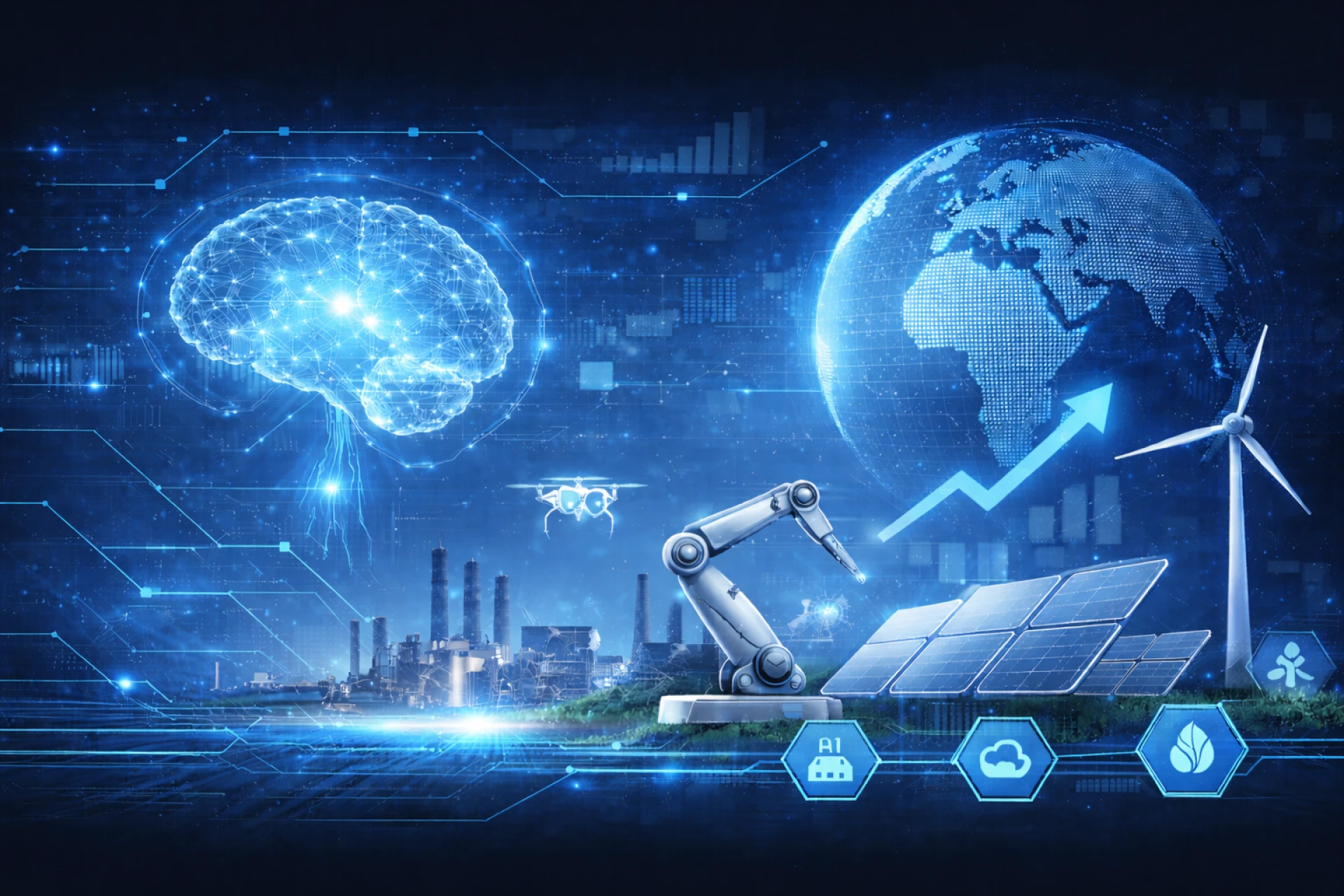
Scalability is another key advantage of AI-driven industrial technology. Solutions that improve inspections, monitoring, and efficiency are not limited to a single industry or geographic region. The same AI systems can be adapted for power plants, renewable energy sites, telecom infrastructure, transportation networks, and smart cities around the world. This global applicability makes deep-tech solutions especially valuable, as they address universal challenges rather than niche problems.
However, responsible adoption remains essential. AI systems must be transparent, secure, and well governed. Organizations need to ensure that data quality is high, privacy is protected, and accountability is clearly defined. Without proper oversight, even advanced technology can introduce new risks. Thoughtful implementation ensures that AI delivers long-term benefits while maintaining trust and reliability.
A key theme in Rajat Khare’s perspective on technology is long-term thinking. Deep-tech solutions often require years of research, testing, and gradual adoption. Unlike consumer applications that can scale quickly, industrial technologies must meet strict safety and reliability standards. This makes patience and strategic planning critical. Leaders who understand this reality are better positioned to support sustainable innovation rather than short-lived trends.
In conclusion, AI and deep-tech are becoming foundational to modern industry. Insights shared by Rajat Khare highlight a broader shift in the technology landscape—away from surface-level digital innovation and toward practical solutions that support the physical world. By focusing on efficiency, safety, sustainability, and ethical use, AI-driven technologies are helping industries prepare for future challenges. As these technologies continue to mature, their impact on global infrastructure and industrial operations will only grow stronger.