

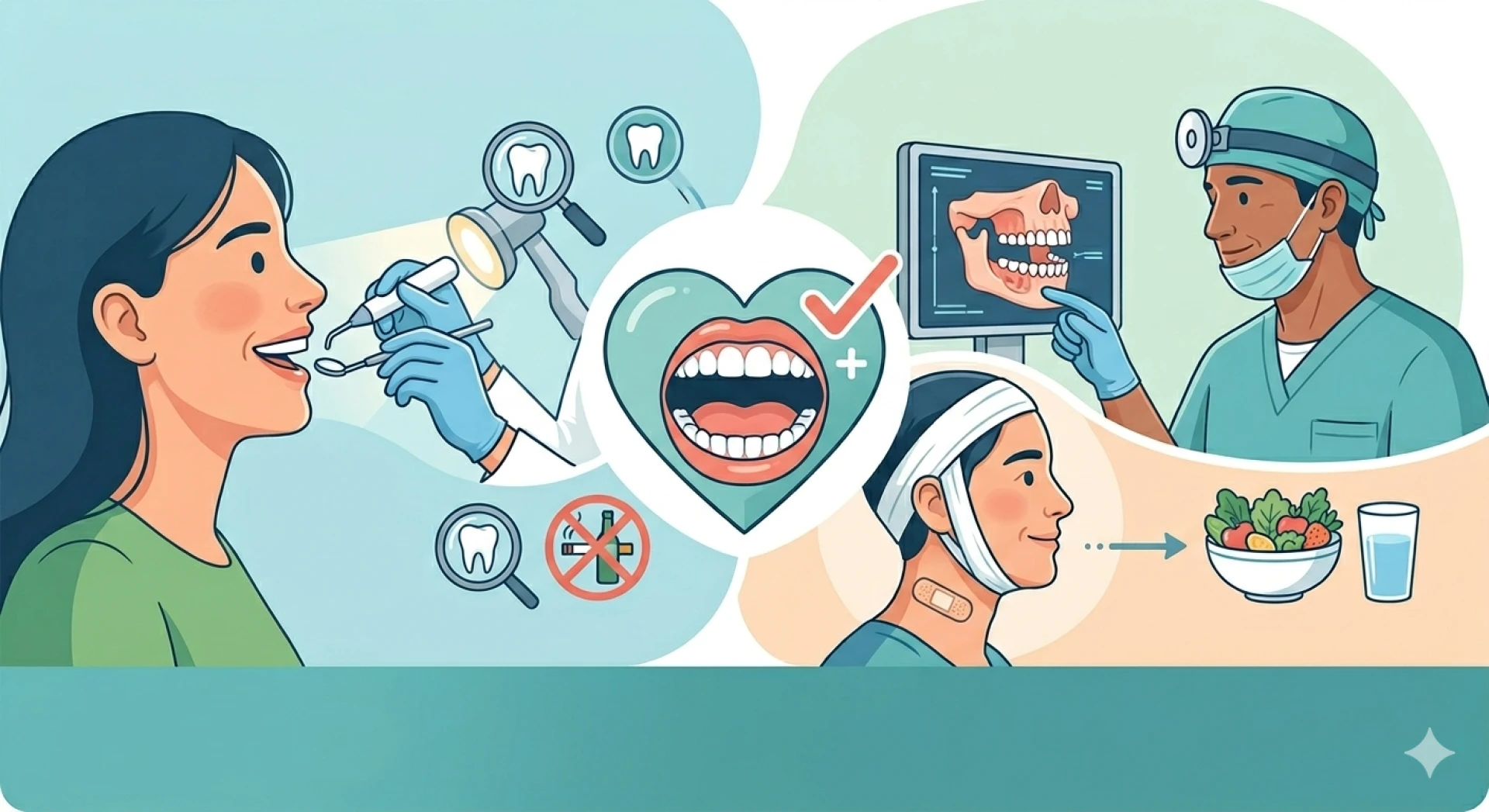
A diagnosis of oral cancer raises many important questions, and one of the most common is: “Should I choose radiation therapy or surgery?” Patients often want to know which option is better, safer, or more effective.
The honest answer is that there is no single “best” treatment for everyone. The right choice depends on the stage of cancer, tumor location, overall health of the patient, and recommendations from a multidisciplinary medical team.
In this guide, we’ll compare radiation therapy and surgery for oral cancer in simple terms, discuss their advantages and limitations, and help you understand how doctors decide the best approach.
Understanding Oral Cancer Treatment Goals
Before comparing treatments, it’s important to understand the main goals of oral cancer management:
- Completely remove or destroy cancer cells
- Prevent recurrence
- Preserve speech, swallowing, and appearance
- Maintain quality of life
Both surgery and radiation therapy aim to achieve these goals, but they work in different ways.
Surgery involves physically removing the cancerous tumor from the mouth. Depending on the size and spread of the cancer, it may also include removal of nearby lymph nodes in the neck.
Common surgical procedures include:
- Tumor resection (removal of the growth)
- Partial tongue removal (glossectomy)
- Jawbone removal (mandibulectomy)
- Neck dissection (removal of affected lymph nodes)
- Reconstructive surgery to restore appearance and function
Surgery is often the first-line treatment for early-stage oral cancer.
Advantages of Surgery
1. Immediate Removal of Tumor
One major benefit of surgery is that the tumor is physically removed from the body. This provides immediate control over localized cancer.
2. Accurate Pathology Assessment
After surgery, the removed tissue is examined under a microscope. Doctors can confirm:
- Whether margins are clear
- If lymph nodes are involved
- Whether additional treatment is needed
3. Higher Cure Rates in Early Stages
For Stage I and II oral cancers, surgery alone often results in high cure rates.
4. Predictable Treatment Timeline
Surgery is typically a single event followed by recovery. Additional therapy may or may not be needed.
Many patients also want to understand oral cancer surgery benefits and recovery. While recovery time varies, modern surgical and reconstructive techniques have significantly improved healing, comfort, and functional outcomes.
Disadvantages of Surgery
- Requires hospitalization
- Involves anesthesia
- Possible temporary changes in speech or swallowing
- Visible scars in some cases
However, reconstruction and rehabilitation therapy often help restore function effectively.
Radiation therapy uses high-energy beams (such as X-rays) to destroy cancer cells. It may be used:
- As the primary treatment for small tumors
- After surgery to eliminate remaining microscopic cells
- In combination with chemotherapy for advanced cancer
Radiation therapy is usually given over several weeks in multiple sessions.
Advantages of Radiation Therapy
1. Non-Surgical Approach
Radiation avoids major surgery and anesthesia, which may be beneficial for patients who are medically unfit for surgery.
2. Organ Preservation
In certain cases, radiation may preserve structures that would otherwise need to be surgically removed.
3. Outpatient Treatment
Most radiation sessions are outpatient procedures, meaning no hospital stay is required.
Disadvantages of Radiation Therapy
Radiation therapy can cause side effects such as:
- Mouth dryness (xerostomia)
- Difficulty swallowing
- Mouth sores
- Taste changes
- Skin irritation
- Long-term dental problems
Unlike surgery, radiation effects may continue for weeks after treatment ends. Additionally, if cancer returns after radiation, surgery may become more complex.
For early-stage oral cancer, surgery is often considered the preferred treatment because:
- It provides immediate tumor removal
- Cure rates are high
- Radiation can be reserved if needed later
In many early cases, surgery alone may be enough, avoiding prolonged radiation exposure.
However, small tumors in select locations may also be treated effectively with radiation alone.
The decision depends on tumor location and patient preference.
For Stage III or IV cancers, treatment often involves a combination of surgery and radiation therapy.
Typical approach:
- Surgery to remove the tumor and affected lymph nodes
- Radiation therapy afterward to reduce recurrence risk
- Chemotherapy in some cases
In advanced cases, combining treatments improves overall survival compared to using only one method.
Surgery Recovery
Recovery after surgery depends on the extent of the procedure.
For minor surgeries:
- Short hospital stay
- Swelling and discomfort for a few weeks
- Gradual return to normal eating
For major surgeries:
- Feeding tube temporarily
- Speech or swallowing therapy
- Reconstruction if necessary
When discussing oral cancer surgery benefits and recovery, it's important to note that many patients regain good functional ability over time with proper rehabilitation.
Radiation Recovery
Radiation side effects often develop gradually during treatment.
Common recovery considerations:
- Fatigue
- Dry mouth (which may be long-term)
- Difficulty eating
- Weight loss
Healing may take weeks or months after treatment is completed.
For early-stage oral cancer:
- Surgery alone offers excellent long-term survival.
- Radiation alone may also be effective in select cases.
For advanced-stage disease:
- Combination therapy improves survival chances.
No single treatment is universally better. The stage and overall health play crucial roles.
Doctors consider:
- Cancer stage
- Tumor size and depth
- Lymph node involvement
- Patient’s age and overall health
- Speech and swallowing preservation
- Patient preference
A multidisciplinary team — including a surgeon, radiation oncologist, and medical oncologist — collaborates to recommend the best treatment plan.
Yes, in many early-stage cases, patients can discuss options and weigh pros and cons.
Important questions to ask your doctor:
- What are the cure rates for my stage?
- What side effects should I expect?
- How will this treatment affect my speech and eating?
- Will I need additional therapy later?
Understanding options empowers patients to make informed decisions.
So, which is better — radiation therapy or surgery for oral cancer?
The answer depends entirely on the individual case.
- For early-stage oral cancer, surgery is often preferred due to high cure rates and immediate tumor removal.
- For advanced cases, a combination of surgery and radiation provides the best outcomes.
- Radiation may be preferred in patients who cannot undergo surgery.
Discussing oral cancer surgery benefits and recovery with your healthcare team can help clarify expectations and reduce uncertainty.
Ultimately, the goal of treatment is not just survival but also preserving quality of life. With modern medical advancements, many patients successfully overcome oral cancer and return to normal routines.
Early detection remains the most important factor in improving outcomes. If you notice persistent mouth sores, lumps, or swallowing difficulties lasting more than two weeks, seek medical evaluation promptly.


