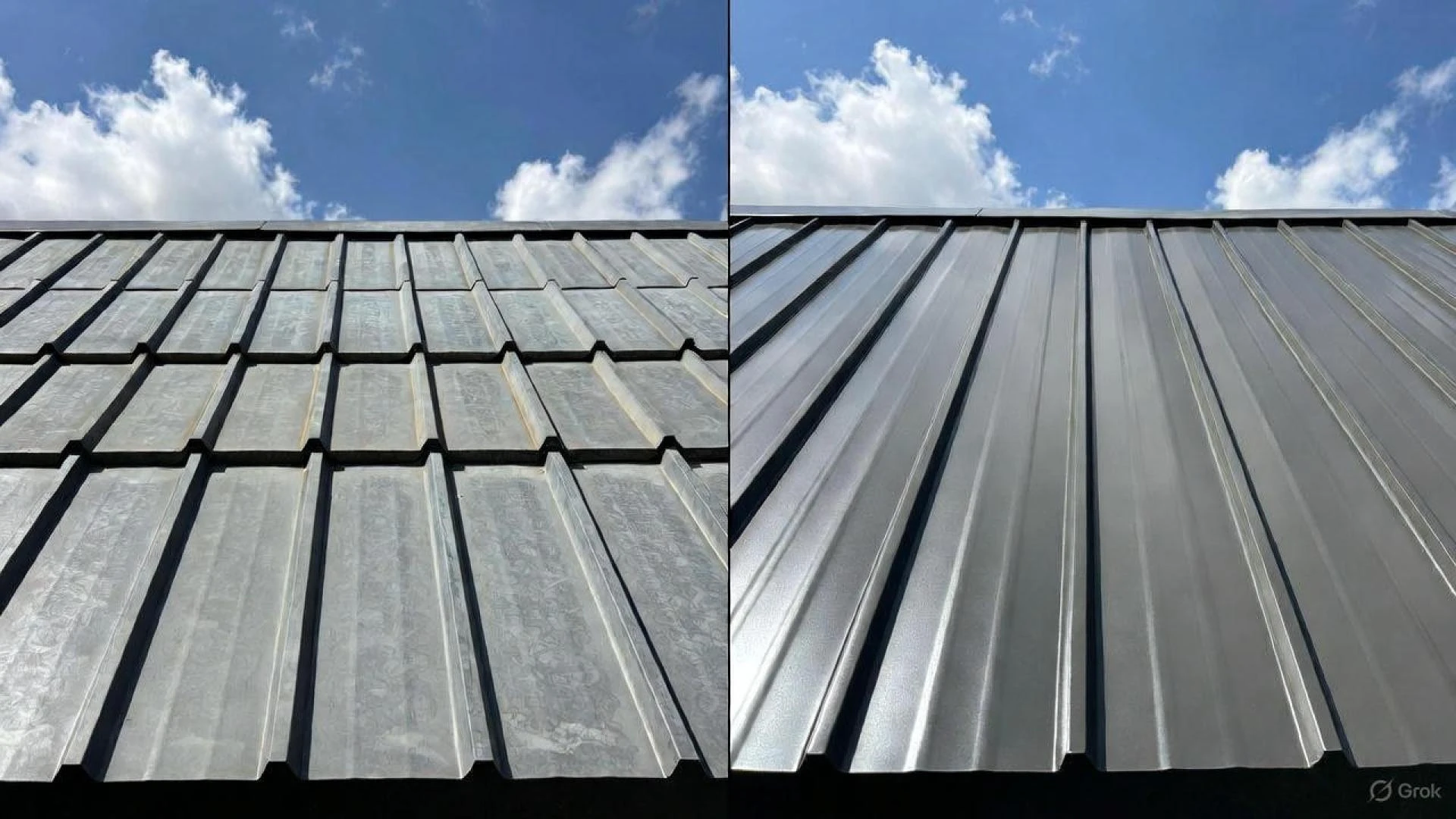
I’ve installed both r panel and pbr panel on countless jobs—from residential garages to sprawling warehouses.
The r panel vs pbr panel question isn’t just academic. Picking the wrong one can cost you time, money, and headaches.
Let’s dig into the differences, real costs, and how to make the right choice.
Understanding the Panels
R panel is a ribbed metal panel, exposed fasteners, and typically requires decking or closely spaced framing.
It’s popular for homes, small shops, and garages.
PBR panel, or Purlin Bearing Rib, includes a bearing leg along the edges. That small tweak allows it to span open purlins without extra decking.
I’ve personally installed PBR on 40-foot warehouses where R panel would have sagged mid-winter.
Panel Design and Dimensions
Knowing pbr panel dimensions and R panel specs is crucial.
- R panel: 36 inches wide, 26–29 gauge, lengths up to 40 feet
- PBR panel: same width, heavier gauge options, optimized for wide spans
On a 30-foot-span shop, PBR panels held perfectly, while R panel would have required extra framing.
Small design differences have huge practical effects.
Benefits I’ve Seen Firsthand
From field experience:
R Panel
- Affordable and widely available
- Quick install on short spans
- Works well with decking
PBR Panel
- Can span open framing
- Higher load capacity
- Superior wind and snow resistance
I once retrofitted a warehouse with R panel that sagged. Switching to PBR solved the problem entirely.
R Panel vs PBR Panel Price
Clients often ask about r panel vs pbr panel price.
- R panel: $1.25–$3.50 per square foot
- PBR panel: $1.75–$4.25 per square foot
When considering r panel vs pbr panel cost, remember: PBR can reduce framing needs.
On large builds, that often offsets the higher panel price.
Comparing PBR Panel vs AG Panel
Another common question is pbr panel vs ag panel.
Ag panels are lighter, narrower, and mainly decorative.
PBR panels are structural, meant for heavy-duty roofing.
I’ve seen DIY ag panels fail on barns. PBR would have held perfectly.
Installation Insights
R panel is forgiving with solid decking.
PBR panel installation requires careful alignment of the bearing leg on purlins.
Mistakes I’ve corrected: misaligned first panel, skipped side-lap screws, ignoring thermal expansion.
Even small oversights create leaks or buckling.
Regional Notes: Western States PBR Panel
In the Western U.S., Western States PBR panel is common due to UV intensity and snow loads.
I’ve installed it in Colorado and Utah: panels stayed straight, resisted snow, and needed minimal maintenance over a decade.
Regional coatings and gauges make a difference—don’t ignore local specs.
Cost vs Long-Term Value
Comparing r panel vs pbr panel cost, upfront, R panel is cheaper.
But PBR often saves money by reducing framing needs and avoiding callbacks.
I’ve had a 50×100-foot warehouse project: PBR cost $12k more upfront but saved $20k in structural modifications and repairs.
Long-term, PBR pays for itself on commercial builds.
Maintenance and Longevity
Both panels are low-maintenance if installed correctly:
- Inspect fasteners annually
- Clear debris
- Check trim sealant
I’ve seen PBR roofs 20+ years old in harsh climates with minimal wear.
R panels last as long—but only when used on appropriate spans.
Choosing Between R Panel and PBR Panel
Here’s my field-tested advice:
- R Panel: Residential, garages, workshops, short spans, decking present
- PBR Panel: Warehouses, barns, industrial buildings, open framing, long spans
Think of R panel as a compact SUV and PBR as a heavy-duty truck.
Both get you there—but one carries a bigger load safely.
Case Study From the Field
I installed R panel on a 30×50 pole barn.
10 years later, it’s still solid because the spacing was tight and decking solid.
A similar open-framing project with R panel sagged within three winters.
Switched to PBR—still straight after 12 years.
Lesson: structural application outweighs initial material cost.
Final Thoughts From the Jobsite
The r panel vs pbr panel decision boils down to load, span, and building type.
Both panels perform well when applied correctly.
I’ve trusted both on projects, but for wide spans or heavy loads, PBR is my go-to.
When weighing r panel vs pbr panel price, remember: long-term performance matters more than short-term savings.
Choose wisely, install properly, and your roof will last for decades.