
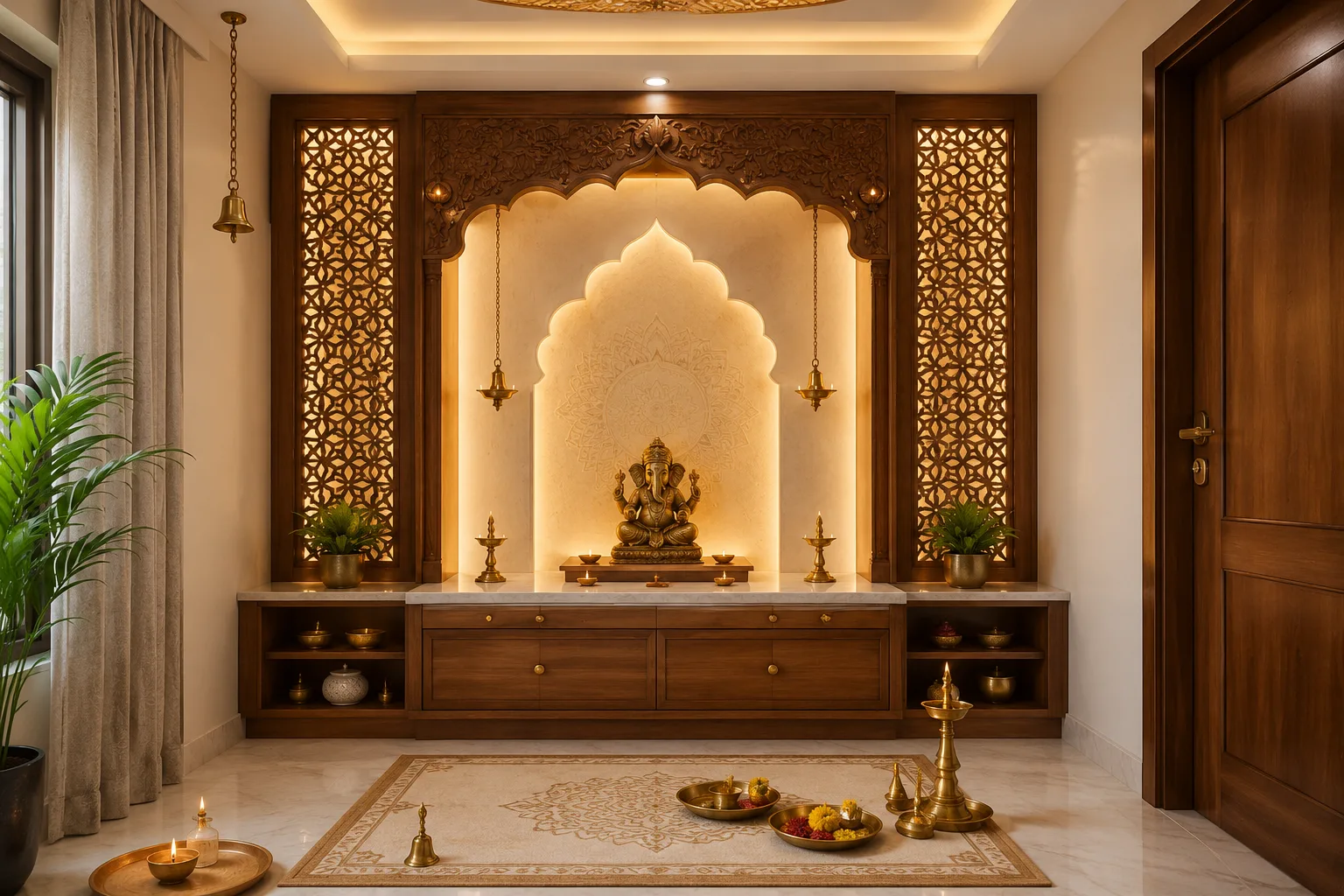
A puja room is the spiritual anchor of an Indian home, and the way it is designed has changed a lot in the last few years. Homeowners today want a space that feels peaceful, looks elegant, and still respects Vastu principles — without taking up too much room in compact modern apartments.
This guide walks through the latest Puja Room Interior Design Trends, practical layout ideas, material choices, and what to look for if you're hiring a professional for puja room interior design in Patna.
What Are the Most Popular Puja Room Design Trends Right Now?
The biggest shift in puja room design is toward minimalism combined with traditional elements. Instead of heavy wooden temples with intricate carvings covering an entire wall, homeowners are choosing:
- Wall-mounted or floating puja units that free up floor space
- Backlit marble or corian temple panels for a soft, warm glow
- Fluted wood panelling paired with brass or copper accents
- Mandala and jali (lattice) patterns for partitions and ceilings
- Neutral colour palettes — ivory, sandalwood, beige, and soft gold — replacing bright reds and maroons
- Smart lighting with dimmable LED strips instead of traditional bulbs
These trends work because they blend devotion with everyday home aesthetics, so the puja area feels connected to the rest of the house rather than isolated.
Where Should the Puja Room Be Placed According to Vastu?
The northeast corner (Ishaan kon) of the home is considered the most auspicious location for a puja room, as it is believed to receive the first rays of morning sunlight. If the northeast isn't available, east or north-facing walls are the next best options. Vastu also recommends:
- Keeping the idols at least a few inches away from the wall, not directly touching it
- Avoiding placement under a staircase or next to a bathroom
- Ensuring the door of the puja room opens inward and faces east or north
- Using a raised platform (chowki) rather than placing idols directly on the floor
Many professional designers now combine Vastu compliance with modern layout planning so the sacred space works structurally and spiritually.
How Much Space Do You Need for a Puja Room?
You don't need a dedicated room anymore — a well-designed puja corner can work in as little as 6 to 9 square feet. Here's a quick breakdown of common layouts:
Home TypeRecommended Puja SpaceCommon Design ApproachStudio/1BHK apartmentWall niche or corner unit (2–3 ft wide)Wall-mounted floating shelf with sliding doors2–3 BHK apartmentDedicated corner (4–6 sq ft)Fluted panel backdrop with a small temple unitIndependent house/villaSeparate puja room (40–80 sq ft)Full room with jali windows, seating, and storageDuplex/luxury homePuja room with mezzanine or skylightMarble flooring, dome ceiling, natural light wellThis flexibility is one reason puja room design has become a specialised niche — the same principles need to be adapted very differently for a small flat versus an independent bungalow.
What Materials Work Best for a Modern Puja Room?
Material choice affects both durability and how sacred the space feels. The most requested combinations currently include:
- Marble or Italian marble flooring – easy to clean, naturally cooling, and traditionally considered pure
- Teak or sheesham wood units – long-lasting and pair well with brass fittings
- Corian or acrylic backlit panels – used for temple backdrops with carved motifs
- Brass and copper fixtures – for bells, diyas, and door handles, adding a traditional touch
- Jali (perforated) partitions – in wood, MDF, or stone, used to separate the puja area without a solid wall
A practical tip from recent projects: matte-finish surfaces are being preferred over glossy ones because they don't show fingerprints or water marks from daily rituals like aarti and abhishek.
How Do You Design a Puja Room in a Small Apartment?
This is one of the most common questions homeowners search for, especially in cities with compact housing. The answer generally involves:
- Vertical storage for puja items instead of wide cabinets
- Fold-away or sliding doors to conceal the temple when not in use
- Compact chowki-style seating rather than full flooring
- A single accent wall (jali, fluted panel, or textured plaster) instead of decorating all four walls
- Task lighting focused only on the idols, keeping the rest of the area subtle
This approach keeps the puja space visually calm and functional even in a 1BHK or 2BHK home.
What Should You Ask a Puja Room Designer Before Hiring Them?
Whether you're planning a small wall unit or a full room, it helps to ask a few direct questions before finalising a designer or contractor:
- Can they show a portfolio of completed puja room projects, not just renders?
- Do they consult a Vastu expert or follow Vastu guidelines during planning?
- What materials and finishes are included in the quoted price?
- What is the expected timeline from design to installation?
- Do they offer customisation for idol size, storage needs, and existing home decor?
If you are looking for puja room interior design in Patna, asking these questions upfront helps you compare quotes accurately and avoid mismatched expectations later.
How Do You Choose the Best Puja Room Designing Company in Patna?
Patna has seen growing demand for dedicated puja room design as more homeowners renovate older houses or design new ones with a modern-traditional blend. When evaluating the best puja room designing company in Patna, it's worth comparing on these factors:
FactorWhy It MattersPortfolio of local projectsShows familiarity with regional preferences and home layoutsVastu knowledgeEnsures placement and design follow traditional guidelinesMaterial sourcingLocal sourcing can reduce cost and delivery timeCustomisation optionsAllows the design to match idol size, family traditions, and available spaceAfter-installation supportUseful for maintenance of lighting, wood finish, or fittingsA company that combines interior design expertise with an understanding of Vastu tends to deliver more balanced results than a general contractor handling it as a side task.
Final Thoughts
Modern puja room design is less about ornate decoration and more about creating a genuinely peaceful, functional corner that fits the way people actually live today — smaller homes, busier schedules, and a preference for understated elegance. Whether you're planning a compact wall unit or a full room with marble flooring and jali windows, aligning the design with both Vastu principles and practical space planning makes the biggest difference. For homeowners exploring puja room interior design in Patna, working with a designer who understands both the aesthetic trends and traditional requirements will give the most lasting result.
For general guidelines on residential space planning and building norms, you can refer to the Ministry of Housing and Urban Affairs, Government of India.