Hair loss is a common concern affecting many men and women in Dubai and worldwide. Among the various treatment options available, Platelet-Rich Plasma (PRP) injections have gained significant popularity due to their natural approach and promising results. This article provides a comprehensive guide on PRP Hair Restoration Dubai, explaining what the treatment involves, how it works, what to expect during and after the procedure, and key factors to consider before opting for it.
What Are PRP Injections for Hair Growth?
PRP stands for Platelet-Rich Plasma, a substance derived from your own blood that contains a high concentration of platelets. Platelets are rich in growth factors that stimulate cell repair and regeneration. When injected into the scalp, PRP encourages hair follicles' natural growth cycle, promoting thicker, healthier hair.
PRP therapy has become a sought-after non-surgical alternative for people experiencing hair thinning, early-stage hair loss, or those wanting to improve overall scalp health. The treatment is believed to boost hair density, slow down hair loss, and sometimes stimulate new hair growth.
How Do PRP Injections Work for Hair Growth?
The science behind PRP therapy lies in harnessing your blood's healing power:
- A small volume of blood (typically 10-20 ml) is drawn from your arm.
- The blood is processed in a centrifuge, which separates the platelet-rich plasma from other components like red blood cells.
- This platelet-rich plasma, rich in growth factors, is carefully injected into specific areas of the scalp where hair thinning or loss has been observed.
- The growth factors promote tissue repair, stimulate hair follicle stem cells, and improve blood supply to the hair roots.
This natural process helps to prolong the active growth phase (anagen) of hair follicles, resulting in reduced hair shedding and increased hair thickness.
What to Expect During a PRP Treatment Session in Dubai
Understanding the procedure can help prepare you mentally and physically. Here is a typical sequence of a PRP hair treatment session:
Pre-Treatment Preparation
- A consultation is usually conducted to assess your scalp condition, hair loss pattern, and suitability for PRP.
- Medical history will be reviewed to rule out any contraindications such as blood disorders or infections.
The PRP Procedure Steps
- Blood Draw: A small sample of your blood is taken from your arm using sterile methods.
- Centrifugation Process: The blood sample is spun in a centrifuge separating the plasma rich in platelets.
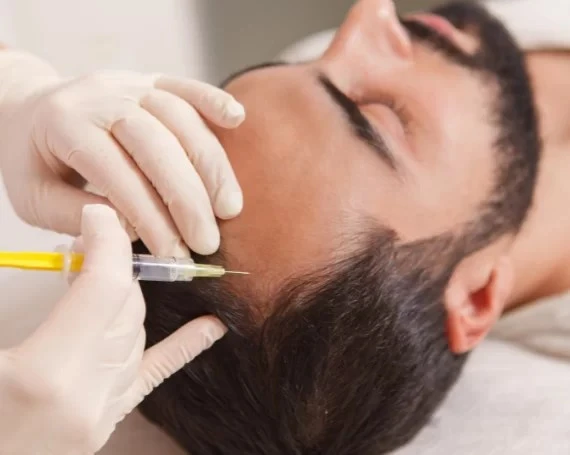
- Scalp Injection: Using fine needles, the PRP is injected into targeted areas on the scalp where hair growth stimulation is needed.
- Duration: The entire session usually lasts about 45 minutes to 1 hour.
Pain and Discomfort
Most patients report minimal pain or discomfort during the injections; the process is typically well-tolerated. Topical anesthetics or cooling methods may be used to reduce any sensation of pain.
Post-Treatment Care and Recovery
One of the benefits of PRP for hair growth is the minimal downtime involved. Here’s what you can expect after the procedure:
- Mild Scalp Sensitivity: Some temporary redness, swelling, or tenderness where the injections were made is common for 1-2 days.
- Activity Restrictions: It’s advisable to avoid washing your hair or strenuous exercise for 24-48 hours after treatment.
- Hair Care: Use gentle hair products and avoid harsh chemicals or heat styling immediately after the procedure.
How Many Sessions Are Needed?
Hair growth stimulation through PRP typically requires multiple treatment sessions for optimal results. A common protocol is:
- Initial phase: 3 to 4 sessions spaced 4-6 weeks apart.
- Maintenance phase: Follow-up treatments every 3-6 months.
Consistency in sessions maximizes the effects and may help sustain hair growth in the long run.
Who Is an Ideal Candidate for PRP Hair Therapy?
PRP injections are mainly recommended for individuals experiencing:
- Early signs of hair thinning and androgenetic alopecia (pattern baldness).
- Hair loss due to stress, hormonal imbalances, or mild scalp inflammation.
- Those seeking a natural, minimally invasive hair rejuvenation option.
It’s important to have realistic expectations—PRP works best for individuals with active hair follicles and may not be effective in completely bald areas or advanced hair loss.
Potential Risks and Side Effects
PRP is considered safe due to the use of your own blood, minimizing risks of allergic reactions or infections. However, minor side effects can include:
- Temporary scalp soreness or bruising
- Mild headache or dizziness (rare)
- Infection risk is minimal with proper sterile technique
Consultation with a healthcare expert is important to assess suitability, especially if you have underlying medical conditions.
PRP Hair Growth in Dubai: The Local Perspective
Dubai offers advanced medical facilities where this cutting-edge treatment is commonly performed by trained specialists. The city's diverse population often seeks PRP for Hair Loss Dubai, making it an attractive choice for busy professionals and residents seeking non-surgical solutions.
Conclusion
PRP injections represent an innovative, natural method to stimulate hair growth and improve scalp health. For those facing early hair thinning or mild hair loss, PRP offers a minimally invasive treatment with promising results and little downtime.