The weeks right after a hair transplant can feel like a strange mix of relief and impatience. You have finally taken action on something that has been bothering you for a while, and now comes the hardest part. Waiting. Waiting for the scalp to heal. Waiting for the temporary shedding phase to pass. Waiting for that first sign of fresh growth.
What most people do not realise until they have been through it is that this recovery window is far more important than it seems. What happens during these weeks can genuinely influence how your final results turn out. And this is exactly why PRP hair treatment has become such an essential part of modern hair restoration planning.
If you are considering or have recently undergone a hair transplant in Thane, understanding how PRP supports the recovery process is worth your attention.
Why the Healing Phase Deserves So Much Focus
During a hair transplant, individual follicular units are carefully extracted from a donor area, usually the back of the scalp, and implanted into the areas where hair has thinned or stopped growing. Each transplanted graft needs to do quite a lot of work in a fairly short window. It has to establish a fresh blood supply, settle properly into the surrounding tissue, and eventually move into an active growth phase.
In the days and weeks following the procedure, the scalp is healing on several fronts simultaneously. The skin surface is recovering from the tiny incisions made during the transplant. The grafts themselves are trying to connect with nearby blood vessels. And underneath it all, the transplanted follicles typically go through a natural shedding cycle before settling into renewed growth.
This is a sensitive and important stage. If the scalp does not have the right support during this period, healing can slow down, and the overall success rate of the grafts can be affected. This is precisely the gap that PRP is designed to fill.
Understanding PRP and How It Actually Works
PRP stands for Platelet Rich Plasma. It is a treatment that uses your own blood to concentrate the natural healing proteins your body already produces, then delivers them directly to where they are needed most.
The process is fairly simple. A small blood sample is drawn from your arm, much like a routine blood test. This sample is then placed into a centrifuge machine, which spins it at high speed to separate it into its different components. What gets isolated is the plasma layer that contains the highest concentration of platelets, the cells responsible for healing and tissue repair.
Platelets are loaded with growth factors, which are specialised proteins that instruct your body to repair damaged tissue, generate new cells, and improve blood circulation. When this concentrated plasma is injected into the scalp, those growth factors begin working directly on the hair follicles in that area.
PRP treatment for hair stimulates new blood vessel formation around the follicles, helps calm inflammation in the scalp tissue, and encourages weak or dormant follicles to shift back into an active growth phase. Since the treatment is made entirely from your own blood, there is no risk of allergic reaction and nothing foreign being introduced into your body. It is a safe, well-studied therapy that has earned its place as one of the most reliable supportive treatments in hair restoration today.
How PRP Speeds Up Recovery After a Hair Transplant in Thane
When PRP is introduced during the weeks following a hair transplant, it offers a set of very specific advantages that directly support the most delicate parts of the healing process.
The first major advantage is reduced inflammation. Some swelling and redness after a transplant is completely normal, but PRP growth factors actively help calm this response, creating a more stable healing environment for the newly placed grafts.
The second is improved graft survival. For transplanted follicles to thrive, they need a reliable blood supply, and they need it fast. PRP speeds up the formation of new blood vessels around each graft, ensuring the follicles receive the oxygen and nutrients they need during the most critical early phase of recovery.
The third is faster surface healing. The small incisions made during the procedure tend to heal more quickly when the scalp tissue is receiving concentrated growth factor support. In practical terms, this often means less visible redness, quicker resolution of any scabbing, and a generally smoother overall recovery.
The fourth, and the one most patients care about most, is earlier visible growth. Nearly every transplant patient goes through a shedding phase between roughly weeks two and eight, where the transplanted hair temporarily falls out before the follicles transition into a fresh growth cycle. PRP cannot eliminate this phase entirely, but it can shorten its duration and help follicles re-enter active growth sooner. Many patients who add PRP hair treatment in Thane to their recovery plan report seeing new growth appear earlier than they expected.
What PRP Does for Long-Term Hair Growth
The benefits of PRP are not limited to the early recovery period. Continued sessions over the following months provide ongoing support that improves both the quality and the durability of your results.
As the transplanted hair starts to grow in, regular PRP treatment for hair helps maintain a healthy scalp environment, which supports the development of thicker and stronger hair shafts. Follicles that are consistently nourished tend to produce denser, more resilient hair over time compared to follicles left without any additional support.
PRP also plays a meaningful role in protecting the natural hair surrounding the newly transplanted areas. This is a detail many patients overlook. The hair around the transplant zones is often already experiencing some degree of thinning, since it is typically affected by the same underlying causes as the original hair loss. Without intervention, this surrounding hair can continue to weaken even while the transplanted hair grows in beautifully, which can eventually create an uneven or patchy looking result.
By strengthening these existing follicles and slowing further loss, PRP helps create a far more balanced, natural, and complete-looking outcome across the entire scalp.
What to Expect During a PRP Session
If you have never undergone PRP before, knowing what to expect can make the process feel a lot less daunting. A typical session takes somewhere between 45 and 75 minutes from start to finish.
The appointment begins with a small blood draw, usually around 15 to 20 ml, taken from your arm. This sample is placed in a centrifuge and processed for several minutes to separate and concentrate the platelet rich plasma. While the blood is being processed, a numbing cream is applied to your scalp to keep the injection process comfortable.
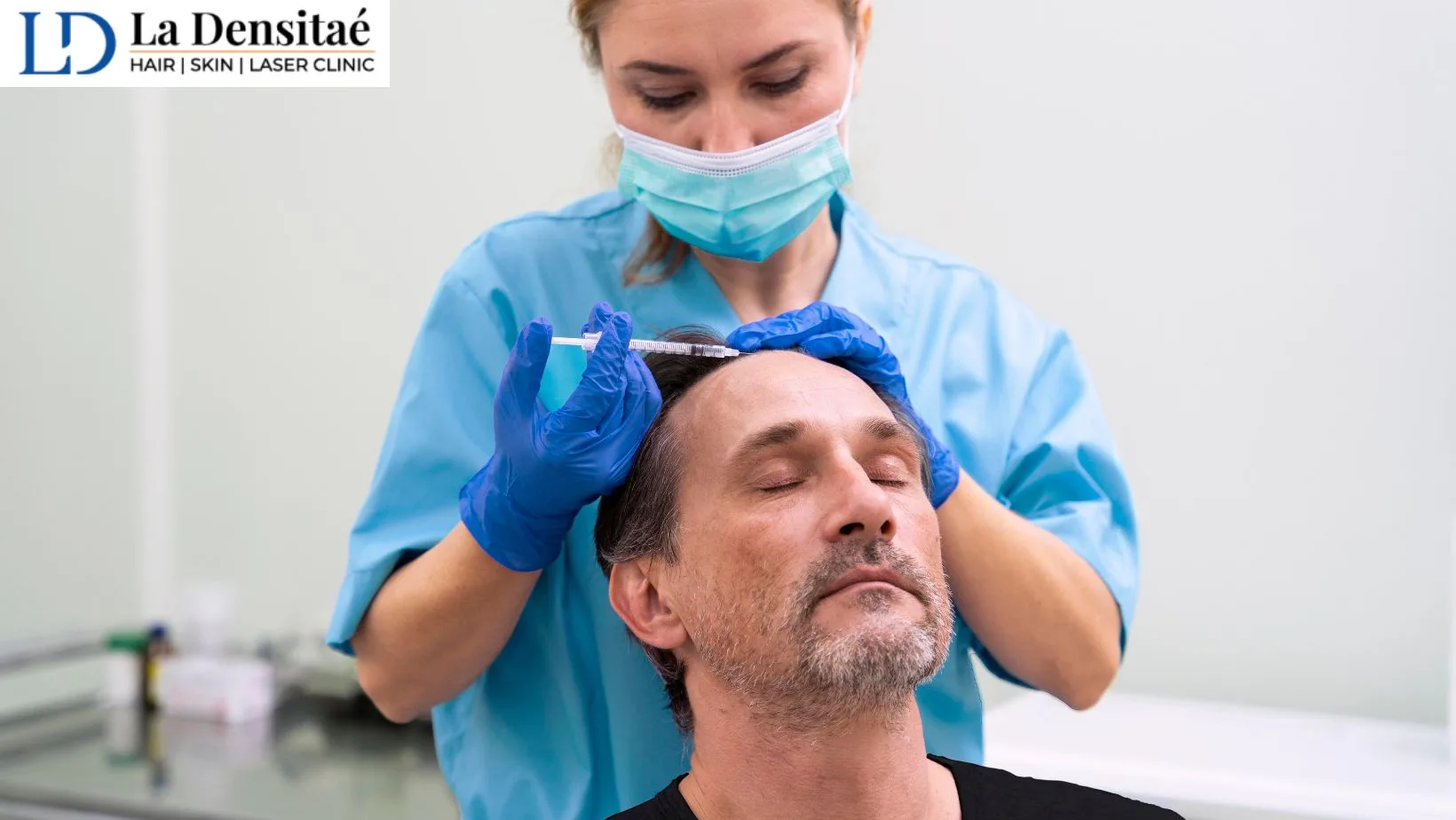
Once the PRP is ready, it is carefully injected at multiple points across the treatment area using very fine needles. The exact injection pattern depends on which areas are being treated and what your specific hair goals are.
Some mild redness or slight tenderness on the scalp afterward is completely normal and usually settles within a few hours. There is no real downtime involved, and most people return to their regular activities immediately.
For patients recovering from a transplant, PRP is generally recommended starting two to four weeks after the procedure, once the initial healing process is underway. A typical course involves three to four sessions spaced about a month apart, followed by maintenance sessions every few months to help sustain the results long term.
Finding the Right Hair Transplant Clinic in Thane for PRP
Not every PRP treatment delivers the same quality of results, and this difference usually comes down to the skill of the practitioner and the equipment being used.
When choosing a hair transplant clinic in Thane for PRP, prioritise clinics where hair restoration is a genuine specialisation rather than just one of many general services offered. Doctors who regularly perform both transplants and PRP understand exactly how to time and target the treatment for the best possible outcome.
Ask specifically about the centrifuge equipment the clinic uses. Better quality machines produce a cleaner, more concentrated PRP sample, which has a direct impact on how effective the treatment ultimately is. Even the most skilled injection technique cannot compensate for a poorly processed sample.
It is also worth paying attention to how thoroughly the clinic evaluates your scalp before recommending a treatment plan. A proper assessment of your hair loss pattern, follicle condition, and recovery progress is essential for PRP to deliver its full benefit. If a clinic skips straight to pricing without a real evaluation, that is worth noting.
Thinking Through the Cost
It is natural to consider hair transplant cost in Thane as part of your overall decision-making process. Pricing for the transplant procedure itself depends on the technique used, the number of grafts required, and the clinic's expertise and facilities. PRP sessions are usually priced separately and charged per session as an addition to the overall plan.
While this does add to your total investment, the benefits PRP brings in terms of faster healing, stronger graft survival, and improved long-term density make it a sound decision for most patients. Consider the alternative scenario, where a patient skips PRP, experiences a slower recovery or less dense growth, and later needs corrective treatments to fix the gap. In that context, PRP often ends up being the more cost-effective path overall.
Many clinics also offer bundled packages that combine PRP sessions with the transplant procedure at a more affordable combined rate, so it is always worth asking about this during your consultation.
Give Your Recovery the Same Care as Your Procedure
Hair treatment in Thane has evolved significantly over recent years, moving away from the idea that the transplant procedure alone is the complete solution. The best outcomes today come from a thoughtful, complete approach that supports the scalp at every stage of the journey, not only during the surgical part of the process.
PRP hair treatment plays a central role in this approach. It works alongside your body's own natural healing processes, supports your transplant through its most delicate phase, and helps your hair grow back stronger, fuller, and faster than it otherwise would.
If you are planning or have recently completed a hair transplant in Thane, it is worth speaking to a qualified specialist about including PRP in your recovery plan. It is a relatively small addition to your overall journey that can make a genuinely meaningful difference to how your final results look and feel.