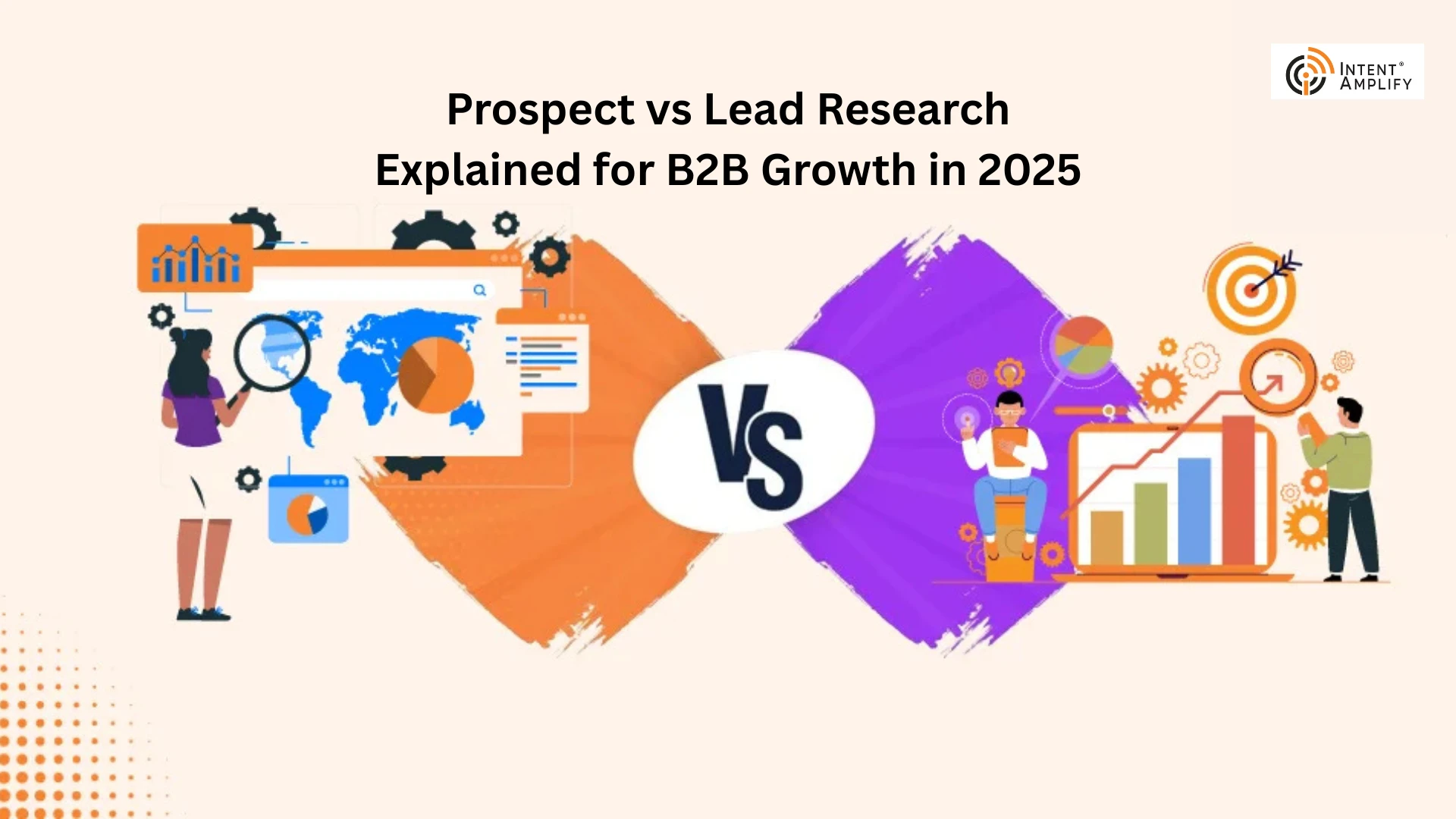
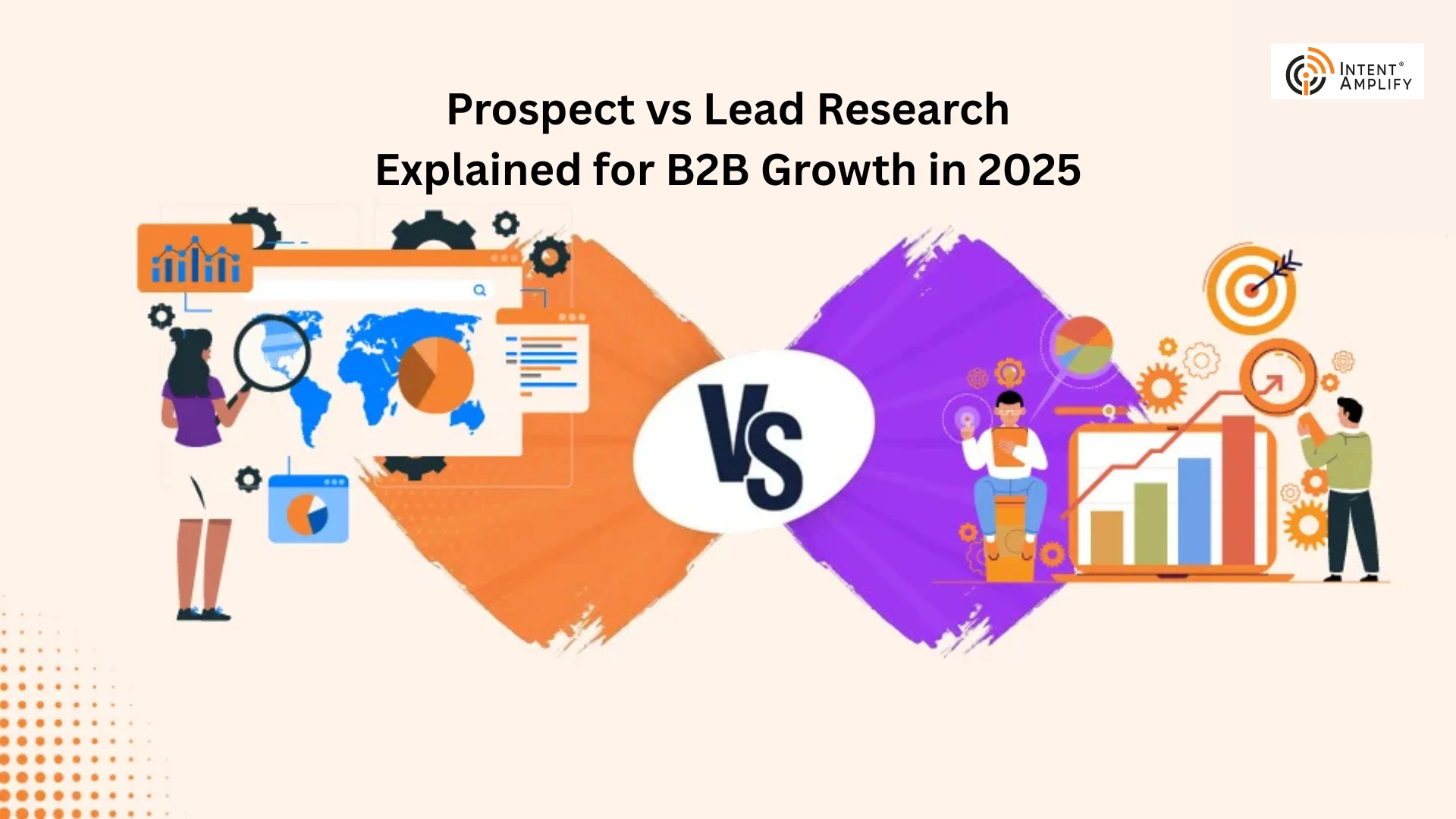
In today's competitive B2B landscape, the difference between a prospect and a lead often determines whether your sales pipeline thrives or stagnates. Many organizations use these terms interchangeably, yet they represent fundamentally different stages in the buyer journey. Understanding this distinction and executing targeted research for each stage has become essential for driving meaningful revenue growth in 2025.
The challenge facing modern sales and marketing teams isn't finding contacts—it's identifying the right contacts at the right time with the right level of intent and engagement. Without clarity on what constitutes a prospect versus a lead, your team wastes resources pursuing unqualified contacts while missing high-potential opportunities hiding in plain sight.
This comprehensive guide breaks down the prospect versus lead distinction, explains how research strategies differ for each, and reveals how B2B companies are using this understanding to accelerate pipeline growth and improve sales efficiency.
Understanding the Core Difference: Prospects vs Leads
Before diving into research methodologies, establishing precise definitions is critical. The confusion between prospects and leads stems from their overlapping nature, yet they occupy distinct positions in the sales funnel.
A prospect is a company or individual that fits your ideal customer profile and possesses the characteristics suggesting they could benefit from your solution. Prospects represent the broadest category—they're potential customers you've identified through research or targeting criteria. However, a prospect hasn't necessarily expressed interest in your offering. They're in the awareness phase at best.
A lead, by contrast, is a prospect who has demonstrated active interest in your solution. They've engaged with your content, attended a webinar, downloaded a resource, filled out a form, or otherwise signaled intent to learn more. Leads represent qualified prospects who have taken action indicating buyer readiness.
Key distinctions at a glance:
- Prospects are identified through research; leads are created through engagement
- Prospects fit your ideal customer profile; leads show behavioral intent signals
- Prospects require outbound prospecting; leads respond better to targeted nurturing
- Prospect research focuses on fit; lead research emphasizes engagement and buying signals
The strategic implication is significant: your research approach, messaging framework, and engagement strategy must differ fundamentally depending on whether you're targeting prospects or working with leads.
Why Prospect Research Matters in 2025
Prospect research has evolved dramatically. In 2025, successful prospect identification combines traditional account research with advanced data intelligence and behavioral analysis. Companies that excel at prospect research start with clear ideal customer profile (ICP) definition and then systematically identify organizations matching those criteria.
Effective prospect research answers fundamental questions: Does this company have the budget to purchase? Do they face the problems your solution solves? Is there organizational change suggesting increased buying urgency? Do they operate in an industry where your solution delivers proven ROI?
The 2025 prospect research landscape includes multiple data sources. Account intelligence platforms provide enriched company data, technographic insights revealing software usage, financial indicators showing growth trajectory, and organizational structure information. These tools have become table stakes for serious B2B demand generation programs.
What separates world-class prospect researchers from average performers is their ability to synthesize disparate data sources into actionable intelligence. Understanding industry-specific trends, recognizing organizational change signals, and identifying economic conditions favoring your solution separate high-performing teams from those generating undifferentiated prospect lists.
Elements of comprehensive prospect research:
- Company financials and growth trajectory indicators
- Industry vertical and market positioning
- Technology stack and software usage patterns
- Organizational structure and decision-maker identification
- Recent company announcements and strategic initiatives
- Competitive positioning and vulnerability analysis
- Budget cycle timing and procurement patterns
Research quality directly impacts downstream conversion metrics. Teams with rigorous prospect research criteria report higher engagement rates, shorter sales cycles, and improved deal quality compared to teams relying on broad, unqualified prospect lists.
The Lead Research Imperative: Converting Intent Into Pipeline
While prospect research focuses on identifying fit, lead research centers on understanding engagement context and buying intent. When someone downloads a resource, attends a webinar, or visits your pricing page, they've created data points revealing their interests and likely business challenges.
Lead research in 2025 emphasizes intent signals and behavioral indicators. Modern marketing automation platforms, website analytics, and engagement tracking tools provide unprecedented visibility into what prospects are learning, which content resonates, and where they're in their evaluation journey.
The sophistication of lead research directly influences nurturing effectiveness. When your team understands that a lead engaged with three pieces of content focused on cost optimization, they can tailor subsequent outreach around ROI and efficiency. When research reveals a lead is comparing your solution with three competitors, your team can proactively address differentiation.
Progressive B2B organizations implement lead scoring models that combine behavioral and demographic factors. A lead demonstrating high engagement (multiple content views, extended time on key pages, repeated visits) scores higher than a lead with single, passive engagement. This scoring methodology helps sales teams prioritize follow-up efforts toward highest-probability opportunities.
Download Your Free Media Kit
Mastering prospect and lead research is foundational to B2B growth. Learn how forward-thinking organizations differentiate their prospect identification and lead qualification strategies to accelerate pipeline growth and sales efficiency.
Download Your Free Media Kit to discover best practices in demand generation research, lead qualification, and account-based prospecting.
Research Methodologies for Prospect Identification
Building a systematic prospect research process requires multiple data sources and analytical frameworks. In 2025, the most effective prospect research combines first-party data (your customer database, website analytics) with third-party intelligence (account intelligence platforms, industry databases) and intent signals (content engagement, search behavior).
First-party data analysis reveals patterns in your best customers. What industries do they operate in? What company sizes generate highest lifetime value? What geographic regions show strongest product adoption? What roles typically champion your solution? This analysis creates your ideal customer profile, establishing the criteria against which all prospects are measured.
Third-party account intelligence platforms provide enriched company data unavailable through traditional research. These platforms track company growth, leadership changes, technology implementations, funding announcements, and strategic initiatives. When integrated with your prospect research process, this intelligence dramatically improves targeting accuracy.
Consider a scenario where you discover through research that a target prospect recently hired a new Chief Marketing Officer from a digital-native company. This intelligence signals likely budget allocation toward marketing technology, content platforms, and demand generation capabilities. Your prospect research has identified not just a company, but a company in transition with heightened buying probability for marketing-focused solutions.
Industry vertical research provides contextual understanding of market dynamics, regulatory environments, and competitive pressures specific to prospects' industries. A manufacturing prospect facing supply chain disruption has different priorities than a healthcare prospect navigating regulatory change. Effective research accounts for these contextual differences.
Prospect research best practices:
- Define your ideal customer profile with extreme clarity
- Monitor technology adoption indicating readiness for your solution
- Track organizational changes suggesting increased buying urgency
- Analyze competitive displacement opportunities
- Segment prospects by stage and buying readiness
- Continuously refine prospect criteria based on customer analysis
Lead Scoring and Qualification Research
Once you've identified prospects and initiated outreach, lead research becomes focused on qualifying interest and engagement level. Modern lead qualification combines behavioral research with explicit feedback gathering.
Behavioral research reveals how leads interact with your digital properties. Which pages do they visit most frequently? How much time do they spend with specific content? Do they access multiple pieces of related content suggesting deep exploration? Do they revisit key pages, indicating serious consideration? These behavioral patterns provide windows into their interests and evaluation progress.
Explicit feedback gathering—surveys, discovery calls, lead qualification forms—provides direct insight into lead challenges, purchase timeline, budget availability, and decision-making process. The most effective B2B organizations combine behavioral and explicit research to build comprehensive lead profiles.
Lead scoring in 2025 increasingly incorporates predictive models leveraging historical conversion data. These models identify behavioral patterns most correlated with eventual customer conversion. Organizations using predictive lead scoring report 20-30% improvements in sales team efficiency compared to traditional explicit scoring alone.
Components of effective lead research:
- Content engagement patterns and frequency
- Page visit sequences revealing research trajectory
- Comparison content viewing indicating evaluation stage
- Explicit feedback from conversations and surveys
- Technographic alignment with your solution requirements
- Fit assessment against ideal customer profile
- Timeline and budget indicators suggesting purchase readiness
The Account-Based Research Advantage
Account-based marketing (ABM) strategy depends entirely on exceptional prospect and lead research. When you identify target accounts strategically and then implement coordinated research at the company, department, and individual level, your prospecting and nurturing efforts become substantially more effective.
ABM-focused research goes beyond traditional prospect research by identifying specific individuals within target accounts who influence purchase decisions. Rather than researching whether a company fits your ICP, ABM research investigates whether they have decision-makers aligned with your solution, whether recent organizational changes create buying urgency, and whether specific individuals' professional backgrounds suggest openness to your approach.
This hyper-targeted research enables personalized outreach at scale. When you know that a prospect company just hired a new VP of Sales with background in account-based selling, you've gained invaluable insight for personalized outreach. Your research has identified not just a prospect, but a prospect most likely responsive to your specific value proposition.
Leading B2B companies in 2025 structure their research capabilities to support ABM execution. They combine account-level research identifying high-potential targets with contact-level research enabling personalized engagement. This tiered research approach drives significant improvements in engagement rates and conversion velocity.
Integrating Prospect and Lead Research Into Your Sales Process
The practical application of prospect and lead research occurs through integrated systems where research insights feed directly into prospecting and nurturing workflows. This integration ensures research quality translates into operational impact.
Sales development teams responsible for prospect outreach require research tools providing rapid access to prospect intelligence. When a researcher identifies a high-fit prospect, the SDR team needs context immediately: company profile, recent announcements, decision-maker information, identified pain points, and competitive positioning. This research-enabled outreach converts more frequently than generic prospecting.
Similarly, marketing automation systems should activate different engagement tracks based on lead research findings. A lead demonstrating high engagement with cost-optimization content should receive messaging emphasizing ROI benefits. A lead comparing you with competitors should receive differentiation-focused content. This research-informed personalization drives higher engagement and faster deal progression.
The most sophisticated organizations implement unified lead and prospect databases where research findings flow seamlessly from prospect research into lead nurturing and ultimately into sales engagement. When research reveals a prospect is expanding into a new market, this intelligence automatically informs nurturing campaigns emphasizing your solution's benefits for market expansion scenarios.
Book Your Free Demo
See how Intent Amplify's AI-powered platform integrates prospect research, lead intelligence, and account-based marketing to accelerate your B2B pipeline growth and sales efficiency.
Book Your Free Demo to explore how leading B2B companies leverage advanced research capabilities to qualify prospects faster and convert leads more effectively.
Research Technologies Transforming B2B Growth in 2025
The technology landscape for prospect and lead research has expanded dramatically. Artificial intelligence, predictive analytics, and advanced data integration now enable research capabilities previously requiring enormous manual effort.
AI-powered prospect identification platforms analyze millions of company data points, identify patterns correlated with conversion, and automatically surface high-fit prospects matching your criteria. These platforms dramatically reduce time spent on manual research while improving prospect quality through algorithmic pattern recognition.
Intent data platforms monitor online behavior signals indicating buying intent. When companies exhibit search patterns, content consumption, and website behavior consistent with evaluating solutions in your category, intent platforms flag these signals. For B2B companies, this intent intelligence has become invaluable for timing outreach and prioritizing prospect lists.
Predictive lead scoring leverages historical customer data to identify leads most likely to convert to customers. Rather than relying on explicit scoring rules, predictive models continuously learn which behavioral and demographic patterns correlate with conversion. This approach typically improves sales team efficiency and conversion rates compared to traditional scoring methodology.
Company intelligence platforms provide enriched data on organizational structure, recent hires, technology adoption, financial performance, and strategic initiatives. Integration of this intelligence into prospect research workflows enables team members to rapidly assess prospect fit and identify buying signals.
The convergence of these technologies has democratized access to research capabilities. Mid-market and even smaller B2B companies now have access to prospect and lead research tools previously available only to enterprise organizations with large research teams.
Research Best Practices for 2025
The most successful B2B organizations have established rigorous research disciplines ensuring consistent quality and operational impact. These best practices differentiate high-performing demand generation and sales teams.
First, establish clear ideal customer profile criteria defining exactly which prospects warrant outreach investment. Without clear ICP definition, prospect research becomes unfocused and wasteful. Your ICP should be based on analysis of your best existing customers, not industry assumptions about who should benefit from your solution.
Second, implement systematic prospect research processes ensuring consistency across your team. Different team members should conduct prospect research using comparable criteria and data sources, enabling reliable comparison of prospect quality and reducing individual biases affecting research quality.
Third, maintain research documentation enabling knowledge sharing and continuous improvement. When your team documents research findings, decision rationale, and outcomes, you create institutional knowledge improving future research efforts. This documentation also enables analysis identifying which research criteria correlate most strongly with eventual conversion.
Fourth, integrate research findings directly into prospecting and nurturing workflows. Research value is realized only when insights influence messaging, prioritization, and engagement strategy. If research lives in spreadsheets disconnected from sales and marketing operations, it generates minimal return on investment.
Fifth, continuously test and refine your research criteria based on actual conversion outcomes. The research criteria generating highest-quality prospects should receive continued investment, while underperforming criteria should be modified or eliminated.
The Future of Prospect and Lead Research
Looking forward, expect continued integration of artificial intelligence and machine learning into prospect and lead research. Predictive models will become increasingly sophisticated at identifying prospects and leads most likely to convert, enabling unprecedented targeting precision.
However, technology alone is insufficient. The organizations winning in 2025 and beyond combine powerful research tools with human judgment, domain expertise, and strategic thinking. Researchers who understand industry dynamics, recognize organizational change signals, and think strategically about competitive positioning create value that pure algorithmic approaches cannot.
The most progressive organizations are investing in research talent—experienced professionals who understand their industry, recognize buying signals, and can synthesize disparate data sources into actionable intelligence. These researchers partner with sales teams to ensure intelligence translates into pipeline impact.
Contact Us Today
Transform your B2B prospecting and lead qualification strategy through research-powered demand generation and account-based marketing.
Contact Us Now to discuss how Intent Amplify can help your organization master prospect and lead research, accelerate pipeline growth, and achieve your revenue objectives.
About Us
Intent Amplify® is a full-funnel, omnichannel B2B lead generation powerhouse powered by AI, delivering cutting-edge demand generation and account-based marketing solutions since 2021. We provide a one-stop shop for all B2B lead generation and appointment-setting needs, helping companies across healthcare, IT/data security, HR tech, martech, fintech, and manufacturing strengthen their sales and marketing capabilities. Our skilled professionals take full responsibility for your success, offering comprehensive services including B2B Lead Generation, Account-Based Marketing, Content Syndication, Install Base Targeting, Email Marketing, and Appointment Setting. We're committed to building steadfast partnerships, catering to your personalized requirements and driving meaningful revenue results.
Contact Us
Intent Amplify® 1846 E Innovation Park Dr,
Suite 100 Oro Valley, AZ 85755
Phone: +1 (845) 347-8894, +91 77760 92666
Email: [email protected]