
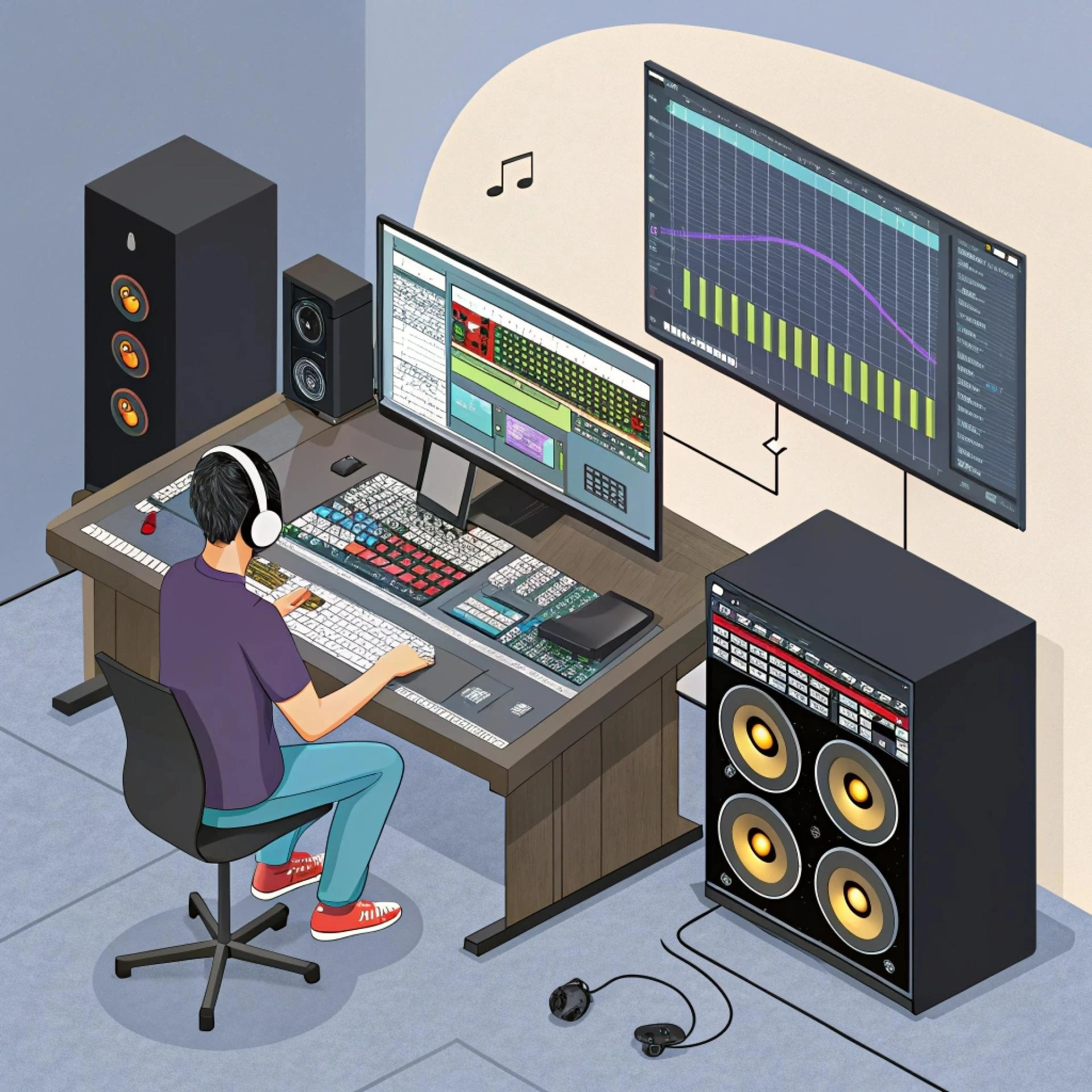
The base of modern sound creation, mixing, and mastering lies in Digital Audio Workstations, commonly called DAWs. Whether a beginner or an advanced learner in techniques, knowing how to use a DAW professionally can make all the difference in your audio output quality. Many keen learners start this through exposure via music production courses in Chennai, while others learn through practice, observation, and experimentation.
This article will take you through some of the practical techniques of DAW which can enhance the result of sound engineering. These techniques are simple to understand but highly effective if applied with patience and consistency.
1. Understand Your DAW Layout Completely
Before trying advanced tools, take complete control over the layout. Any DAW contains tracks, automation lanes, plugins menu, mixer panel, and editing tools. Study the shortcuts and workflow features because fast navigation saves time and is good for creative flow.
2. Always start with Clean Audio
No matter how powerful your DAW, or advanced your plugins, poor input always equates to poor output. While recording, make sure:
Proper mic distance
Correct gain level - avoid clipping
Fewer effects are required afterward with clean audio, and it allows the dynamics to remain intact.
3. The gain staging must be perfect
Gain staging is how you keep your recorded audio signal in healthy levels throughout your processing chain, to avoid distortion, clipping, and other kinds of unwanted noise. You want your signals neither too low nor too loud.
4. EQ With Precision, Not Emotion
EQ shapes the frequency balance, but most beginners misuse it by boosting too many frequencies. The rule is always subtract before you add. Find those low rumbles, harsh mids, or piercing highs that aren't needed and take them down a notch. For instance:
Cut low frequencies - rumble in vocal tracks below 80Hz
EQ is mainly about clarity and separation, not loudness.
5. Use Compression for Balance, Not for Loudness
Compression smooths out dynamic differences in audio; it makes it even and controlled. Beginners tend to over-compress and thus squeeze out the life from an otherwise naturally expressive audio source. Use light ratios and adjust attack and release for a more natural flow. If used accordingly, compression gives body, thickness, and polish to vocals and instruments.
6. Layer Your Sounds Smartly
Layering is essential in the construction of large musical arrangements. An example could be that electronic music or film scoring often involves layer upon layer of pads, drums, or vocals. On the other hand, unconsidered layering can simply result in clutter. Make sure each layer serves a specific purpose, such as:
Body
Texture
Attack
Stereo width
Emotional character
Take out one, or change one when two sounds are too similar.
7. Pan for Space and Depth
Your mix should sound wide, natural, and three-dimensional. Panning will generally be used to spread the sounds out across the stereo field: place lead elements in the center while the supporting instruments are placed left or right. Avoid pushing too far unless required for creative effect.
Simple example:
Vocals, kick, snare → Center
Guitars, pads, backing vocals → Spread left and right
hi-hats or shakers → Slightly off-centre
Panning creates room for every sound to breathe.
8. Use Effects Like Reverb and Delay Professionally
Reverb and delay create atmosphere, space, and emotional feel, but too much will make the results muddy. Choose room size, decay, and mix settings carefully: Short reverbs keep vocals clean, and long reverbs are best used in cinematic or ambient kinds of music. Delay can often replace reverb in many places because it keeps clarity intact.
9. Automate for Professional Dynamics
One of the most powerful features inside a DAW is automation: instead of keeping volume, panning, reverb, and other settings static, automation allows for movement.
10. Refer and Compare, But To A Purpose
A professional engineer is always comparing his mix to a trusted reference, but it needs to be in a really careful way. It's not about trying to emulate another person's sound per se; it's about your track having clarity, balance, and good frequency distribution. Just listen for how loud things are, how wide the stereo field is, and how clean the bass sounds.
11. Learn Sound Theory and Improve Continuously
Continuous learning builds your confidence and creativity. Many learners opt for formal paths to learning, such as sound engineering courses in Kerala, while others learn it on the go with live projects. Practice, patience, curiosity, and a willingness to improve every day will be crucial.
12. Final Mix and Master with Care
Mixing balances all the elements, and mastering polishes the overall output. Key points while mastering:Maintain dynamic balance
Conclusion
Mastering DAW techniques is a journey that requires discipline, listening skill, patience, and creativity. The power of the software tools actually comes from how intelligently you use them. Create clarity, emotion, balance, and storytelling in the sound. One can have studio-quality output right from the workplace with continuous learning and passion. If you apply the above techniques consistently, your work will start sounding more polished, detailed, and emotionally engaging. Great results are not about expensive equipment; it's about understanding sound and making thoughtful choices inside your DAW.