

Private surgery in Canada offers an alternative for those facing long wait times in the public healthcare system, especially for procedures like hip and knee replacements. Patients can access timely care through accredited private facilities and expert Canadian surgeons, often with significantly shorter wait periods than in the public system.
While private options are available within Canada, they tend to focus on specific procedures and may have their own waiting lists. Some Canadians also explore private healthcare networks that coordinate care across provinces or even internationally to receive quicker treatment without leaving the country.
This approach allows patients to avoid extended delays, reduce pain and disability caused by waiting, and return to their normal lives sooner. Understanding how private surgery works in Canada and the potential benefits can help patients make informed decisions about their care.
Overview of Private Surgery in Canada
Private surgery in Canada provides an alternative to the public system, often addressing wait times and access limitations. It covers specific procedures, involves distinct eligibility criteria, and varies significantly in cost compared to public healthcare.
Types of Procedures Offered
Private surgery Canada typically focuses on elective and non-emergency procedures. Common options include orthopedic surgeries like hip and knee replacements, certain diagnostic and minor treatments, and cosmetic surgeries. Some specialized procedures may also be available privately, depending on the province and facility.
Access to private surgery for medically necessary operations is more limited and regulated, with provinces placing restrictions on what can be offered outside the public system. Private facilities often cater to patients seeking faster treatment for procedures that may have long waitlists in public hospitals.
Cosmetic surgery is almost exclusively private and paid out-of-pocket, with no public funding. This distinction is important because private access to medically necessary surgeries requires navigating provincial rules and availability.
Eligibility and Patient Selection
Eligibility for private surgery in Canada varies by province and procedure. Patients must generally have a referral from a public healthcare provider or specialist for medically necessary surgeries. Some private clinics require proof that public wait times are excessive or documentation of a diagnosis.
Certain provinces restrict private payment options to specific surgeries, limiting patient choice. Others allow broader access but maintain regulatory oversight to ensure care quality and equitable access.
Private surgery patients must cover costs upfront or through private insurance, except in rare cases where provincial rules allow supplemental private payment. Those seeking private cosmetic procedures typically face fewer eligibility barriers but pay the full cost.
Cost Comparison with Public Healthcare
Private surgery costs in Canada are generally higher than those in the public system, where treatment is funded by provincial health plans. Patients pay out-of-pocket or through private insurance for private care, covering surgeon fees, facility charges, anesthesia, and aftercare.
Cost variability depends on procedure type, location, and facility accreditation. For example:
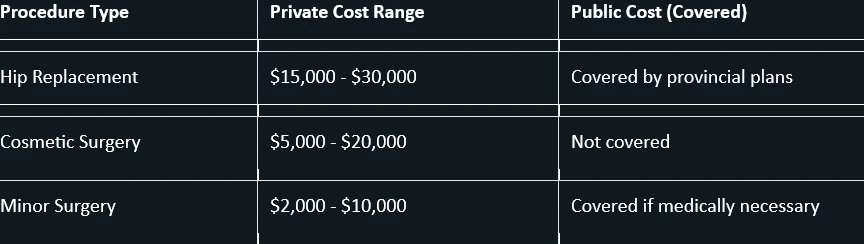
Private surgery often appeals to those who prioritize timeliness and convenience over cost. The trade-off involves paying more for faster access but receiving similar medical standards, as Canadian private facilities are subject to provincial regulations.
Choosing a Private Surgery Clinic
Selecting a private surgery clinic involves evaluating the facility's safety and quality standards, verifying the credentials of the surgeons, and understanding the level of care provided before, during, and after the procedure. These factors directly impact surgical outcomes and patient satisfaction.
Accreditation and Standards
The clinic’s accreditation status is a critical indicator of its compliance with health and safety regulations. Patients should look for accreditation from recognized Canadian bodies, such as Accreditation Canada or provincial health authorities. These organizations conduct regular inspections to ensure that clinics adhere to strict protocols regarding hygiene, equipment maintenance, and emergency preparedness.
In addition to official accreditation, high-quality clinics maintain transparent policies on infection control, patient privacy, and staff training. Reviewing these policies can help patients confirm that the clinic meets professional healthcare standards. Some provinces also regulate where private surgeries can take place, so it is important to verify the clinic operates within those legal frameworks.
Surgeon Qualifications
Surgeon expertise significantly affects surgical success and risk management. Patients should verify that surgeons hold valid licenses from the Royal College of Physicians and Surgeons of Canada or equivalent provincial regulatory bodies. A surgeon’s specialty certifications and years of practice in the specific procedure requested are essential to confirm.
Many clinics provide surgeon profiles, including their educational background, board certifications, and experience. Patients should seek surgeons with documented outcomes, as well as positive peer and patient reviews. Surgeons affiliated with recognized teaching hospitals or professional organizations may offer additional assurance of their professional competence.
Patient Experience and Aftercare
Patient experience encompasses the clarity of communication, efficiency in scheduling, and overall comfort during the surgical process. Private clinics often provide more personalized service and shorter wait times, but it is important to confirm these benefits before booking.
Aftercare protocols are equally important. Quality clinics offer detailed discharge instructions, follow-up appointments, and access to support services such as physical therapy or specialist consultations. Understanding the clinic’s post-surgery care plan helps patients prepare for recovery and reduces the risk of complications. Transparency about costs related to aftercare should also be confirmed before surgery