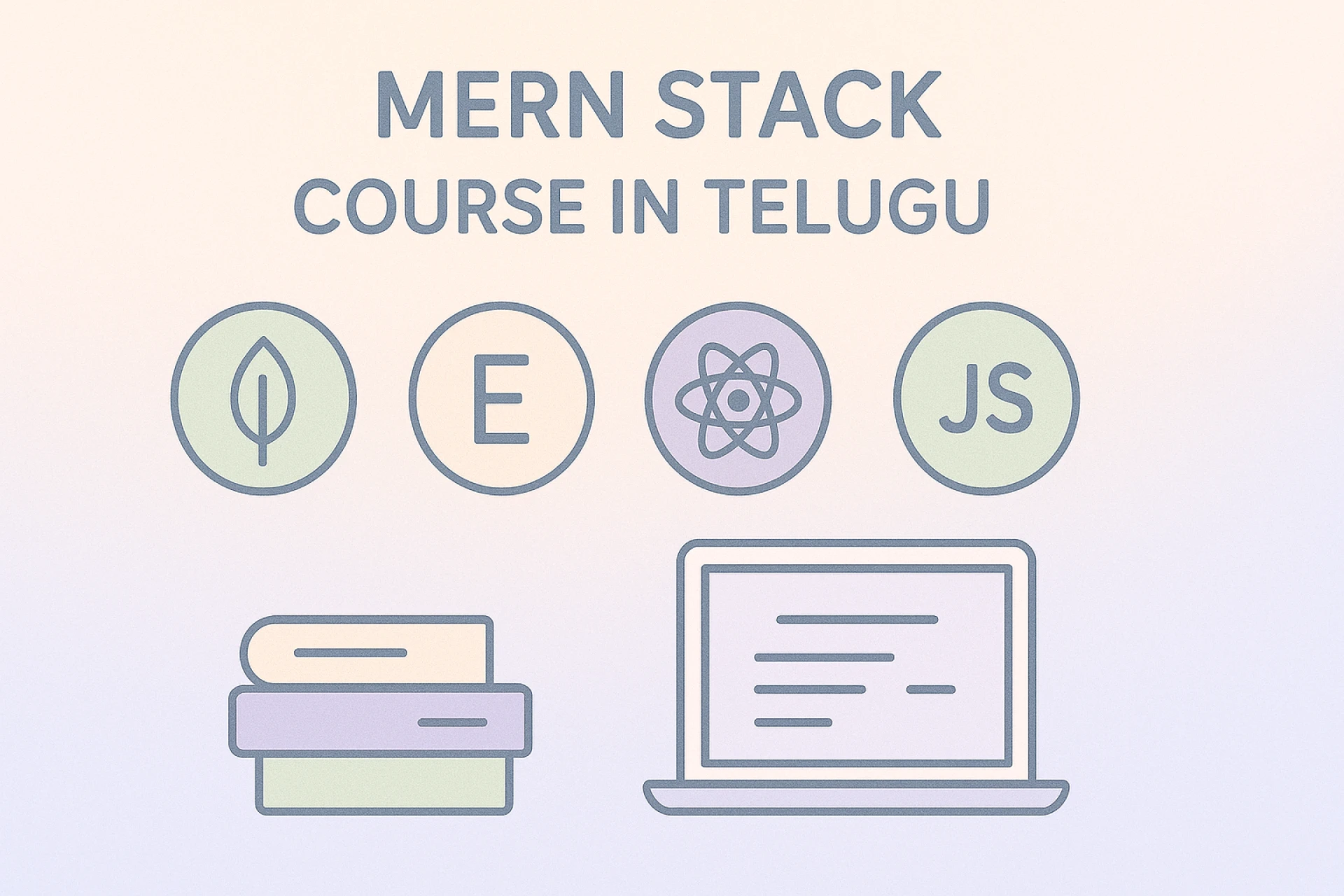
The demand for skilled web developers is growing rapidly across the globe. Companies are constantly searching for professionals who can build dynamic, responsive, and secure applications. Among various full-stack technologies, the MERN Stack—MongoDB, Express.js, React.js, and Node.js—has become one of the most powerful and popular choices for modern web development. If you dream of becoming a developer, whether frontend, backend, or full stack, an MERN Stack Course in Telugu can be your stepping stone toward a high-growth tech career.
This blog explains how a MERN Stack course prepares you for real-world developer jobs, what skills you learn, what job roles you can target, and why learning in Telugu makes the journey easier and more effective.
Why MERN Stack is the Best Choice for Developer Jobs
Startups, tech companies, SaaS platforms, and enterprise applications widely use the MERN Stack. Its popularity comes from several major advantages:
- End-to-end JavaScript: You use JavaScript for frontend, backend, and even database operations.
- Scalability: Ideal for growing applications like social networks and e-commerce sites.
- High performance: Node.js makes server operations extremely fast.
- Reusable components: React improves UI development and reduces repetitive code.
- Flexible NoSQL database: MongoDB handles large volumes of dynamic data.
Because of these strengths, companies prefer developers who know MERN Stack, making it a great skill set for job seekers.
What You Learn in a MERN Stack Course in Telugu
A MERN Stack course taught in Telugu helps you master both frontend and backend development with simplified explanations, structured modules, and practical guidance.
Here’s a detailed look at what you learn:
1. Strong Fundamentals of Web Development
You begin with the essentials:
- HTML5 for structuring pages
- CSS3 for styling
- JavaScript for interactivity
- DOM manipulation
- Modern ES6+ concepts
These basics form the foundation for your MERN journey.
2. Mastering React.js for Frontend Development
React is one of the most in-demand frontend libraries today. You learn:
- Components and props
- State management
- React Hooks (useState, useEffect, useContext)
- Conditional rendering
- Event handling
- Component life cycle
- Routing with React Router
- Working with APIs
- Building dynamic dashboards and interfaces
This prepares you for frontend developer roles and UI-based projects.
3. Learning Node.js for Backend Logic
Node.js powers the backend of MERN applications. You learn:
- How Node.js works
- Asynchronous programming
- NPM packages
- File system operations
- Building servers
- Handling requests and responses
Node makes you capable of writing efficient and scalable backend logic.
4. Building RESTful APIs with Express.js
Express.js is used to create backend routes that communicate with the frontend. You master:
- GET, POST, PUT, DELETE requests
- API routing
- Middleware usage
- Error handling
- Query parameters
- Route protection
- Validation techniques
These skills help you build professional server-side APIs.
5. Working with MongoDB Database
MongoDB is the backbone of MERN Stack. You learn:
- Collections and documents
- CRUD operations
- Designing schemas
- Mongoose ORM
- Referencing and embedding documents
- Data validation
- Indexing and optimization
Managing data efficiently makes you job-ready for backend development.
6. Authentication and Security
Every application requires secure login systems. You learn:
- JWT authentication
- Password hashing with bcrypt
- Login and signup flows
- Role-based access
- Protecting private routes
- Session management
Security knowledge is essential for developer job roles.
7. Real-Time Projects for Job Readiness
You build real projects such as:
- E-commerce website
- Blog application
- Social media features
- Task manager app
- Authentication dashboard
- Admin panel
- Job portal
- Notes app with cloud storage
These projects strengthen your resume and portfolio.
8. Deployment and DevOps Basics
The course also teaches you:
- How to host MERN applications
- Using cloud platforms like Render, Netlify, or AWS
- Environment variables
- Production build setup
- GitHub workflows
Knowing deployment is a major advantage during job interviews.
How MERN Stack Skills Help You in Developer Job Roles
With MERN expertise, you can target multiple career paths:
1. Frontend Developer
Companies need React.js developers to build modern UI components. You will be able to create:
- Dashboards
- Forms
- Landing pages
- Real-time UI rendering
- User-friendly web interfaces
2. Backend Developer
Your Node.js and Express.js knowledge prepares you for backend roles where you build:
- Server logic
- API endpoints
- Database models
- Authentication systems
- Admin functionalities
3. Full Stack Developer
This is the most in-demand and highest-paying role. You manage both:
- Frontend (React)
- Backend (Node + Express)
- Database (MongoDB)
- Deployment
Companies value full-stack developers because they handle end-to-end development.
4. MERN Stack Developer
A dedicated role where you work exclusively with MERN technologies. You build everything from:
- User interfaces
- Backend APIs
- Scalable databases
- Integrated systems
5. Freelance Web Developer
MERN Stack gives you enough skills to build websites for clients. This helps you earn while learning.
Why Learning in Telugu Makes a Big Difference
Many students struggle to understand technical English explanations. A MERN Stack Course in Telugu helps you learn easily because:
- Concepts become simple
- No language barriers
- Better understanding of logic
- Faster learning
- Improved confidence
- Clear instructions and demonstrations
Learning in your native language helps you master even advanced topics with ease.
Job Preparation Support in MERN Course
Most Telugu MERN courses offer:
- Resume building
- GitHub portfolio setup
- Mock interviews
- Coding practice sessions
- Job assistance
- Real-time assignments
These sessions help you prepare professionally for interviews.
Top Skills You Gain for Developer Jobs
After completing the course, you will have:
- Strong JavaScript expertise
- Ability to create dynamic web applications
- Experience with databases
- Knowledge of REST APIs
- Authentication and security skills
- Debugging and testing abilities
- Clean coding practices
- Deployment experience
These skills give you a competitive advantage in interviews.
Conclusion
Preparing for developer jobs becomes easier when you choose a structured and practical learning path. A MERN Stack Course in Telugu teaches you everything you need—frontend, backend, database, and deployment—with clear explanations in your mother tongue. With hands-on projects, real-world examples, and job readiness training, you become fully capable of applying for developer roles with confidence.