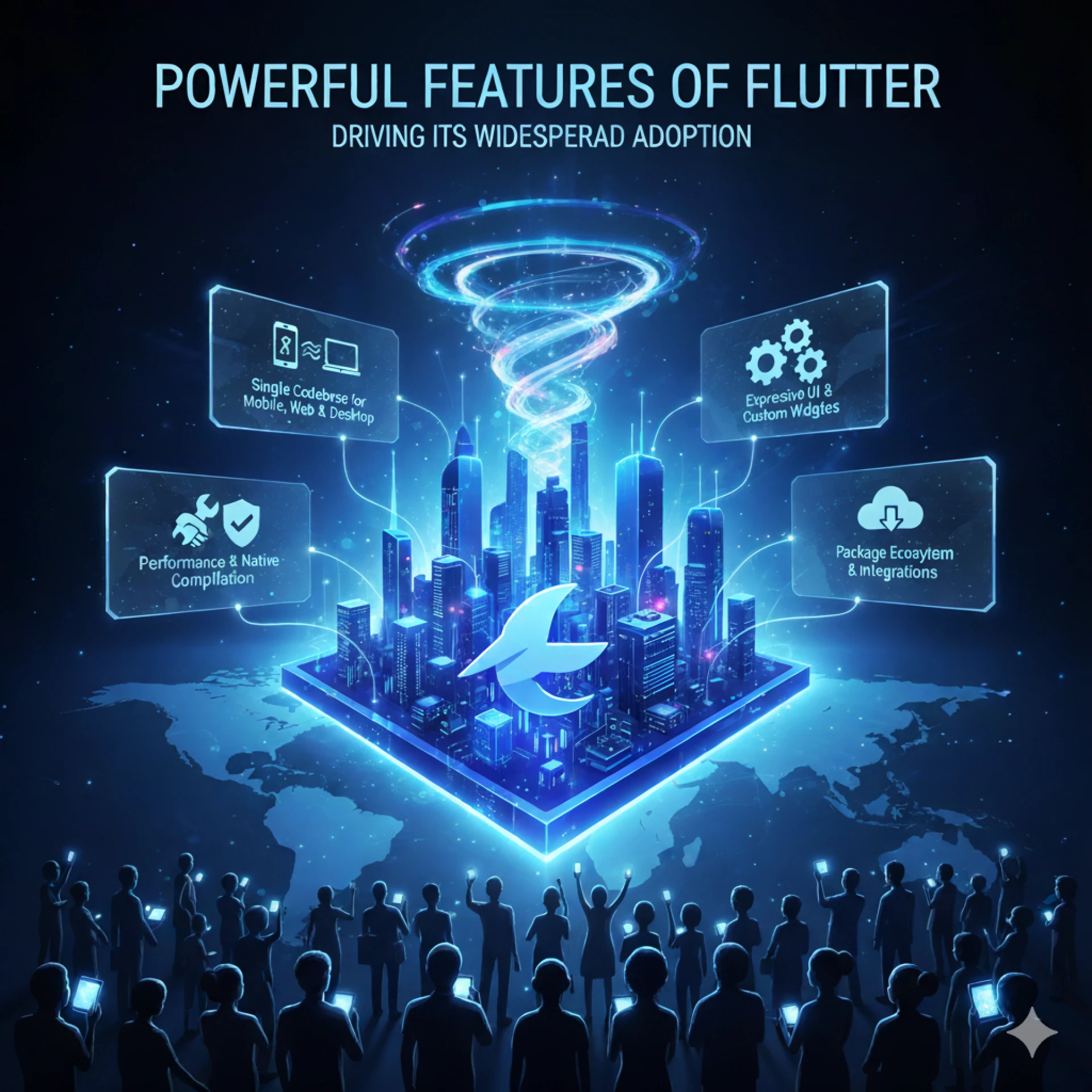
In recent years, Flutter app development has gained massive traction among developers, startups, and large enterprises alike. Flutter, an open-source UI toolkit created by Google, has proven to be an incredibly efficient framework for building high-performance applications across multiple platforms with a single codebase. Whether you're creating mobile apps for iOS and Android, or building web and desktop applications, Flutter offers a suite of powerful features that have contributed to its widespread adoption. Let’s explore some of the key features that make Flutter the go-to choice for developers in 2025.
1. Single Codebase for Multiple Platforms
One of the most compelling reasons for Flutter app development's popularity is its ability to create natively compiled applications from a single codebase. Traditionally, developers needed to write separate code for Android and iOS apps, which could be both time-consuming and costly. With Flutter, you can develop one codebase that works across iOS, Android, web, and even desktop platforms (macOS, Windows, Linux). This cross-platform capability significantly reduces development time and costs while allowing businesses to reach a broader audience without duplicating effort.
2. Rich and Customizable Widgets
Flutter’s rich set of pre-designed widgets, based on Google's Material Design principles, allows developers to create beautiful and responsive UIs without having to design each element from scratch. Whether you’re building a simple app or a complex user interface, Flutter provides the flexibility to customize widgets to suit your needs.
This versatility makes it easier for developers to maintain consistency across platforms while also ensuring a native-like look and feel. The ability to easily customize these widgets enables the creation of highly interactive and visually appealing Flutter app development experiences.
3. Hot Reload for Faster Development
Flutter’s hot reload feature is one of its most celebrated aspects among developers. It allows developers to instantly see the changes they make in the code without having to restart the app. This drastically speeds up the development process, as you don’t have to wait for the app to recompile every time you make an update.
For Flutter app development, hot reload enables a faster feedback loop, allowing developers to experiment with the design and functionality of their apps on the fly. Whether you’re fixing bugs, tweaking the UI, or adding new features, this feature saves significant development time, leading to faster iterations and quicker releases.
4. Native Performance and High-Speed Rendering
Flutter offers near-native performance by compiling to native ARM code. Unlike other cross-platform frameworks that rely on web views or other intermediate layers, Flutter directly compiles to native code, ensuring fast and smooth performance. This high-performance rendering is especially important for apps that require intensive graphics, animations, or real-time updates.
As a result, Flutter allows developers to build apps with a smooth, responsive user experience, even for complex and high-performance applications. With its custom rendering engine, Flutter app development can deliver graphics-heavy apps, such as games, media players, and AR applications, without compromising performance.
5. Seamless Integration with Firebase and Other Backend Services
Firebase, Google’s cloud-based platform, integrates seamlessly with Flutter, making it an ideal choice for backend services. Whether you need to implement authentication, real-time databases, file storage, or cloud functions, Flutter app development can tap into Firebase’s services to speed up development.
The integration with Firebase allows developers to build scalable and secure apps quickly, leveraging real-time data syncing and robust backend capabilities. Whether you’re building a chat app, e-commerce platform, or social network, Flutter’s easy integration with Firebase gives developers the tools to create dynamic, responsive, and data-driven apps.
6. Strong Community and Ecosystem
Another powerful feature of Flutter is its rapidly growing community and ecosystem. As more developers adopt Flutter app development, the community continues to expand, contributing plugins, libraries, and other tools that simplify development. Whether you need a specific UI component, third-party API, or package to handle common app functions, Flutter’s vast library of packages can meet nearly every need.
Moreover, Google’s continued support and commitment to improving the framework mean that developers can rely on regular updates, bug fixes, and new features, ensuring Flutter app development remains on the cutting edge.
7. Strong Documentation and Learning Resources
For developers new to mobile development or those switching from another framework, Flutter offers extensive documentation and learning resources. Google has invested in creating tutorials, sample projects, and detailed guides that make it easy to get started with Flutter.
Whether you're a beginner or an experienced developer, you can quickly learn the ins and outs of Flutter’s features. The comprehensive documentation, paired with the active community support, ensures that developers can quickly resolve issues and gain expertise in Flutter app development.
8. Open Source and Free to Use
As an open-source framework, Flutter is completely free to use, making it accessible to developers across the world. This has significantly contributed to its rapid adoption, especially among startups and individual developers who need a cost-effective solution to build cross-platform applications.
Being open-source also means that developers can contribute to the framework, report bugs, and suggest new features, further enhancing the overall ecosystem and ensuring its continuous evolution.
In 2025, Flutter app development is becoming the standard for building high-performance, cross-platform applications. With its rich set of widgets, fast development cycle through hot reload, seamless integration with Firebase, and native-like performance, Flutter offers developers everything they need to create beautiful, efficient apps. Moreover, its growing community, strong documentation, and open-source nature ensure that Flutter will continue to lead the way in cross-platform mobile development for years to come.
As more businesses look for efficient ways to build apps across multiple platforms, Flutter provides a powerful and reliable solution that simplifies the process while delivering exceptional performance.