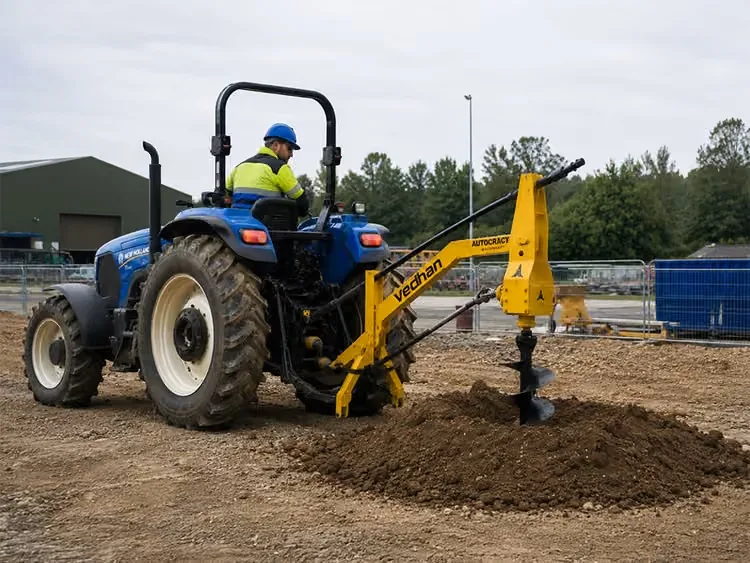
Most post hole digger slows down before it stops. The first sign is rarely a breakdown. It is a hole that takes thirty seconds longer than it did last week, soil that smears instead of cutting, or a faint wobble at the top of the mast. Read those signals early and an auger lasts seasons. Ignore them and a small replacement part turns into a workshop bill and a stalled schedule.
Augers work by slicing, not by force. A sharp cutting tip and correctly torqued blades peel a clean plug of soil away from the walls, which is why a well-maintained unit keeps its speed in clay. Once the tip rounds off, the machine starts compressing the ground instead of cutting it. The auger still spins, the tractor still strains, and the hole takes twice as long.
The two-minute shift check
The check that prevents most of this takes two minutes at the start of a shift. Look at the cutting tip for rounding or chips. Confirm the blade bolts are tight, because a single loose bolt changes the cutting angle and loads the gearbox unevenly. Run a hand along the flighting for cracks or bends. Check the gearbox oil level before the first hole, not at the end of the day when the unit is hot and you are already behind schedule.
Replace wear parts on a schedule rather than waiting for a hole that refuses to cut. Tips and blades cost little compared with the downtime they cause, and keeping one spare set on the vehicle removes the temptation to push a dull auger through another hundred holes. A practical spares kit is short: one cutting tip, two blade bolts, a set of blades, and a spare shear pin if your driveline uses one.
Spares and soil type
Soil decides how often those parts need attention. Sandy loam is forgiving, clay dulls tips slowly but loads the gearbox hard, and murram or gravel grinds an edge down within days. Crews working rocky ground should shorten the inspection interval rather than wait for the shift check to catch a problem.
Safety is a routine, not a reminder
Safety follows the same routine. Lower the auger to the ground and disengage the PTO before clearing spoil. Keep gloves, loose sleeves and drawstrings away from a rotating shaft. Never let a second person guide the auger by hand while it turns, and keep bystanders outside the turning radius of the tractor and linkage.
Crews that treat these steps as habits finish a season without an incident and with an auger that cuts the way it did on its first day. The machine is simple. The discipline around it decides the outputs the way it did on day one.