Pool fencing quotes can look like they were pulled from a hat until you understand what the installer is actually pricing.
Two pools that “feel the same” can land miles apart once you factor in surfaces, access, and how the gate will behave day after day.
If you’re trying to budget without getting stitched up by surprise add-ons, the trick is to get crystal clear on scope.
Most cost blowouts come from assumptions that were never written down.
What actually moves the price
Start with the fence run, but don’t stop there.
Linear metres matters, yet corners, returns, and awkward pinch points often matter more because they slow the install and add hardware.
A straight run on sound concrete is a very different job to a run that hops between pavers, decking, and a retaining cap.
If you can feel movement underfoot, there’s a good chance the quote will need either stabilisation work or a different fixing method.
Gate hardware is where “cheap now” often becomes “annoying later”.
A gate that self-closes perfectly on day one can drift if the substrate moves, the latch is low-grade, or the hinge system isn’t suited to wind and daily use.
Access is the silent line item that nobody thinks about until the crew shows up.
Narrow side paths, steep blocks, and fragile landscaping can add time, protection work, and careful handling that doesn’t show up in a simple “per metre” conversation.
Then there’s the awkward question of what counts as the barrier.
People sometimes assume a boundary fence, a wall, or a door arrangement will do part of the job, and later discover extra panels or changes are needed once it’s properly checked.
Decision factors: choosing an approach that fits your home
If you’re choosing between barrier types, think in “whole-of-life” rather than just “quote total”.
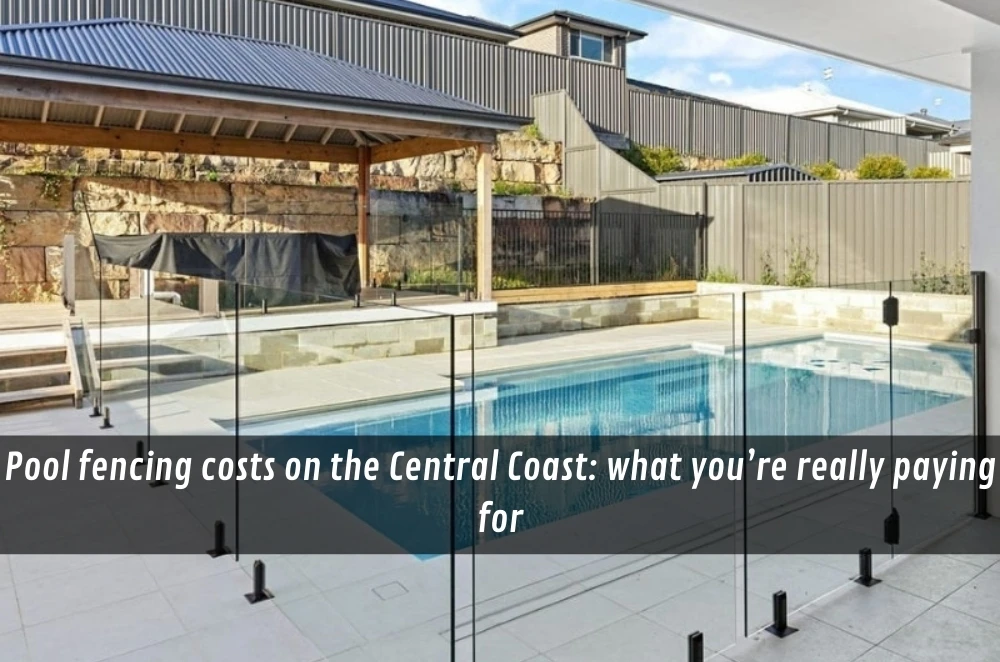
Glass fencing tends to cost more upfront because it’s less forgiving: alignment tolerances are tighter, hardware quality matters, and the substrate needs to be stable enough to hold everything true.
The upside is the clean look and the visibility, which is a practical benefit when you’re supervising kids or keeping an eye on the semi frameless pool fence installation for safer backyards.
On the other hand, if your yard has lots of movement (older pavers, reactive ground, or a deck that flexes), a simpler barrier approach can be easier to install, easier to adjust, and less fussy to maintain.
There isn’t one right answer, but there is a right answer for how your household uses the space.
Before locking in style, decide where the gate must be, how people will actually walk through the area, and what you’re willing to maintain.
Common mistakes that inflate cost (and cause delays)
The quickest way to pay more is to compare quotes that aren’t quoting the same job.
Here are the repeat offenders.
- “The surface is fine” (without checking). Loose pavers, thin slabs, or hollow spots turn into last-minute changes, and nobody likes last-minute changes.
- Gate details left vague. If one quote includes higher-grade hinges/latches (and time for adjustment) and another doesn’t, the totals will mislead you.
- Gate placement chosen late. A gate that swings into a tight path, sits on a slope, or catches wind can force redesigns and extra panels.
- Make-good not spelled out. Old holes, patching, and tidy finishing around fixings can be a chunky difference between quotes.
- Treating compliance checks as “later”. If something needs alteration to meet requirements, it’s cheaper to plan it early than retrofit it.
A simple 7–14 day plan to get comparable quotes
You don’t need to become a pool fencing nerd, but you do need a repeatable process.
Days 1–2: write down the “musts”.
Decide on sightlines, where the gate must be, how many entry points you need, and any areas you don’t want disturbed.
Days 3–5: walk the line and note surface changes.
Mark where it shifts from concrete to pavers to decking, and take photos of corners, the gate area, and anything that looks uneven or moves.
Days 6–9: standardise the quote request.
Send the same photo pack and rough measurements to each provider, then ask them to state (in writing) their fixing assumptions, gate hardware inclusions, make-good inclusions, and how they handle a substrate that isn’t suitable on the day.
If you want a plain-English example of the kinds of scope details that change pricing, the pool fencing cost guidance for Central Coast homeowners can help you sanity-check what you’re being quoted for.
Days 10–14: compare scope first, then price.
Highlight differences in hardware, assumed fixing method, make-good, and adjustment support, and question any quote that’s light on specifics.
Operator Experience Moment
On real jobs, the fence panels are rarely the drama.
The drama is almost always the gate and the surface it’s fixed into.
When a scope is properly defined up front, installs are smoother and the “small variations” tend to disappear.
Local SMB mini-walkthrough (Central Coast)
A homeowner near Terrigal has older concrete with a paver border around the pool.
They want a gate near the alfresco, but the path is tight and slightly sloped.
Two providers assume the pavers are stable; one flags movement and prices a clear fixing approach.
The quotes look similar until the gate hardware and make-good allowances are compared line by line.
The homeowner asks each provider to confirm assumptions in writing before booking dates.
They choose the quote with the clearest scope, not the lowest headline total.
Practical Opinions (exactly 3 lines)
If sightlines matter in your household, pay for visibility before you pay for fancy finishes.
If the surface is questionable, fix stability first or you’ll keep paying in adjustments.
If quotes are all over the place, chase scope clarity before chasing the lowest number.
Key Takeaways
- Most price differences come from surfaces, gate hardware, access, and layout complexity, not just metres.
- A good quote is explicit about fixing assumptions and make-good, so “extras” don’t sneak in later.
- Gate performance is a long-term cost driver; position and hardware spec deserve extra attention.
- A simple 7–14 day info pack makes quotes comparable and reduces surprises.
Common questions we hear from Australian businesses
How do we get a realistic ballpark without wasting time?
Usually you’ll get closer numbers faster by sending a photo pack, rough measurements, and a preferred gate location before organising multiple site visits.
Next step: take wide shots of the full run plus close-ups of corners and the gate area, then send the same pack to each provider.
In many Central Coast yards, mixed surfaces are common, so calling out concrete-to-paver or deck transitions early improves accuracy.
Why can a “cheap” quote end up costing more?
It depends on what the quote quietly assumes away, especially surface prep, make-good, and gate hardware details.
Next step: ask for a written inclusions list that names the fixing method assumptions and how variations are handled if the substrate isn’t suitable.
Locally, coastal exposure can also change hardware durability expectations, which can affect true long-term cost.
Does premium gate hardware actually matter?
In most cases it does, because the gate is the part that gets used constantly and must self-close reliably every time.
Next step: ask what hinge/latch system is included and whether post-install adjustment support is part of the job.
On the Coast, wind and salt air can be factors, so robustness and adjustability are worth discussing early.
What should we decide first when planning a pool area upgrade?
Usually it’s best to decide function first—gate location, access flow, and maintenance tolerance—then choose the style that suits that decision.
Next step: sketch two gate positions and walk the routes you’ll actually take when the backyard is busy.
With sloped blocks and narrow side access in parts of the region, the most “aesthetic” layout isn’t always the easiest to install or live with.