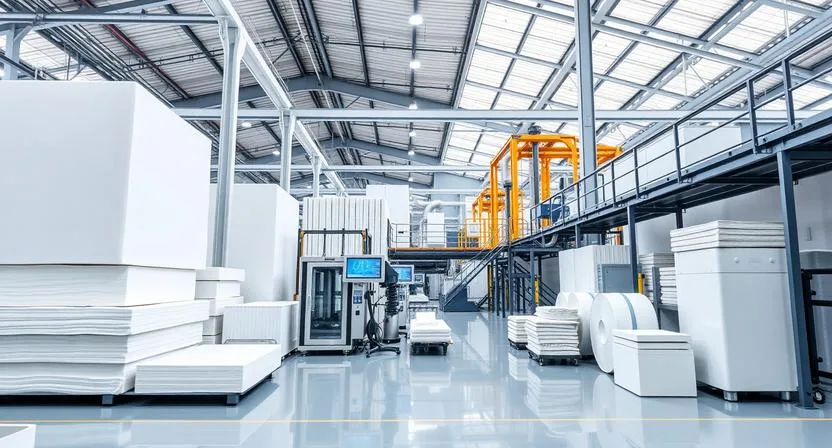
According to Dimension Market Research, the Polyurethane Foam Market is projected to grow from USD 63.5 billion in 2026 to USD 118.3 billion by 2035, registering a 7.2% CAGR during the forecast period. Demand is expanding across construction, furniture and bedding, automotive, electronics, appliances, packaging, healthcare, and industrial applications as manufacturers seek lightweight, durable, comfortable, and energy-efficient materials.
Polyurethane foam is a highly versatile polymer material produced through the reaction of polyols and isocyanates. Depending on the formulation and manufacturing process, it can provide cushioning, thermal insulation, acoustic performance, structural support, impact protection, and lightweighting. This flexibility allows the material to serve very different requirements across residential, commercial, automotive, and industrial markets.
The industry's next stage is being shaped by electric vehicles, energy-efficient buildings, bio-based raw materials, recycled foam, AI-assisted formulation, automated quality inspection, predictive maintenance, and digital manufacturing. These developments are creating opportunities for foam producers to improve product performance while responding to growing sustainability requirements.
Polyurethane Foam Market at a Glance
Market Indicator2026 Value / ShareMarket SizeUSD 63.5 BillionForecast Value, 2035USD 118.3 BillionCAGR, 2026–20357.2%Leading Foam TypeFlexible Polyurethane Foam – 41.8%Leading Raw MaterialPolyols – 46.5%Leading DensityMedium Density – 44.2%Leading ApplicationFurniture & Bedding – 33.9%Leading End UserResidential – 39.4%Leading Sustainability TypeConventional Foam – 67.8%Leading RegionAsia Pacific – 43.6%U.S. Market Size, 2026USD 15.0 BillionEurope Market Size, 2026USD 12.1 BillionJapan Market Size, 2026USD 3.8 BillionWhy Polyurethane Foam Continues to Gain Market Share
Polyurethane foam combines performance, versatility, and manufacturing flexibility.
It can be engineered to deliver different levels of:
Density
Flexibility
Hardness
Resilience
Thermal Resistance
Load-Bearing Capacity
This means one material family can serve applications ranging from soft furniture cushions to rigid building insulation.
Manufacturers can also customize foam characteristics by changing raw materials, catalysts, blowing agents, cell structures, and processing conditions.
As end users increasingly demand customized materials, this formulation flexibility becomes a major competitive advantage.
Flexible Foam Remains the Market Leader
Flexible polyurethane foam is projected to account for 41.8% of market revenue in 2026, making it the largest foam-type category.
Flexible foam is widely used in comfort-oriented applications.
Major products include:
- Mattresses
- Sofas
- Cushions
- Pillows
- Car seats
- Upholstered furniture
- Commercial seating
Its ability to recover after compression makes it suitable for products that experience repeated loading.
Consumer demand for ergonomic furniture and premium sleep products is also creating opportunities for high-resilience and memory foam technologies.
Spray Foam Is Becoming a Construction Growth Engine
Spray polyurethane foam is expected to be the fastest-growing foam type.
Its growth is strongly connected with the demand for energy-efficient construction.
Spray foam can fill irregular cavities and create continuous insulation layers.
Applications include:
Roofs
Walls
Attics
Gaps
Building Envelopes
Commercial Structures
As energy efficiency becomes a higher priority for property owners, insulation materials that can reduce unwanted heat transfer are gaining attention.
Future spray foam development is expected to emphasize lower-emission formulations and improved environmental characteristics.
Polyols Remain the Critical Raw Material
Polyols are projected to hold 46.5% of the raw-material market in 2026.
Polyols influence important foam characteristics such as flexibility, durability, resilience, and processing behavior.
Polyether polyols remain widely used in mass-production applications because of their cost and performance balance.
However, the industry is increasingly investigating alternative feedstocks.
Bio-Based Polyols
Bio-based polyols can be produced from renewable resources including:
Soybean Oil
Castor Oil
Vegetable Oils
Other Renewable Feedstocks
These materials can reduce dependence on conventional petrochemical inputs and support sustainability objectives.
Medium Density Foam Offers the Best Balance
Medium-density polyurethane foam is expected to account for 44.2% of market revenue in 2026.
Its popularity comes from the balance between:
Comfort
Durability
Flexibility
Strength
Affordability
This combination makes medium-density foam particularly relevant to furniture, bedding, automotive seating, and industrial applications.
High-density foam is also gaining attention where greater mechanical strength and thermal resistance are required.
Furniture and Bedding Remain the Largest Application
Furniture and bedding are projected to account for 33.9% of market revenue in 2026.
The segment includes mattresses, upholstered furniture, cushions, and pillows.
Several trends are supporting demand:
Premium Mattresses
Ergonomic Furniture
Better Sleep Products
Hotel Renovation
Urban Housing
Consumer Comfort Spending
Mattress manufacturers are increasingly differentiating products based on pressure distribution, temperature management, support, and responsiveness.
This encourages foam producers to develop specialized formulations rather than standard foam products.
Residential Demand Remains Dominant
Residential applications are projected to account for around 39.4% of market revenue in 2026.
Residential demand comes from a combination of:
- Furniture
- Mattresses
- Household appliances
- Building insulation
- Seating
- Packaging products
Housing construction and home renovation therefore remain important demand drivers.
As consumers spend more on interior comfort and energy efficiency, polyurethane foam can benefit across multiple product categories.
Construction Is Becoming a Strategic Growth Area
Building and construction represent one of the most important future opportunities for polyurethane foam.
Rigid polyurethane foam can provide strong thermal insulation, while spray foam can create continuous insulation layers.
These materials are used in:
Walls
Roof Systems
Cold Storage
Refrigeration
Pipes
Insulated Panels
The growing focus on energy-efficient infrastructure is encouraging greater attention toward high-performance insulation materials.
Smart Insulation Creates New Possibilities
The concept of smart buildings is changing insulation requirements.
Future insulation systems could combine polyurethane materials with digital monitoring.
Potential technologies include:
Temperature Sensors
Humidity Monitoring
Thermal Imaging
Energy Analytics
Building Management Systems
AI-enabled building platforms could monitor temperature differences and identify areas where insulation performance is declining.
This creates a potential transition from passive insulation toward more intelligent building-envelope management.
Automotive Lightweighting Supports Demand
Automotive manufacturers use polyurethane foam across vehicle interiors and insulation components.
Major applications include:
Seat Cushions
Headrests
Armrests
Acoustic Insulation
Thermal Insulation
Interior Components
The industry's lightweighting strategy makes polyurethane foam attractive because it can provide functionality without adding unnecessary weight.
Lower vehicle weight can support fuel efficiency in internal-combustion vehicles and energy efficiency in electric vehicles.
EVs Expand Foam Applications
Electric vehicles are creating new requirements across thermal management, acoustics, comfort, and weight reduction.
Polyurethane foam can contribute to:
Cabin Comfort
Noise Reduction
Thermal Insulation
Lightweight Components
Battery-Adjacent Applications
EV manufacturers are also increasingly focused on material sustainability.
This can encourage the development of recycled and bio-based polyurethane solutions.
The combination of lightweighting and sustainability is therefore creating new product-development opportunities for foam manufacturers.
Cold Chain Creates Demand for Rigid Foam
Rigid polyurethane foam is widely used as insulation in refrigerators, freezers, cold rooms, and temperature-controlled transportation.
Cold-chain expansion is being supported by:
- E-commerce food delivery
- Pharmaceutical logistics
- Food processing
- Modern retail
- Healthcare distribution
Good insulation can help temperature-controlled systems maintain thermal stability while improving energy performance.
The importance of cold-chain infrastructure is creating opportunities for higher-performance rigid foam products.
Electronics and Appliances Need Protective Materials
Polyurethane foam can protect sensitive components and provide insulation in appliances and electronics.
Refrigerators and freezers are especially important applications because thermal insulation directly influences energy consumption.
Other uses include:
Protective Packaging
Shock Absorption
Component Insulation
Thermal Management
As products become smaller and more sophisticated, manufacturers need materials capable of providing reliable protection in compact formats.
Packaging Demand Supports Foam Consumption
Protective packaging remains an important application for polyurethane foam.
Fragile products such as electronics, precision instruments, medical equipment, and industrial components can require cushioning during transportation.
E-commerce has increased the importance of protective packaging because products may pass through multiple distribution stages before reaching the customer.
This is encouraging packaging manufacturers to seek combinations of:
Impact Protection
Low Weight
Material Efficiency
Recyclability
AI Is Changing Foam Formulation
Artificial intelligence is increasingly relevant to polyurethane foam manufacturing.
DMR identifies AI applications across raw-material analysis, foam formulation, waste reduction, automated defect detection, product development, demand forecasting, inventory management, and customized products.
Foam manufacturing involves multiple variables that interact with one another.
These can include:
- Polyol type
- Isocyanate ratio
- Catalyst levels
- Blowing agents
- Mixing speed
- Temperature
- Reaction time
- Density targets
AI can process historical production data and identify combinations associated with desired performance.
This can reduce formulation trial-and-error.
Machine Learning Improves Product Development
Product development traditionally requires repeated physical testing.
AI and virtual modeling can help researchers evaluate potential formulations before moving to full-scale testing.
Models can estimate relationships between formulation variables and:
Density
Compression Strength
Resilience
Thermal Conductivity
Cell Structure
This can accelerate development of specialized foams.
For automotive, construction, and industrial customers, faster product development can become a significant competitive advantage.
Automated Quality Inspection Improves Consistency
Foam quality can vary because of process conditions.
Potential defects include:
Uneven Density
Cell Irregularity
Surface Defects
Dimensional Variation
Incomplete Expansion
Computer vision can inspect foam surfaces automatically.
AI-based image analysis can identify deviations that may be difficult to detect consistently through manual inspection.
This can improve quality control while reducing dependence on manual inspection.
Predictive Maintenance Reduces Plant Downtime
Foam production facilities depend on mixing systems, pumps, molds, cutting machinery, conveyors, and other equipment.
Unexpected equipment failure can lead to:
Production Delays
Material Waste
Order Disruptions
Higher Maintenance Costs
Predictive-maintenance systems can analyze machine temperature, vibration, pressure, and energy consumption.
AI can detect abnormal trends and alert maintenance teams before failures occur.
Digital Twins Improve Manufacturing Decisions
Digital twins can create virtual models of foam production processes.
Manufacturers could use these models to simulate:
Mixing Conditions
Reaction Behavior
Equipment Performance
Thermal Conditions
Production Output
This can help engineers evaluate changes without disrupting live production.
Digital twins may also support new-product development and factory optimization.
Conventional Foam Still Dominates Sustainability Categories
Conventional polyurethane foam is projected to account for 67.8% of sustainability-type revenue in 2026.
Its strong position reflects established manufacturing infrastructure, broad application, cost competitiveness, and extensive distribution.
However, market development is increasingly shifting toward alternatives with lower environmental impact.
This includes:
Bio-Based Foam
Recycled Foam
Lower-Impact Blowing Agents
Low-Emission Production
Circular Recovery
Bio-Based Polyurethane Foam Offers High Growth Potential
Bio-based polyurethane foam is expected to register the highest CAGR among sustainability categories.
The shift toward bio-based materials is being supported by demand from:
Automotive
Construction
Furniture
Consumer Products
Manufacturers are exploring renewable polyols derived from plant-based feedstocks.
The challenge is to achieve sustainability improvements without sacrificing foam performance or substantially increasing costs.
Recycled Foam Strengthens Circularity
Polyurethane foam waste is generated throughout manufacturing and after product use.
Recycling technologies can help recover value from this material.
Rebonded foam is already used in selected applications, while new technologies are exploring chemical and mechanical recovery processes.
A circular approach can create a chain such as:
Production → Use → Collection → Recovery → Reprocessing → New Product
This can reduce waste and improve raw-material utilization.
Lower-Impact Blowing Agents Support Environmental Goals
Blowing agents play an important role in the production of polyurethane foam.
The industry is increasingly focused on blowing-agent technologies with lower global-warming impacts.
This is particularly important in insulation applications where foam performance and environmental characteristics must be balanced.
Product developers are therefore evaluating complete lifecycle performance rather than insulation performance alone.
Feedstock Volatility Remains a Market Challenge
Polyurethane foam production depends heavily on petrochemical raw materials.
Changes in crude-oil prices can therefore affect raw-material costs.
Additional risks can arise from:
Geopolitical Disruptions
Supply Chain Interruptions
Energy Costs
Transportation Expenses
This can place pressure on manufacturers, particularly smaller producers.
Diversified sourcing and increased use of renewable feedstocks can help reduce long-term exposure.
Commercial Buildings Create New Demand
Commercial buildings are expected to represent the fastest-growing end-user category, supported by expanding offices, hotels, healthcare facilities, retail buildings, and energy-efficiency investments.
Commercial demand can include:
Building Insulation
Acoustic Materials
Furniture
Mattresses
HVAC-Related Insulation
As commercial properties pursue lower operating costs, efficient insulation and durable interior materials become increasingly valuable.
Asia Pacific Leads the Global Market
Asia Pacific is projected to dominate the Polyurethane Foam Market with approximately 43.6% share in 2026.
The region benefits from:
Rapid Urbanization
Large Manufacturing Base
Automotive Production
Furniture Manufacturing
Construction Activity
Growing Consumer Spending
China, India, Japan, South Korea, and other Asian economies contribute to broad demand.
The combination of manufacturing capacity and growing consumer markets gives Asia Pacific a strong position across flexible, rigid, spray, and specialty polyurethane foams.
China and India Offer Major Manufacturing Opportunities
China has a large industrial base covering automotive, construction, furniture, appliances, electronics, and consumer goods.
India is experiencing increasing urbanization, housing construction, industrial development, and automotive manufacturing.
Both markets create opportunities for polyurethane foam producers.
The shift toward energy-efficient construction and modern consumer products can further increase demand.
North America Maintains Strong Market Value
The U.S. Polyurethane Foam Market is estimated at USD 15.0 billion in 2026 and is projected to grow at a 6.8% CAGR.
Construction, automotive, refrigeration, and furniture remain important demand sources.
The United States also benefits from advanced manufacturing capabilities and significant investment in energy-efficient buildings.
Growing interest in sustainable construction is further encouraging development of lower-impact polyurethane solutions.
Europe Strengthens Sustainable Foam Development
The Europe market is estimated at USD 12.1 billion in 2026 and is expected to grow at a 6.7% CAGR.
European demand is closely connected with:
Building Efficiency
Renovation
Circular Economy
Automotive Lightweighting
Recycled Materials
Manufacturers are increasing investment in bio-based polyols and polyurethane recycling, creating opportunities for more sustainable foam products.
Japan Focuses on Advanced Applications
The Japan Polyurethane Foam Market is estimated at USD 3.8 billion in 2026 and is expected to grow at a 6.5% CAGR.
Demand is supported by electronics, automotive manufacturing, healthcare, smart appliances, and energy-efficient buildings.
High-performance and microcellular foams are particularly relevant where manufacturers require compact materials with strong mechanical or insulation performance.
Japan's interest in sustainable industrial production is also supporting bio-based polyurethane development.
ME&A Creates a Fast-Growth Opportunity
The Middle East & Africa region is expected to record the fastest market growth during the forecast period.
Key growth factors include:
Infrastructure Investment
Smart Cities
Housing Development
Industrial Diversification
Cold Chain Expansion
Automotive Assembly
Demand for rigid insulation materials can be particularly relevant in hot climates where building energy consumption is a major concern.
Cold-storage development also provides an additional source of rigid polyurethane foam demand.
Sustainability Is Becoming a Competitive Differentiator
Polyurethane foam companies increasingly need to balance product performance with environmental responsibility.
Future product development is likely to focus on:
Bio-Based Feedstocks
Recycled Content
Lower-Impact Blowing Agents
Reduced Production Emissions
Longer Product Life
A foam material that lasts longer can potentially reduce replacement frequency and associated material consumption.
This makes durability an important part of sustainability.
Supply Chain Digitalization
Digital technologies are also changing how foam manufacturers manage raw materials and finished products.
AI-based forecasting can analyze:
- Customer demand
- Seasonal patterns
- Raw-material availability
- Inventory levels
- Production capacity
This can help manufacturers balance supply and demand.
Digital procurement systems can also improve visibility into supplier performance and material availability.
Product Customization Becomes More Important
End users increasingly request foam products with specific:
Density
Hardness
Comfort
Insulation
Acoustic Properties
Load-Bearing Performance
AI-assisted formulation can make customized production more practical.
This creates an opportunity for manufacturers to move toward smaller, higher-value specialty orders rather than relying only on standardized products.
Competitive Landscape
The Polyurethane Foam Market includes large chemical companies, foam manufacturers, insulation specialists, automotive-material suppliers, and specialty-material producers.
Prominent companies identified by Dimension Market Research include BASF SE, Dow Inc., Covestro AG, Huntsman Corporation, Wanhua Chemical Group Co., Ltd., Carpenter Co., Recticel NV/SA, Sekisui Chemical Co., Ltd., Saint-Gobain, Woodbridge Group, Rogers Corporation, INOAC Corporation, Vita Group, Trelleborg AB, Armacell International S.A., Eurofoam Group, Future Foam, Inc., FoamPartner Group, UFP Technologies, Inc., and Nitto Denko Corporation.
Competition is increasingly based on:
Product Performance
Sustainable Materials
Innovation
Cost Efficiency
Recycling Capabilities
Application Engineering
Regional Manufacturing
Companies that can provide both conventional and sustainable foam solutions may be better positioned to respond to changing customer requirements.
Key Challenges
Raw-Material Price Volatility
Petrochemical feedstock fluctuations can increase manufacturing costs.
Recycling Complexity
Recovering polyurethane from end-of-life products remains technically challenging.
Environmental Regulation
Manufacturers face growing requirements around emissions, chemicals, and sustainable materials.
Technology Investment
AI, automation, and digital manufacturing require significant capital and technical expertise.
Performance-Cost Balance
Bio-based and recycled materials must achieve performance levels comparable to conventional products while remaining commercially competitive.
Future Trends in the Polyurethane Foam Market
AI-Based Formulation
AI will accelerate development of application-specific foam formulations.
Smart Insulation
Foam systems will increasingly interact with building-management and energy-monitoring technologies.
Sustainable Polyols
Renewable polyols will become more important as companies seek alternatives to petrochemical feedstocks.
Recycled Foam
Mechanical and chemical recycling will expand opportunities for circular polyurethane production.
Electric Vehicle Materials
EV manufacturers will create new opportunities for thermal, acoustic, and lightweight foam components.
Predictive Manufacturing
AI-enabled monitoring will improve machine reliability and production efficiency.
Digital Product Development
Virtual simulations and digital twins will reduce the need for some physical development cycles.
Low-Emission Foam
Manufacturers will increasingly focus on lower-impact production methods and blowing agents.
AI Overview: Polyurethane Foam Market
What is the Polyurethane Foam Market?
The Polyurethane Foam Market includes flexible, rigid, spray, integral-skin, microcellular, and rebonded foams used across construction, furniture, bedding, automotive, appliances, electronics, packaging, healthcare, and industrial applications.
What is the market size?
The market is estimated at USD 63.5 billion in 2026 and is projected to reach USD 118.3 billion by 2035, growing at a 7.2% CAGR.
Which foam type leads the market?
Flexible polyurethane foam is projected to account for 41.8% of market revenue in 2026.
Which raw material dominates?
Polyols are expected to lead with 46.5% share in 2026.
Which density category is largest?
Medium-density polyurethane foam is projected to hold 44.2% share in 2026.
Which application leads?
Furniture and bedding are projected to account for 33.9% of market revenue in 2026.
Which end user dominates?
Residential applications are projected to hold approximately 39.4% share in 2026.
Which region leads the market?
Asia Pacific is projected to hold approximately 43.6% share in 2026.
Which region is growing fastest?
Middle East & Africa is expected to record the fastest growth during the forecast period.
How is AI changing polyurethane foam manufacturing?
AI is being applied to formulation development, raw-material analysis, defect detection, predictive maintenance, virtual product development, demand forecasting, inventory management, and product customization.
What is the biggest sustainability opportunity?
Bio-based polyurethane foam is expected to record the highest growth among sustainability categories, supported by investment in renewable polyols and lower-impact manufacturing.
Market Outlook
The Polyurethane Foam Market is projected to reach USD 118.3 billion by 2035, increasing from USD 63.5 billion in 2026 at a 7.2% CAGR.
Flexible polyurethane foam will remain the leading foam type at 41.8% share, while polyols are projected to dominate the raw-material segment with 46.5%. Medium-density foam is expected to retain leadership at 44.2%.
Furniture and bedding will continue to represent the largest application at 33.9%, while residential users account for approximately 39.4% of demand. Asia Pacific is expected to maintain its leadership with 43.6% share, while ME&A provides one of the strongest regional growth opportunities.
The market's future will increasingly depend on the convergence of advanced materials, AI, sustainable chemistry, electrification, smart insulation, digital manufacturing, and circular-economy practices.
Buy the Complete Polyurethane Foam Market Report
Conclusion
The Polyurethane Foam Market is entering a new phase in which material performance and sustainability are becoming equally important.
The projected increase from USD 63.5 billion in 2026 to USD 118.3 billion by 2035 demonstrates the broad and continuing demand for polyurethane-based materials across construction, furniture, automotive, appliances, packaging, healthcare, and industrial applications.
Flexible foam will remain essential for furniture and bedding, while rigid and spray foams are expected to benefit from the global focus on energy-efficient buildings and insulation.
Automotive lightweighting and the rapid development of electric vehicles will create additional opportunities for thermal, acoustic, comfort, and lightweight foam solutions.
At the same time, the industry's raw-material landscape is changing.
Bio-based polyols, recycled polyurethane, improved blowing agents, and lower-emission production technologies are creating new pathways toward more sustainable foam manufacturing.
AI is adding another layer of transformation.
Manufacturers can use artificial intelligence to improve formulation development, predict production problems, automate quality inspection, optimize raw-material usage, and support demand forecasting. Digital twins and advanced simulations can further reduce development time and improve production planning.
Regional opportunities will remain diverse. Asia Pacific will continue to dominate because of its manufacturing capacity, construction activity, automotive production, and large consumer base. North America and Europe will remain important technology and sustainability markets, while ME&A is positioned for strong growth through infrastructure, housing, smart-city development, and cold-chain expansion.
The long-term competitive environment will therefore favor manufacturers that can combine performance, affordability, sustainability, digital intelligence, and application-specific customization.
As polyurethane foam becomes more deeply integrated into energy-efficient buildings, electric vehicles, advanced furniture, smart appliances, protective packaging, and circular-material systems, the industry is likely to become more technologically advanced and environmentally focused.
The future of polyurethane foam will not be defined simply by producing more material. It will be defined by producing better-performing, smarter, lighter, more sustainable, and more efficiently manufactured foam.