Removing stubborn, seized or damaged components from heavy equipment can be challenging, particularly when working in demanding construction and foundation drilling environments. A slide hammer makes this process easier by applying controlled impact force to loosen and extract tightly fitted parts. However, choosing between a pneumatic slide hammer and a manual slide hammer can affect maintenance time, operator effort and overall productivity. Both tools serve a similar purpose, but their operating methods and capabilities differ. Understanding these differences will help contractors and maintenance professionals select the right equipment for their specific applications.
1. Understanding the Difference Between Pneumatic and Manual Slide Hammers
A manual slide hammer operates through physical effort. The operator moves a weighted component along a shaft and uses its impact to generate pulling force. It is a straightforward tool that does not require compressed air or an additional power source.
Manual slide hammers are generally suitable for smaller extraction jobs, occasional maintenance and applications where pneumatic equipment is unavailable.
A pneumatic slide hammer, on the other hand, uses compressed air to generate repeated impact movements. This reduces the need for continuous manual hammering and helps operators remove stubborn components more efficiently.
For piling and foundation drilling equipment, where teeth, retaining pins and wear components can become heavily seized, pneumatic operation offers a practical advantage.
2. Pneumatic Slide Hammer vs. Manual Slide Hammer: Key Differences
Both tools can assist with component removal, but their performance varies depending on the working environment and maintenance requirements.
Operating effort: Manual slide hammers require repeated physical movement, which can cause fatigue during demanding jobs. Pneumatic models use compressed air, reducing repetitive manual effort.
Working speed: Manual tools depend on the operator's strength and working pace. Pneumatic slide hammers deliver repeated impact action, helping speed up stubborn component removal.
Control: Manual tools offer direct physical feedback. Pneumatic models with variable throttle control allow operators to adjust the impact action according to the task.
Equipment requirements: Manual slide hammers can operate independently, while pneumatic versions require a suitable compressor, air hose and compatible connections.
Maintenance productivity: Manual tools can be sufficient for occasional repairs. Pneumatic options are generally more practical for workshops and maintenance teams handling frequent extraction work.
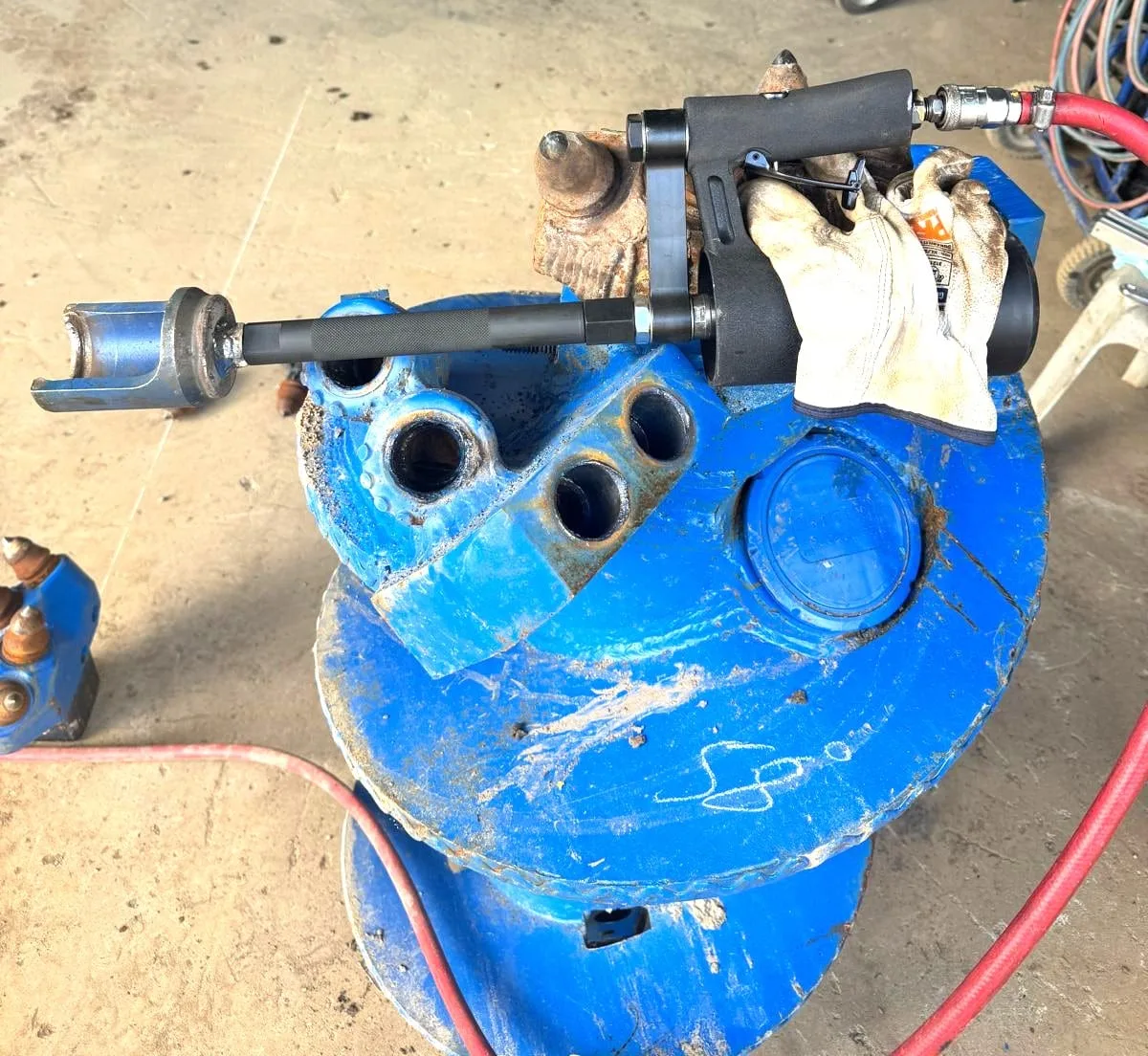
For example, CITE's pneumatic slide hammer delivers up to 185 controlled hammer blows per minute, helping maintenance crews remove stubborn teeth and retaining components from piling and foundation drilling equipment.
3. Which Slide Hammer Is Better for Your Application?
The better option depends on how frequently the tool will be used and the type of components being removed.
A manual slide hammer may be suitable when:
- Extraction work is occasional.
- Components are relatively easy to remove.
- Compressed air is unavailable.
- Portability and simple operation are priorities.
A pneumatic slide hammer is worth considering when:
- Maintenance teams regularly remove seized components.
- Equipment downtime needs to be reduced.
- Repetitive manual hammering creates unnecessary physical effort.
- Controlled, consistent impact action is important.
For piling contractors and foundation drilling specialists, pneumatic equipment can be particularly useful when replacing worn teeth on augers, drilling buckets and core barrels.
CITE's pneumatic slide hammer features a compact stubby configuration, variable throttle control and an optional extension rod for accessing restricted working areas. These features make it a practical choice for demanding equipment maintenance tasks.
Conclusion
Choosing between a pneumatic and manual slide hammer comes down to the demands of your maintenance work. Manual models offer simplicity and independence from compressed air, while pneumatic models provide faster, more consistent impact action with less physical effort. For professionals working with piling and foundation drilling equipment, investing in suitable pneumatic tooling can help improve maintenance efficiency and minimise unnecessary downtime.
Before choosing your equipment:
- Assess the frequency of component removal.
- Consider the level of extraction force required.
- Check available compressed air capacity.
- Prioritise compatible attachments and operator safety.
- Choose equipment designed for your specific application.
For dependable piling and foundation drilling equipment, explore the specialist tooling solutions available from MyCite Australia (CITE). The right equipment today can help your maintenance team work more efficiently tomorrow.