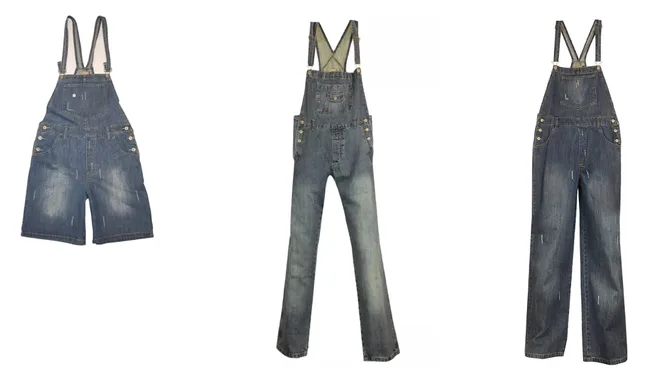
A dungaree is a one-piece outfit with a built-in structure. The bib sits flat across the chest, the straps share weight across the shoulders, and the waist stays free of tight bands. For many wearers, this feels far gentler than a fitted waistband that digs in after lunch.
They also simplify mornings. There is no need to match a bottom with a top, and no need to worry about a top riding up. Add a layer you already own, and the outfit is finished.
Good design matters here. A pair that has been properly shaped for fuller figures will offer more room at the hip, thigh and seat, without losing its neat line at the bib.
Fabrics for Every Month
Choosing cloth by season keeps you comfortable and helps the garment last.
- Spring and autumn: Mid-weight stretch denim or cotton twill. Both layer easily and handle changeable days.
- Summer: Linen blends or light cotton. These breathe well and feel cool against the skin.
- Winter: Corduroy or heavier denim. They hold warmth and look good with knitwear.
- Travel and lounging: Jersey or soft sweat fabric, which feels relaxed and forgiving.
Check weight as well as fibre. Fabric weight is measured in GSM, or grams per square metre. As a rough guide, cloth under 200 GSM feels light, while cloth above 300 GSM feels thick and warm. A little elastane in the mix adds comfort when you sit or bend. Look for cloth that feels smooth and springs back, because it will keep its shape longer.
Fit, Cut and Key Details
Once you have chosen a fabric, study the shape. Straight legs are easy and balanced. Wide legs add flow, while a soft taper shows off your shoes. A cropped length avoids dragging hems on wet pavements.
When you want to compare cuts and cloths together, this collection of plus size dungarees at Clove Jeans gives you plenty to explore. Whichever pair you try, inspect these points:
- Straps: Wide, flat straps feel gentler than thin ones.
- Sliders: Sturdy adjusters should stay put through the day.
- Bib: It should cover the chest and lie smooth.
- Side fastenings: Poppers or buttons help you get in and out with ease.
- Pockets: Deep and flat, so they do not flare at the hip.
Move in the pair before you decide. Sit, crouch and lift your arms. If anything pinches, it will bother you more as the day goes on.
Common Buying Mistakes
Many shoppers buy by price alone, then discover the seams fail early. Check the stitching and the weight of the fabric first. Others pick a size down to avoid a loose look, though dungarees are meant to be roomy. A comfortable pair has space to move.
Another slip is forgetting layers. If you plan to wear a thick jumper underneath, try the pair on over one. Finally, check the rise. A rise that is too short pulls, and one that is too long sags. Use the size guide and the garment measurements, not the label alone.
Taking Your Measurements
Sizes vary between brands, so numbers are more helpful than labels. Use a soft tape to record your bust, waist and hips. Then measure torso length by running the tape from one shoulder, through the legs and back to the same shoulder. This figure shows whether the rise and bib will sit comfortably.
Compare your measurements with the garment chart, allowing a little ease for movement. If you fall between sizes, choose the larger one and use the straps to fine-tune the fit.
Styling Through the Seasons
In spring, pair mid-weight denim with a white tee and clean trainers. Add a light jacket for cooler mornings. In summer, wear linen with a fitted vest and flat sandals, then carry a thin cardigan for the evening. In autumn, layer a fine-knit roll neck underneath and finish with ankle boots. In winter, wear a thermal top beneath, add a long coat and a scarf, and choose waterproof footwear.
Colour helps too. Dark shades create a smooth line, while mid tones and prints bring personality. Begin with navy or black, then add colour through tops and accessories.
Caring for Your Dungarees
Follow the care label. Wash at 30 degrees, inside out, with the straps fastened. Choose a gentle cycle to protect stretch fibres. Dry flat or on a line, because high heat can shrink cotton and wear out elastane. Treat small marks with a damp cloth and mild soap, rather than washing the whole garment. Fold the dungarees or hang them by the straps so they hold their shape.
Frequently Asked Questions
Can I wear dungarees all year?
Yes. Choose lighter cloth for summer and layer up for winter.
What should I wear underneath?
A fitted tee or long-sleeved top works well. It stays smooth under the bib and keeps the line clean.
Are dungarees comfortable for sitting?
They are, when the rise is generous and the fabric has some stretch.
Do dungarees suit every height?
Yes, when the straps and hem length are right. Petite wearers can shorten the straps, while taller wearers should check the rise.
How do I stop the straps slipping?
Adjust them evenly, choose flat, wide straps and wear a fitted layer beneath.
Building a Wardrobe Around One Pair
The best dungarees work hard across the seasons. Pick cloth that suits the weather, check the straps and rise, and test the fit by moving. With sensible care and a few simple layers, your pair will feel comfortable, flattering and ready for any day.