Market Overview
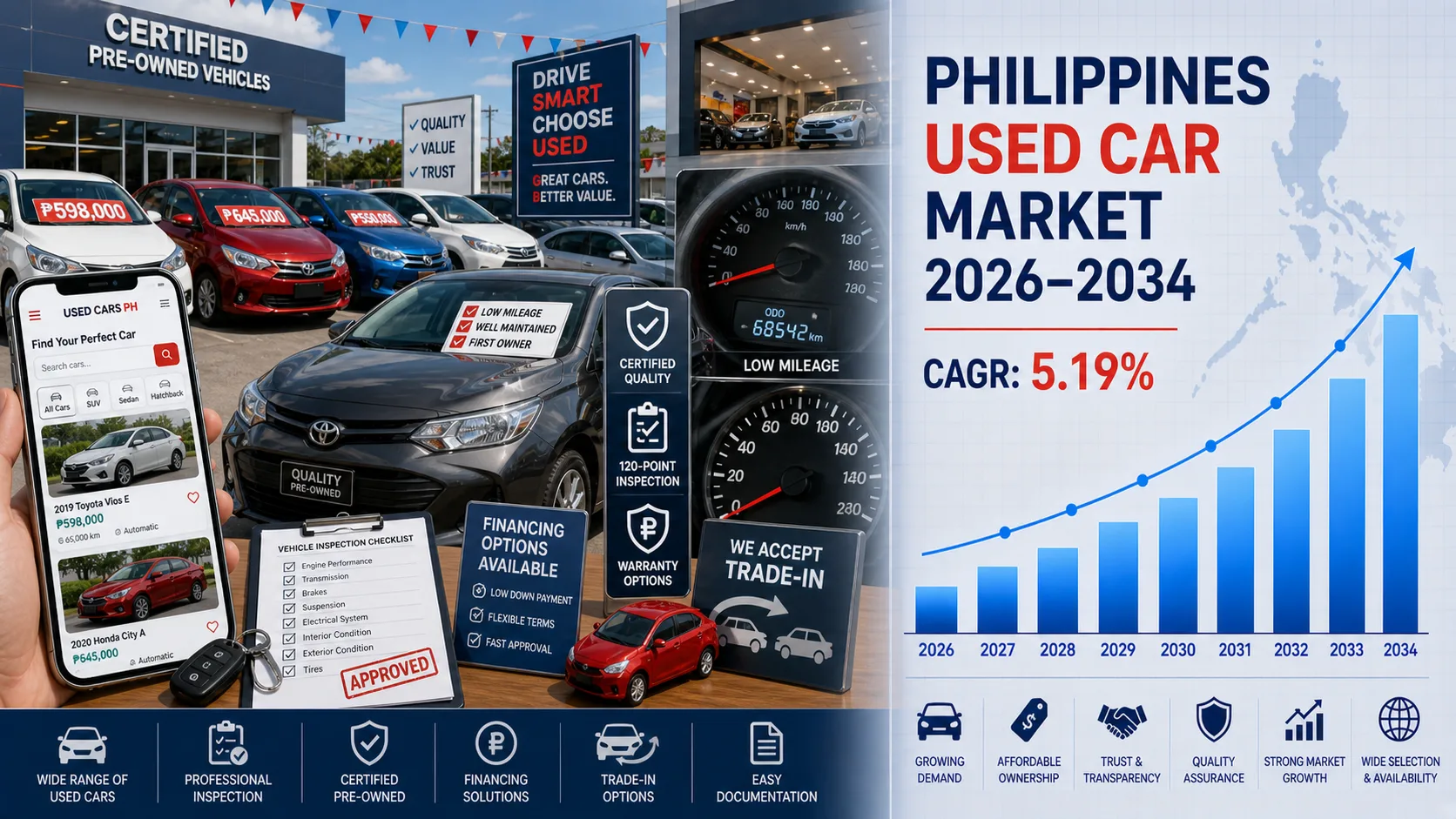
The Philippines used car market is experiencing robust growth, driven by the increasing implementation of government policies that facilitate vehicle import and encourage domestic production of vehicles, leading to a consistent influx of used cars, along with the expansion of digital marketplaces that offer car condition reports and easy financing options, making the entire process smoother and more transparent. The market size reached 1.3 Million Units in 2025 and is projected to reach 2.1 Million Units by 2034, growing at a compound annual growth rate (CAGR) of 5.19% from 2026 to 2034.
The market is strategically important to the Philippines' economy as it enables the nation to provide affordable mobility solutions to a growing middle-class population, supports the automotive ecosystem, and creates new revenue streams for dealers, online platforms, and financing institutions.
Request a Sample Report for In-Depth Market Insights:https://www.imarcgroup.com/philippines-used-car-market/requestsample
Philippines Used Car Market Summary
- The Philippines used car market encompasses a system where pre-owned vehicles (hatchbacks, sedans, sports utility vehicles, and others) are bought and sold through organized and unorganized vendors, using online and offline sales channels.
- These vehicles are valued for their role in providing affordable mobility solutions, offering an accessible entry point to car ownership for budget-conscious consumers, first-time buyers, and growing families.
- The ecosystem includes government agencies (DTI), vehicle manufacturers (Toyota Motor Philippines, Honda Cars Philippines), organized dealers (Automart.Ph, Car Empire, LausGroup), online platforms (Carmudi, Carousell, Philkotse.com, Tsikot.com, Zigwheels), fintech financing platforms (OneLot, CarDekho SEA), and consumers.
- Major segments identified in the market include vehicle type (hatchbacks, sedan, sports utility vehicle, others), vendor type (organized, unorganized), fuel type (gasoline, diesel, others), sales channel (online, offline), and region (Luzon, Visayas, Mindanao).
- The market is benefiting from the government's support for the automotive industry, including the new RACE program unveiled in February 2025 with PHP 250 Million preliminarily allocated, and policies that ease vehicle importation and promote local manufacturing.
- Growing middle-class population and urbanization, rising vehicle ownership aspirations, and enhanced trust through vehicle inspection and certification are driving sustained expansion across all vehicle categories.
PORTER'S FIVE FORCES ANALYSIS—PHILIPPINES USED CAR MARKET
Bargaining Power of Suppliers—Moderate
- Used car supply is distributed across thousands of private sellers, organized dealers, and unorganized vendors, but large dealer groups like LausGroup of Companies and Toyota Motor Philippines Corporation control significant market share in the certified pre-owned segment.
- Government policies that facilitate vehicle import and encourage domestic production result in a steady flow of cars into the market, giving users more options and reducing dependency on any single supplier.
- Programs that encourage trade-ins make it easier for people to upgrade to newer vehicles, making used cars more accessible to others and increasing supply diversity.
Bargaining Power of Buyers—Moderate to High
- With a wide range of models, brands, and price points available through both online and offline channels, buyers have more flexibility to find vehicles that suit their preferences and needs, creating price sensitivity.
- Online platforms provide tools such as car condition reports, financing options, and delivery services, allowing buyers to make informed decisions and compare deals from both private sellers and dealers.
- The growing availability of affordable financing, low down-payment schemes, and flexible repayment options has further boosted the purchasing power of budget-conscious consumers.
Threat of New Entrants—Moderate
- The expansion of online channels is making it easier for new entrants to reach a wider audience across the country. As per industry reports, the e-commerce market in the Philippines is anticipated to expand at a CAGR of 11.38% from 2024 to 2028.
- Established platforms like Carmudi, Carousell, and Philkotse.com have significant brand recognition and user bases, creating barriers for new online entrants.
- New certification programs (e.g., Honda Certified Plus Program launched in March 2025) and financing innovations (e.g., WowCar launch in December 2024, OneLot funding in October 2024) show that entrants with differentiated value propositions can gain traction.
Threat of Substitutes—Moderate
- Public transportation, ride-hailing services, and car rental services are substitutes for used car ownership, particularly in urban areas with denser transport networks.
- However, in Tier 2 and Tier 3 cities where public transportation may be limited or unreliable, used cars have fewer substitutes.
- New cars are substitutes, but used cars offer an affordable entry point for buyers with financial limitations, making the substitution asymmetrical.
Competitive Rivalry—High
- The market features organized dealers (Automart.Ph, Car Empire, LausGroup, Toyota Motor Philippines Corporation), online platforms (Carmudi, Carousell, Philkotse.com, Tsikot.com, Zigwheels), and unorganized vendors.
- Differentiation occurs through certified pre-owned programs, vehicle history reports, warranties, after-sales support, financing options, and digital user experience.
- Recent entrants like WowCar (December 2024) and new certification initiatives like Honda Certified Plus Program (March 2025) are intensifying competition, while fintech players like OneLot and CarDekho SEA are transforming the financing landscape.
MARKET GROWTH DRIVERS
Increasing Government Support for the Automotive Industry
The government's support for the automotive industry is offering a favorable Philippines used car market outlook. In February 2025, the Department of Trade and Industry (DTI) unveiled a new incentive initiative, the Automotive Industry for Competitiveness Enhancement (RACE) program, aimed at enticing automotive firms to establish their manufacturing processes in the Philippines. The 2025 General Appropriations Act indicated that PHP 250 Million was preliminarily allocated for the RACE program. Policies that ease the importation of vehicles and promote local manufacturing have resulted in a steady flow of cars into the market. This means that more cars, both new and used, are available for resale, giving users more options to choose from.
The government agencies also have programs that encourage trade-ins, making it easier for people to upgrade to newer vehicles and make used cars more accessible to others. According to the Philippines used car market analysis, some initiatives aim to improve infrastructure, which in turn helps to drive the demand for cars, including used ones. As new cars become more affordable through government incentives or lowered taxes, it also leads to more cars circulating, which eventually results in a larger supply of quality used cars. With these measures, the government agencies not only make cars more accessible to a wider range of individuals but also ensure the continuous flow of used vehicles into the market, keeping it active and competitive.
Expansion of Online Platforms
The expansion of online channels is impelling the Philippines used car market growth. More people are turning to the internet to buy and sell used cars because it offers convenience and a varied selection. E-commerce platforms have made it easier for buyers to browse through a variety of cars, compare prices, and find deals from both private sellers and dealers. This online shift reduces the hassle of physically visiting car lots and allows buyers to make informed decisions from the comfort of their homes.
Moreover, digital marketplaces provide tools, such as car condition reports, financing options, and delivery services, which make the entire process smoother and more transparent. For sellers, these platforms provide greater exposure, allowing them to reach a wider audience across the country, which is boosting the Philippines used car market demand. With the broadening of e-commerce portals, people have become more confident in purchasing used cars online because they can easily check reviews, ratings, and certifications. As per industry reports, the e-commerce market in the Philippines is anticipated to expand consistently throughout the forecast period, achieving a CAGR of 11.38% from 2024 to 2028. The Gross Merchandise Value of e-commerce in the nation is expected to rise from USD 14.2 Billion in 2023 to USD 24.8 Billion by 2028.
Growing Middle-Class Population and Urbanization
The Philippines is recording a steady economic growth, and an increasing number of the middle-class population is demanding cheaper and more practical mobility solutions. Second-hand vehicles also offer an affordable option for new cars, particularly in cities where the demand for transportation is increasing. With increasing numbers of people migrating to urban centers to work or study, personal mobility will become crucial to the demand further. Also, younger consumers who are joining the workforce are first-time buyers interested in second-hand cars because of their financial limitations. Used cars are becoming more popular due to their affordable prices and better financing conditions. This demographic and economic shift continues to fuel consistent demand across cities and emerging metro areas, contributing to the expansion of the country's used car ecosystem.
Rising Vehicle Ownership Aspirations and Accessibility
Car ownership in the Philippines is increasingly seen as a symbol of independence, convenience, and status—especially among younger consumers and growing families. While new cars may be out of reach for many, used cars offer an accessible entry point. With a wide range of models, brands, and price points available, buyers have more flexibility to find vehicles that suit their preferences and needs. The growing availability of affordable financing, low down-payment schemes, and flexible repayment options have further boosted the purchasing power of budget-conscious consumers.
As aspirations rise and options become more attainable, used car sales are seeing steady growth, particularly in Tier 2 and Tier 3 cities, where public transportation may be limited or unreliable.
Enhanced Trust through Vehicle Inspection and Certification
Trust and transparency in the used car market have improved significantly with the rise of professional inspection and certification services. Many dealers and platforms now offer certified pre-owned vehicles that have passed rigorous quality checks, giving buyers greater confidence in the condition and value of their purchase. Detailed vehicle history reports, warranties, and after-sales support also reduce perceived risks associated with second-hand car purchases.
These advancements help shift consumer perception of used cars from being uncertain purchases to trusted, value-for-money investments. As trust builds in the secondary market, more consumers are willing to make long-term commitments to pre-owned vehicles, driving market growth and encouraging repeat purchases within a more organized ecosystem.
PHILIPPINES USED CAR MARKET SEGMENTATION
- Vehicle Type Insights:
- Hatchbacks
- Sedan
- Sports Utility Vehicle
- Others
- Vendor Type Insights:
- Organized
- Unorganized
- Fuel Type Insights:
- Gasoline
- Diesel
- Others
- Sales Channel Insights:
- Online
- Offline
- Regional Insights:
- Luzon
- Visayas
- Mindanao
COMPETITIVE LANDSCAPE
The Philippines used car market features a competitive landscape of organized dealer groups, online platforms, certified pre-owned programs, and unorganized vendors. Leading players differentiate through certified pre-owned programs, vehicle history reports, warranties, after-sales support, financing options, and digital user experience. The market is seeing increased investment from fintech platforms and regional auto financing services.
Key players include:
- Automart.Ph
- Car Empire
- Carmax
- Carmudi
- Carousell
- LausGroup of Companies
- Philkotse.com
- Sirqo Group Inc.
- Toyota Motor Philippines Corporation
- Tsikot.com
- Zigwheels
REGIONAL ANALYSIS
- Luzon: As the region containing Metro Manila and major economic centers, Luzon represents the largest used car market in the Philippines. The region benefits from higher population density, greater concentration of organized dealers and online platforms, and better access to financing options. Government infrastructure initiatives in Luzon help drive demand for cars, including used ones.
- Visayas: The Visayas region, including major cities like Cebu, is seeing steady growth in used car demand driven by increasing urbanization and economic activity. Used car sales are growing particularly in Tier 2 and Tier 3 cities where public transportation may be limited or unreliable. The expansion of online platforms is providing greater exposure for sellers in Visayas, allowing them to reach a wider audience across the country.
- Mindanao: Mindanao represents an emerging market for used cars, with growth driven by rising middle-class affordability and the need for personal mobility in areas with less developed public transportation. As aspirations rise and options become more attainable through online platforms and financing, used car sales are seeing steady growth in Mindanao's major urban centers like Davao.
RECENT INDUSTRY DEVELOPMENTS
May 2026: The Chamber of Automotive Manufacturers of the Philippines (CAMPI) withdrew focus from its earlier 500,000-unit vehicle sales target for 2026, citing weaker consumer sentiment and slowing demand. The development is expected to support demand for used vehicles as buyers seek more affordable mobility options.
May 2026: Philippine vehicle sales fell 19% year-on-year to 27,225 units in April 2026, according to CAMPI-TMA data. The decline in new vehicle purchases is expected to strengthen interest in the used-car market as consumers look for lower-cost alternatives.
May 2026: CAMPI reported that electric vehicles continued gaining market share despite weaker overall vehicle sales, as consumers sought fuel-efficient transportation options amid rising fuel costs. This trend is influencing demand patterns in both new and used vehicle segments.
April 2026: Philippine vehicle sales reached 105,642 units in Q1 2026, despite a 10.4% year-on-year decline in March sales. The continued flow of new vehicle purchases is expected to increase future trade-ins and support used-car inventory growth.
February 2026: Industry analysts highlighted that rising new-car sales, expanding financing options, and increasing trade-in activity are boosting the supply of pre-owned vehicles in the Philippines. Market participants expect stronger competition and greater inventory availability in the used-car segment.
Note: If you need any specific information that is not covered currently within the scope of the report, we will provide the same as a part of customization.
Speak to an analyst: https://www.imarcgroup.com/request?type=report&id=28624&flag=C
About Us
IMARC Group is a global management consulting firm that helps the world's most ambitious changemakers to create a lasting impact. The company provides a comprehensive suite of market entry and expansion services. IMARC offerings include thorough market assessment, feasibility studies, company incorporation assistance, factory setup support, regulatory approvals and licensing navigation, branding, marketing and sales strategies, competitive landscape and benchmarking analyses, pricing and cost research, and procurement research.
Contact Us
IMARC Group
134 N 4th St., Brooklyn, NY 11249, USA
Email: [email protected]
Tel No: (D) +91 120 433 0800
United States: +1-201-971-6302