PhD Distance Education: Complete Guide (2026)
Introduction
In 2026, higher education is evolving rapidly with flexible learning models becoming more popular than ever. One of the most searched terms among working professionals and researchers is PhD Distance Education. Many individuals who want to pursue doctoral-level research while continuing their jobs or managing businesses look for flexible PhD options.
However, it is important to understand that PhD is a highly research-intensive academic qualification, and its structure, approval, and delivery mode are strictly regulated in India and most countries. This guide explains everything you need to know about PhD Distance Education, including its meaning, eligibility, legality, alternatives, admission process, benefits, and career scope.
What is PhD Distance Education?
A PhD (Doctor of Philosophy) is the highest academic degree awarded by universities. It focuses on original research, thesis writing, and contribution to a specific academic or professional field.
The term PhD Distance Education generally refers to a flexible or part-time doctoral program where candidates can conduct research without attending full-time regular classes. However, unlike undergraduate or postgraduate distance education programs, PhD cannot be fully completed through distance mode in most countries.
In India, the University Grants Commission (UGC) does not permit fully distance PhD programs. Instead, universities may offer:
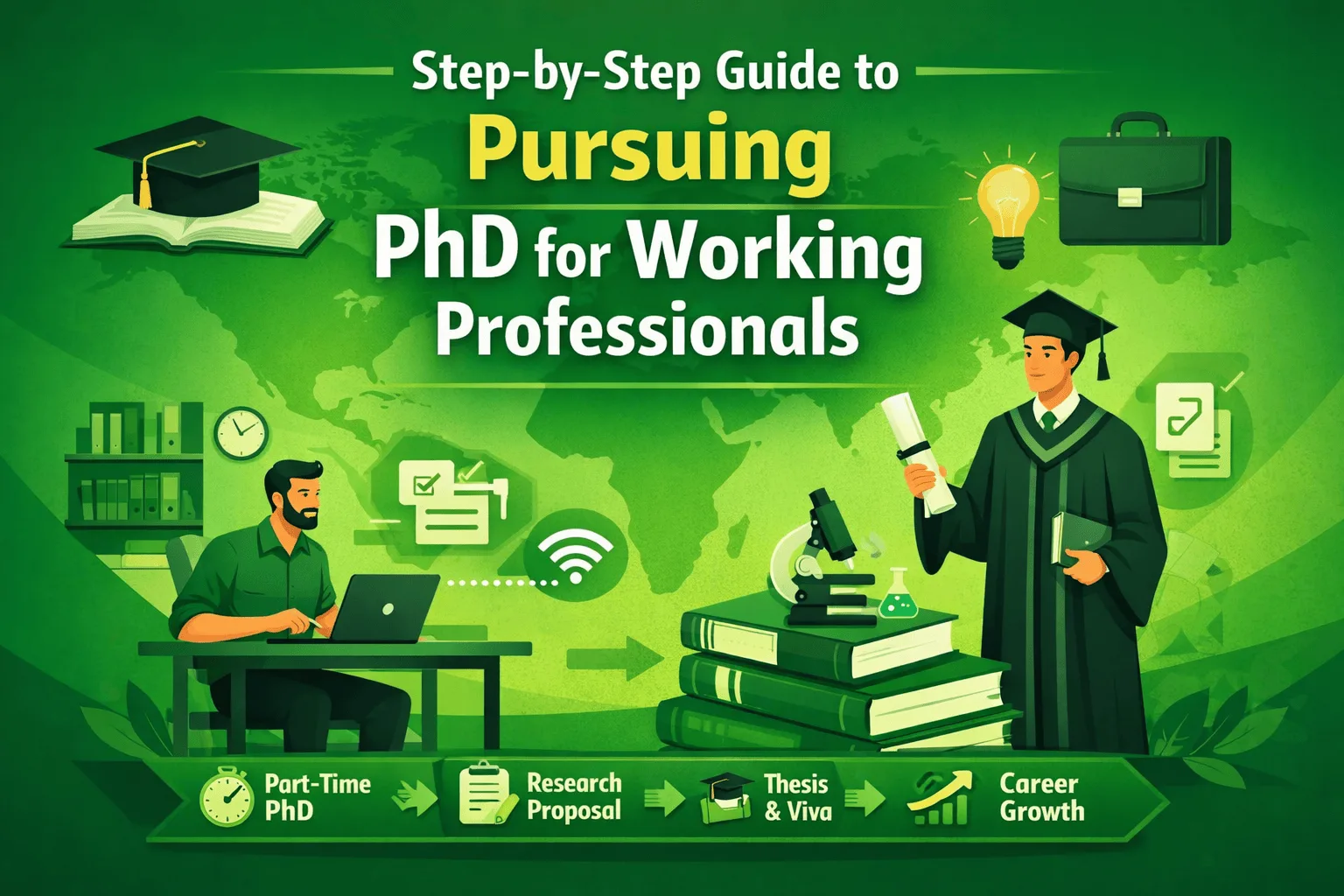
- Part-time PhD programs
- External PhD programs
- Executive PhD programs
- Work-integrated doctoral programs (in some institutions)
These formats allow flexibility but still require research supervision, institutional affiliation, and periodic campus visits.
Is PhD Distance Education Valid in India?
This is one of the most important questions.
According to UGC regulations, a PhD cannot be offered entirely through distance education mode. The research degree must involve:
- Regular interaction with supervisors
- Research methodology training
- Coursework (in many cases)
- Institutional oversight
- Thesis evaluation and viva voce (oral defense)
Therefore, fully “distance PhD programs” are not valid in India if they are offered without proper university approval or supervision structure.
However, part-time PhD programs offered by UGC-recognized universities are valid and widely accepted.
Difference Between Distance PhD and Part-Time PhD
Many students confuse these two terms. Here is the distinction:
Distance PhD (Not officially recognized if fully online)
- No regular campus requirement
- No structured supervision
- Often offered by unapproved institutions
- Not valid under UGC norms
Part-Time PhD (Valid option)
- Requires enrollment in a recognized university
- Regular or periodic interaction with guide
- Research work conducted alongside job
- Requires coursework and thesis submission
- Fully valid for academic and professional use
Eligibility Criteria for PhD Programs in 2026
To apply for a PhD (full-time or part-time), candidates must generally meet the following requirements:
- Master’s degree (MA, MSc, MCom, MBA, MCA, etc.) from a recognized university
- Minimum 55% marks (may vary by institution)
- Qualification in entrance exams such as UGC-NET, GATE, or university-specific tests
- Research proposal submission
- Interview or viva screening round
Some universities also consider professional experience for executive or part-time PhD admissions.
Admission Process for PhD Programs
The admission process usually includes the following steps:
Step 1: Choose Research Area
Select a subject based on your academic background and career goals, such as:
- Management
- Computer Science
- Education
- Commerce
- Social Sciences
- Engineering
- Healthcare
Step 2: Entrance Examination
Many universities require candidates to clear:
- UGC-NET
- University-level PhD entrance tests
- Subject-specific exams
Step 3: Research Proposal Submission
Candidates must submit a detailed research proposal including:
- Topic
- Objectives
- Literature review
- Methodology
- Expected outcomes
Step 4: Interview Round
Shortlisted candidates are invited for an interview or presentation before a doctoral committee.
Step 5: Enrollment and Coursework
Selected candidates complete mandatory coursework before beginning full research work.
Structure of a PhD Program
A PhD program typically includes:
1. Coursework Phase
Covers research methodology, academic writing, and subject-specific theory.
2. Research Phase
Students work under a supervisor to conduct original research.
3. Thesis Writing
A detailed dissertation based on research findings is prepared.
4. Viva Voce
Final oral examination conducted by external experts.
Why PhD Cannot Be Fully Done Through Distance Mode
PhD is not just a degree; it is a research training process. It requires:
- Continuous guidance from a supervisor
- Access to labs, libraries, and academic resources
- Research discussions and seminars
- Peer review and evaluation
These requirements make fully distance PhD impractical and academically invalid under UGC guidelines.
Benefits of Pursuing a Part-Time or Flexible PhD
Even though fully distance PhD is not allowed, part-time PhD programs offer many advantages:
Career Growth
A PhD enhances job opportunities in academia, research, and corporate leadership roles.
Higher Salaries
Doctoral qualifications often lead to higher salary packages and promotions.
Research Opportunities
Candidates contribute to innovation and industry research.
Academic Positions
PhD holders can become professors, lecturers, or researchers.
Professional Recognition
A doctorate adds credibility and authority in your field.
Challenges of PhD for Working Professionals
While flexible PhD programs are beneficial, they also come with challenges:
Time Management
Balancing job responsibilities and research work can be difficult.
Long Duration
PhD programs usually take 3–6 years to complete.
Academic Pressure
Research demands consistency, discipline, and critical thinking.
Resource Requirements
Access to academic journals, labs, and data is essential.
Career Opportunities After PhD
After completing a PhD, candidates can explore various career paths:
1. Academic Careers
- Assistant Professor
- Associate Professor
- University Researcher
2. Corporate Sector
- R&D Specialist
- Data Scientist
- Senior Analyst
- Strategy Consultant
3. Government Jobs
- Research Organizations
- Policy Think Tanks
- Public Sector Units
4. Entrepreneurship
Many PhD holders start startups based on research innovations.
Future of PhD Programs in 2026 and Beyond
In 2026, doctoral education is becoming more flexible with:
- Hybrid learning models
- Digital research tools
- AI-based academic support
- Industry-integrated research programs
- Global collaboration opportunities
However, academic rigor and research quality remain strict to maintain the value of the degree.
Conclusion
PhD Distance Education is often misunderstood as a fully online doctoral degree, but in reality, such programs are not recognized under UGC regulations in India. Instead, students and professionals can pursue part-time or executive PhD programs offered by approved universities.
These programs provide flexibility while maintaining academic quality and research standards. For working professionals aiming for career advancement, teaching positions, or research roles, a structured PhD program remains the most reliable and valuable option.