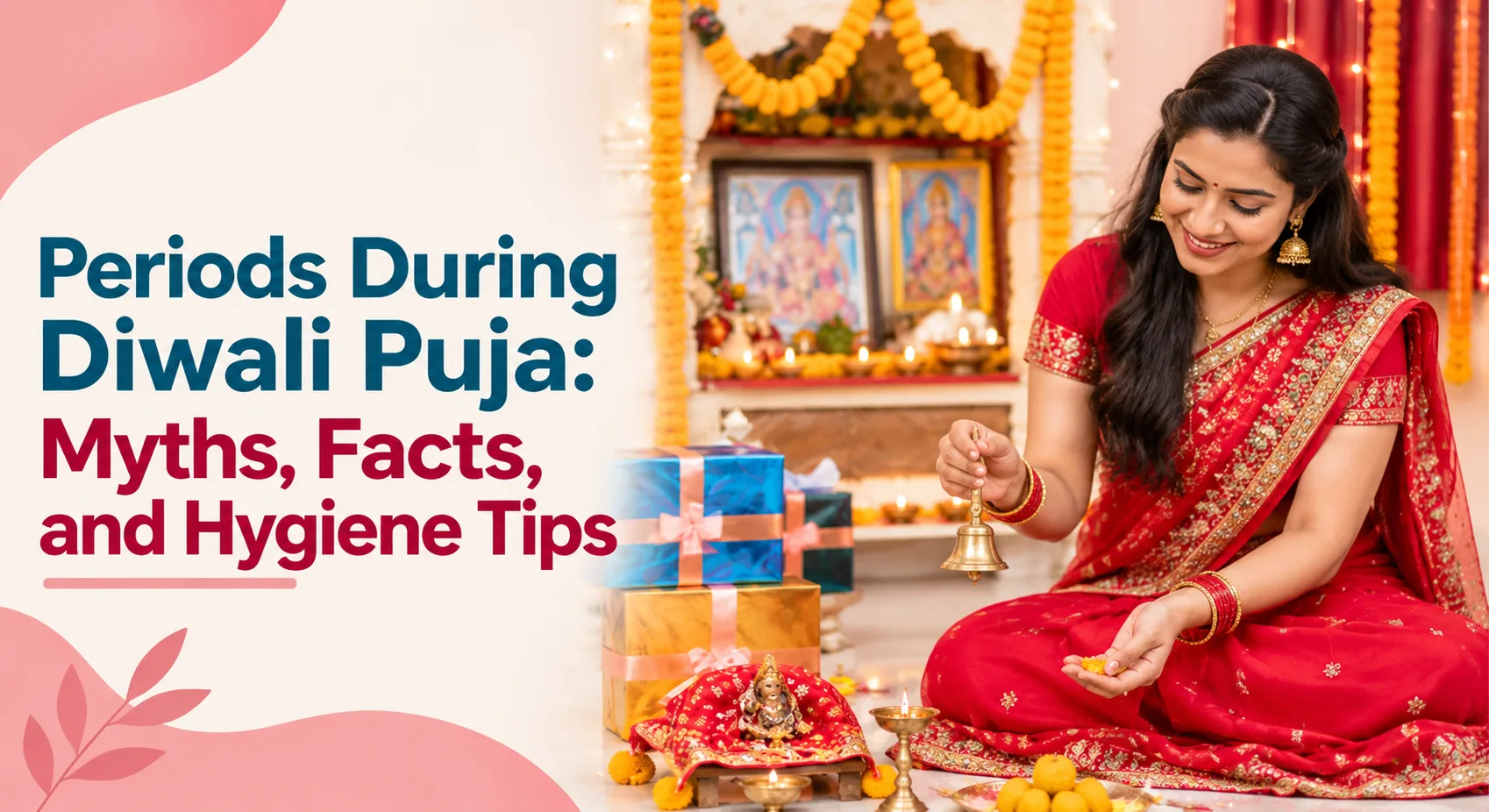
Periods During Diwali: Myths, Facts and Tips to Stay Comfortable
Diwali is a time for celebrating with family, performing puja, visiting relatives, and enjoying festive traditions. But what if your period starts just before or during the celebrations? You may wonder whether you can participate in puja, visit temples, or follow your usual Diwali rituals.
In many Indian households, menstruation is still associated with certain restrictions. These traditional beliefs can sometimes leave women feeling confused or uncomfortable, especially during festivals.
The truth is that periods are a natural part of a woman's reproductive health. Menstruation does not make you physically unclean or stop you from carrying out your everyday activities. Knowing the difference between common beliefs and medical facts can help you make decisions that feel right for you.
Can Diwali Celebrations Affect Your Menstrual Cycle?
Diwali preparations can keep everyone busy. From shopping and cleaning to travelling, attending family gatherings and staying up late, your daily routine may look quite different during the festive season.
These changes can sometimes affect your menstrual cycle. Stress, inadequate sleep, changes in eating habits, and travel-related routine changes may influence the timing of your period.
For most adults, a normal menstrual cycle ranges from 21 to 35 days. So, if your period arrives a few days earlier or later than expected, there is usually no immediate reason to worry.
However, lighting diyas, performing puja, or eating sweets does not directly cause menstruation or change your cycle. If you notice repeated irregular periods, unusually heavy bleeding, or significant changes in your cycle, it is a good idea to consult a gynaecologist for proper guidance.
Common Period Myths in India: Myths vs Facts
Menstruation has been surrounded by different beliefs for generations. While some families follow traditional practices for religious reasons, it is important to understand what medical science actually says.
Let's look at a few common misconceptions about periods.
Myth 1: Women Cannot Participate in Puja During Periods
Fact: Menstruation does not medically prevent a woman from praying, performing daily activities, or attending religious gatherings. Restrictions around participating in puja during periods are based on individual cultural and religious beliefs, not medical reasons. Every woman can make her own decision based on her comfort and personal beliefs.
Myth 2: Taking a Bath During Periods Is Harmful
Fact: There is no medical reason to avoid bathing during menstruation. In fact, taking a regular bath can help you feel fresh and maintain personal hygiene. A warm shower may also provide some comfort if you are experiencing cramps.
Myth 3: Period Blood Is Dirty or Impure
Fact: Menstrual blood is made up of blood and tissue shed from the lining of the uterus. It is a natural part of the menstrual cycle and does not mean that a woman is physically unclean.
Knowing the difference between menstrual cycle myths and facts can help women feel more confident about their bodies and make informed choices without unnecessary fear.
Menstrual Hygiene Tips During Diwali Celebrations
When you are busy attending family functions, visiting relatives or spending long hours outside, managing your period can sometimes become inconvenient.
A little preparation can make things much easier. Here are some simple menstrual hygiene tips to follow during the festive season:
- Change your sanitary pad regularly: Avoid wearing the same pad for too long. Change it every few hours or sooner if it becomes wet or full.
- Keep extra supplies with you: Carry a few extra pads, clean underwear and disposal bags in your handbag.
- Maintain hand hygiene: Wash your hands before and after changing menstrual products.
- Choose comfortable clothing: Breathable cotton underwear can help reduce moisture and skin irritation.
- Avoid scented intimate products: Perfumed washes and sprays may irritate sensitive skin. Use clean water to wash the external genital area.
These small habits can help you stay fresh and comfortable, even when your festive schedule gets busy.
How to Manage Period Cramps During Festivals
Period cramps can be particularly uncomfortable when you have family gatherings, shopping plans, or religious celebrations to attend.
These cramps occur when the uterus contracts to shed its lining. Natural chemicals called prostaglandins trigger these contractions. Higher levels of prostaglandins can lead to stronger contractions and more painful cramps.
If you experience period pain during Diwali, a few simple measures may help:
- Place a warm heating pad or hot water bottle on your lower abdomen.
- Try gentle walking or stretching if you feel comfortable.
- Drink enough water throughout the day.
- Get proper sleep and avoid overexerting yourself.
- Speak to your doctor or pharmacist about suitable pain relief medicines if needed.
If period pain becomes severe, affects your daily activities, or does not improve with usual measures, do not ignore it. You should also seek medical advice if you experience very heavy bleeding, dizziness, or unusual bleeding between periods.
You can also read about ways to get relief from painful periods to understand common causes and available treatment options.
Enjoy Diwali While Taking Care of Your Menstrual Health
Getting your period during Diwali does not mean you have to feel embarrassed or uncomfortable. With a little preparation, good menstrual hygiene and proper care, you can manage your periods while enjoying the festive season.
Remember, menstruation is a normal biological process, not something to feel ashamed of. You can respect your family traditions while also making informed decisions about your health and comfort.
If you have concerns about irregular periods, painful cramps or unusual bleeding, the gynaecology team at Shree Hospital can guide you. Contact Shree Hospital Anklav for appropriate medical advice and women's healthcare support.