
Choosing the right point-of-sale (POS) system is a crucial decision for any business. It directly affects how transactions are processed, how customer data is handled, and how smoothly day-to-day operations run. As businesses move toward more digital solutions, many are faced with a choice between modern Android-based POS systems like the PAX E500 and traditional, older POS terminals. These two types of systems serve the same basic purpose: to handle transactions. However, there are many differences in how they operate, the features they offer, and the benefits they provide.
In this article, we’ll compare the PAX E500 to traditional POS terminals, breaking down key factors such as hardware design, software flexibility, payment options, connectivity, security, and overall cost. By understanding these differences, businesses can better decide which system best suits their needs and goals.
What Is the PAX E500?
The PAX E500 is a modern, Android-powered POS terminal that brings the convenience of mobile technology to payment processing. This device is much more than just a card reader. It allows businesses to run various apps, manage customer relationships, track inventory, and process payments all from one device. With its large, responsive touch screen and the ability to handle both traditional and contactless payment methods, the PAX E500 is designed for businesses that want flexibility and ease of use. If you're interested in exploring its features more, you can check out the full details of the PAX E500 Smart POS Terminal.
What Is a Traditional POS Terminal?
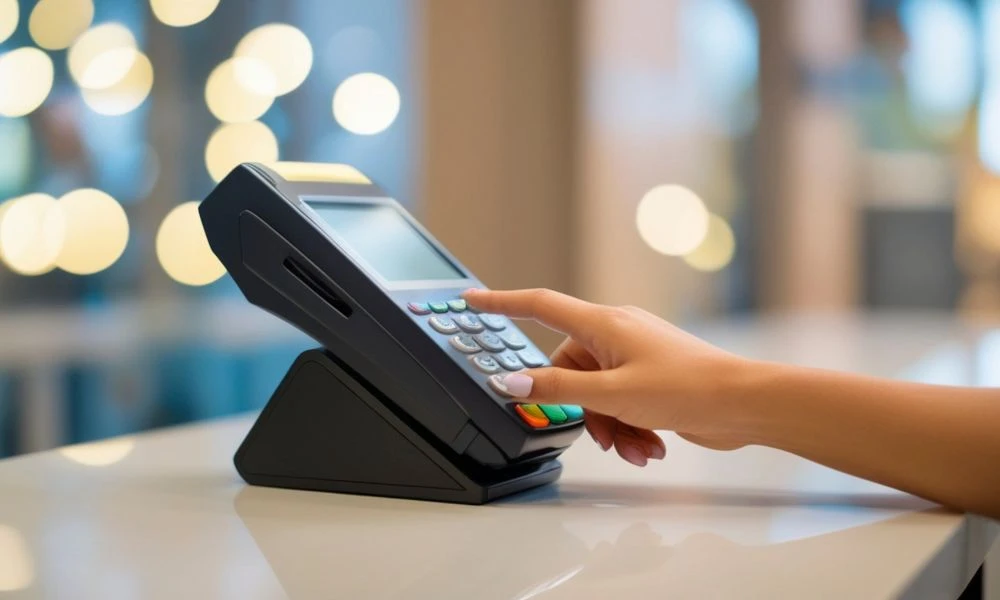
Traditional POS terminals have been around for decades and are what most people think of when they picture a payment processing system. These systems usually consist of a fixed terminal where transactions are entered, a receipt printer, and peripherals like a cash drawer or barcode scanner. They often run on proprietary software and require a stable, wired connection to process payments.
While these systems were once the go-to solution for businesses, many are now outdated. The limitations of traditional POS terminals become clear when comparing them to modern options like the PAX E500.
Key Differences Between PAX E500 and Traditional POS Terminals
1. Operating System and Software Flexibility
One of the major differences between the PAX E500 and traditional POS systems is the operating system.
The PAX E500 runs on Android, which allows businesses to install various apps that can manage everything from inventory to customer data. This opens up endless possibilities for customization and flexibility. Businesses can easily update their software, add new apps, and take advantage of the latest innovations in payment technology.
On the other hand, traditional POS terminals generally run on closed, proprietary systems. This limits the ability to customize the software or install new apps. These older systems also often require manual software updates, which can be time-consuming and inconvenient.
2. Hardware Design and Portability
The PAX E500 is designed with mobility in mind. Unlike traditional POS terminals that are typically bulky and fixed in one location, the PAX E500 is lightweight and can be used on the go. It has a large touchscreen and can be connected to the internet using Wi-Fi, Bluetooth, or 4G, making it perfect for businesses that need flexibility, such as food trucks or pop-up stores.
Traditional POS systems, in contrast, are often large and fixed, requiring cables for power and connectivity. These systems are designed to sit on a counter and may not work well for businesses that need to move around or take payments away from the counter.
3. Payment Acceptance
Both the PAX E500 and traditional POS systems accept common payment methods, such as credit and debit cards. However, the PAX E500 goes a step further by allowing for contactless payments, such as Apple Pay and Google Pay. This makes it easier for customers to pay without inserting a card or using a chip.
Traditional POS systems may not support these newer payment methods, which could limit payment options for tech-savvy customers. Additionally, older systems may require external devices for certain types of payments, making them less convenient than the PAX E500.
4. Connectivity and Networking
Connectivity is another area where the PAX E500 stands out. The device supports a range of connection options, including Wi-Fi, Bluetooth, and 4G, which makes it highly versatile. This is especially useful for businesses that need to process payments in remote locations or without relying on a physical connection.
Traditional POS terminals usually require a wired connection to function, limiting their ability to operate in areas where internet access is unreliable or unavailable. This can be a big disadvantage in certain industries, especially for mobile or temporary businesses.
5. User Interface and Experience
The PAX E500 has a modern, intuitive touchscreen interface that is easy to use and navigate. Because it runs on Android, the design is familiar to many users, and there’s less of a learning curve. This makes the device accessible to employees who may already be comfortable with smartphones or tablets.
In contrast, traditional POS systems often feature physical buttons and small, basic screens, which can be more challenging for employees to operate. These older systems also lack the touch interface that many modern devices now offer.
6. Security and Compliance
Security is a critical consideration for any business, especially when handling payment data. The PAX E500 is fully PCI DSS compliant and offers end-to-end encryption (E2EE) to protect sensitive customer information. It also supports tokenization, which ensures that payment data is anonymized and secure.
Traditional POS terminals may offer security features, but they are often slower to adopt new technologies like encryption and tokenization. This makes the PAX E500 a more secure choice for businesses looking to protect their customers' data.
7. Total Cost of Ownership
When considering the cost of a POS system, it’s important to think beyond the initial price. While traditional POS systems may seem cheaper upfront, they can be more expensive in the long run due to higher maintenance costs and the need for software updates.
The PAX E500, with its modern Android platform, typically offers lower maintenance costs because updates and upgrades can be done remotely. This helps businesses keep their systems up to date without the need for expensive on-site service calls.
8. Scalability
As businesses grow, their POS needs change. The PAX E500 is designed to be highly scalable, allowing businesses to easily add more terminals or integrate with cloud-based services. This makes it an excellent choice for businesses that plan to expand or change locations.
Traditional POS systems, on the other hand, can be difficult to scale. Adding new terminals often involves complex installations, and scaling to new locations can require expensive hardware and software updates.
Which One Should You Choose?
Choose the PAX E500 If:
- You need a mobile POS system
- You want to accept contactless payments
- You prefer a modern, easy-to-use interface
- You need scalability and flexibility
- You want cloud integration for reporting and analytics
- You value security and up-to-date compliance features
Choose Traditional POS Terminals If:
- You have a fixed location and need a basic system
- You don’t need advanced payment features like contactless payments
- You have an existing legacy system that works well for your needs
- You prefer a simple, stable solution without frequent software changes
Conclusion
The PAX E500 Smart POS Terminal offers many advantages over traditional POS systems, especially in terms of flexibility, mobility, and security. With its Android-based platform, modern design, and support for mobile payments, the PAX E500 is a great choice for businesses that need a smart, scalable POS solution.
On the other hand, traditional POS systems can still work well for businesses with basic needs or fixed locations. However, for most businesses looking to stay competitive and future-proof their operations, the PAX E500 offers a far more versatile and innovative solution.