
Introduction
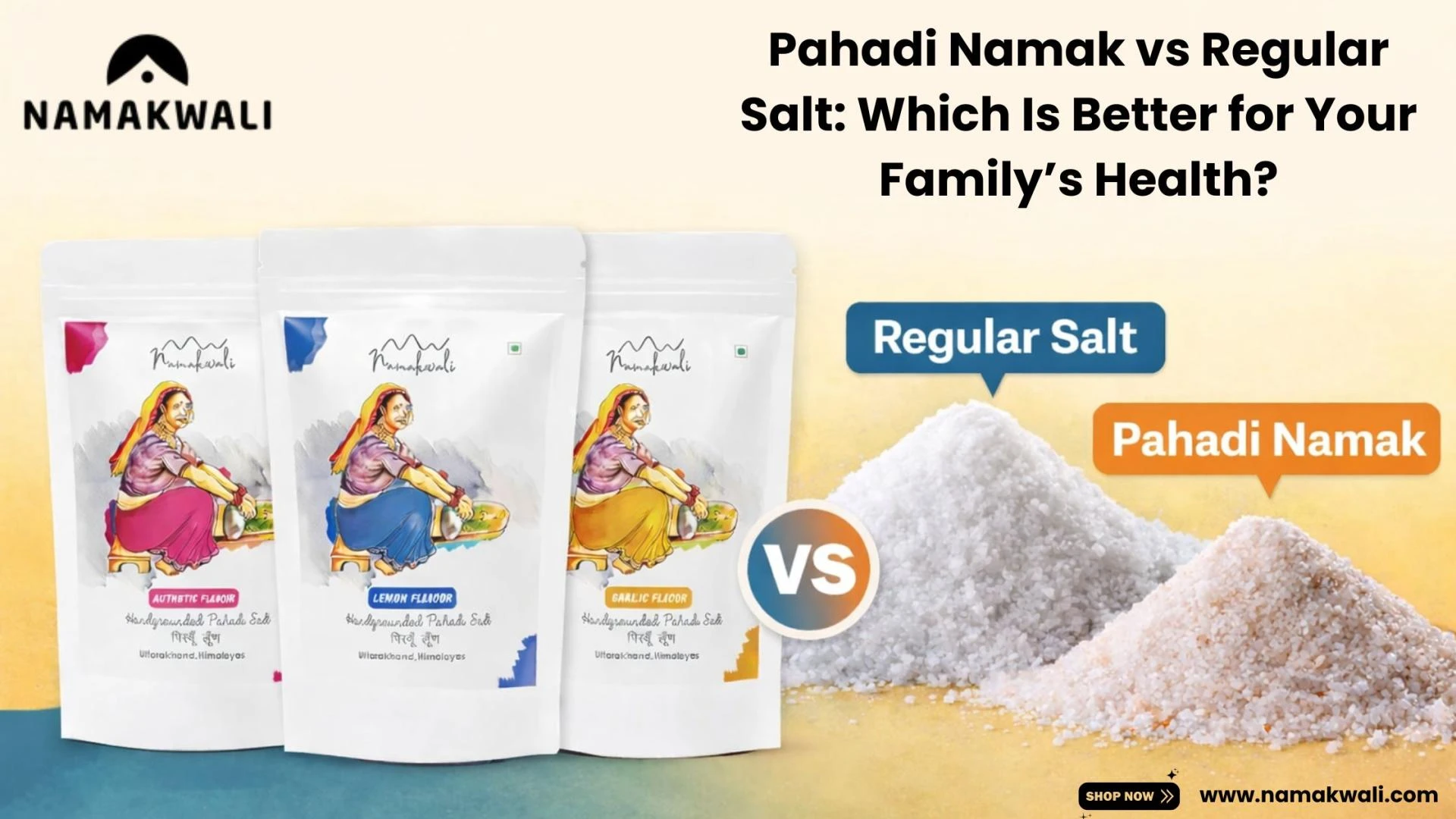
when families shop for salt, they often look at taste, quality, and cost. Many people also check the Pahadi Namak Price before they buy, because mountain salt is seen as special and pure. But is it really better than regular salt? And which one should you keep on your dining table every day? In this simple guide, we will talk about regular salt and pahadi namak, how they are made, how they taste, and how they may affect your family’s health. We will also touch on brands like namakwali salt and namakwali pahadi salt, and the popular local name, phadi namak.
What is Regular Salt?
Regular salt is the white salt most homes already have. It usually comes from sea water or salt mines and then goes through cleaning steps in factories. After that, it is crushed into fine grains. Many brands add iodine to it because iodine helps the body in small ways, especially for the thyroid.
Main points about regular salt:
- It is easy to find in any shop.
- It is low in cost.
- The taste is sharp and direct.
- It is very fine and melts fast in food.
- It often has added iodine.
Regular salt works well for daily cooking like dal, sabzi, rice, and snacks. But some people feel it tastes a bit flat because most natural parts are taken out during factory cleaning.
What is Pahadi Namak?
Pahadi namak, also called mountain salt, comes from hill areas. It is often taken from natural salt rocks and then cleaned in a simple way. Because of this, it keeps some natural parts inside it. In some places, people also call it phadi namak.
Main points about pahadi namak:
- It comes from mountain regions.
- The grains are not always very fine.
- The taste is mild and a little earthy.
- It keeps some natural parts from the rocks.
- It is seen as less processed.
Many families like namakwali pahadi salt because it feels closer to nature. It also gives a soft taste that does not cover the real flavor of food.
Taste and Cooking: Which One Wins?
Taste is a big reason people change their salt. Regular salt gives a strong salty hit. You need only a small amount, and it mixes fast in soups, curries, and dough.
Pahadi namak has a softer taste. Some people say it feels more balanced. It works well in:
- Simple sabzi
- Salads
- Curd dishes
- Fruits and chaat
- Light soups
If you like bold taste, regular salt may suit you. If you like a gentle taste that lets food flavors stay clear, pahadi namak can be a good pick.
Minerals and Daily Health
Salt is mainly sodium chloride. Both types give sodium, which the body needs in small amounts. Too much salt of any kind is not good. Still, people often talk about mountain salt because it keeps tiny amounts of other natural parts from the rocks.
Here is a simple view:
Regular salt:
- Very clean and fine
- Mostly sodium chloride
- Often has iodine added
Pahadi namak:
- Less factory work
- May keep small natural parts from rocks
- No added iodine in many cases
Some simple health points to remember:
- Too much salt can raise blood pressure.
- Less salt is better than changing only the type.
- If your doctor told you to watch salt, follow that advice.
- If you use pahadi namak, keep the amount small.
- If you use regular salt, do the same.
So, the real health win comes from control in amount, not only from the type.
Pahadi Namak Price vs Regular Salt Price
Cost matters in every home. Regular salt is cheaper because it is made in large amounts in factories. Pahadi namak often costs more because it comes from hills and is packed in smaller amounts. The Pahadi Namak Price can change based on:
- The source area
- The brand name
- The cleaning and packing style
- The shop or website
Brands like namakwali salt try to keep fair rates while giving good quality. When you compare prices, think about how much you use in a month and what taste you like more.
Which One Should Your Family Choose?
Here is a clear way to decide:
- If you want low cost and easy mixing in food: Regular salt is fine.
- If you want a mild taste and a more natural feel: Pahadi namak or pahadi namak can be a nice choice.
- If you need iodine for health reasons: Regular iodized salt may be better.
- If you already eat many foods with iodine: You can also try namakwali pahadi salt in some dishes.
You do not have to pick only one. Many homes keep both and use them in different foods.
Storage and Daily Use Tips
No matter which salt you buy, keep these tips in mind:
- Store salt in a dry box with a tight lid.
- Keep it away from water and steam.
- Do not add extra salt at the table if food already tastes fine.
- Try herbs and spices to cut down salt use.
- Teach kids to like less salty food from a young age.
Small habits can make a big change over time.
Final Thoughts
Pahadi namak and regular salt both have a place in the kitchen. One gives strong taste and low cost, the other gives a soft taste and a natural feel. Health mostly depends on how much salt you eat each day, not only on the type you choose. If you want to try a trusted option, look for namakwali salt or namakwali pahadi salt and see which suits your cooking style and family taste. For more details and quality choices, Visit Namakwali.