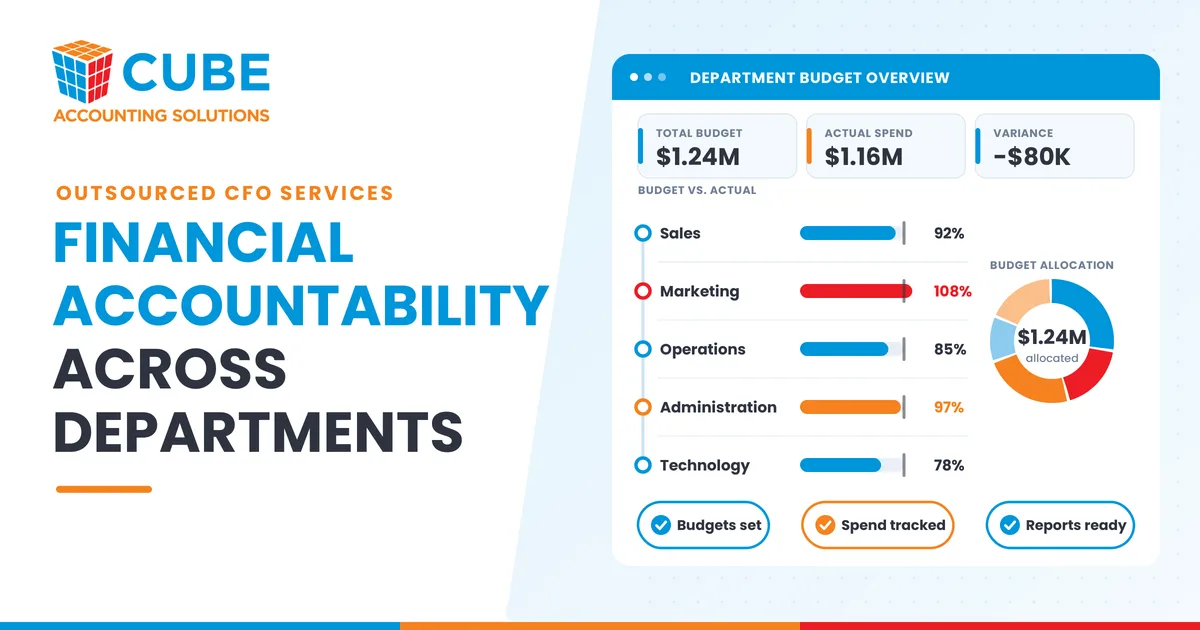
Running a business with multiple departments can make financial management challenging. Each department has its own expenses, employees, goals, and responsibilities. While one team may focus on sales, another may handle operations, marketing, administration, or production. All these departments use company resources, but their spending does not always receive the same level of attention.
Without clear financial accountability, businesses may face unnecessary expenses, missed budgets, poor spending decisions, and confusion about who is responsible for financial results.
This is where Outsourced CFO Services can make a difference. An outsourced CFO helps business owners and department managers understand financial responsibilities, monitor spending, and make decisions based on accurate financial information.
Rather than allowing each department to manage expenses without a clear plan, a CFO helps create a financial structure that connects department-level decisions with the company's overall goals.
What Does Financial Accountability Mean in a Business?
Financial accountability means that every department understands how it uses company money and takes responsibility for its spending and financial results.
For example, a marketing department may have a monthly budget for advertising, software, and promotional activities. The operations department may have a separate budget for equipment, supplies, and employee costs.
Both departments need to understand:
- How much money they are allowed to spend.
- Which expenses are necessary for their work.
- Whether they are staying within their budgets.
- How their spending affects company performance.
- Who reviews and approves financial decisions.
When these responsibilities are clear, managers can make better decisions and business owners can understand where company money is going.
Financial accountability does not mean stopping departments from spending money. It means making sure spending is planned, reasonable, and connected to business needs.
1. Create Clear Budgets for Every Department
One of the first steps toward financial accountability is creating separate budgets for each department.
A company-wide budget provides an overall spending plan, but it may not show how much each team is expected to spend.
For example, a business may have an annual operating budget of $600,000. This amount can be divided among departments based on their responsibilities and expected needs.
An example of a departmental budget may look like this:
DepartmentMonthly BudgetSales$8,000Marketing$6,000Operations$12,000Administration$4,000Technology$5,000Total$35,000These figures are only examples. Actual budgets depend on the size, industry, and needs of the business.
An outsourced CFO helps determine whether these budgets are realistic. They review historical spending, expected business activity, and future plans before setting financial targets.
This gives department managers a clear understanding of their spending limits and helps prevent unplanned expenses.
2. Assign Financial Responsibilities to Department Managers
Budgets alone cannot create financial accountability. Employees and managers must understand who is responsible for monitoring spending and approving expenses.
For example, the marketing manager may be responsible for advertising expenses, while the operations manager oversees equipment purchases and supplier payments.
An outsourced CFO can help establish clear financial responsibilities across the organization.
This may include:
- Assigning budget ownership to department managers.
- Defining spending approval limits.
- Establishing rules for large purchases.
- Requiring documentation for business expenses.
- Creating regular budget review meetings.
- Identifying who is responsible for correcting overspending.
These responsibilities reduce confusion and make it easier to identify problems.
When every manager knows what they are responsible for, financial decisions become more organized.
3. Track Actual Spending Against Department Budgets
A department may have a clear budget but still spend more than expected.
For example, a company may allocate $6,000 per month to marketing. However, the department spends $7,500 because of additional advertising campaigns and new software subscriptions.
Without regular monitoring, management may not notice the extra spending until the end of the year.
An outsourced CFO compares actual expenses with planned budgets to identify these differences.
This process helps answer important questions:
- Why did the department spend more than planned?
- Was the additional spending approved?
- Did the expense support business growth?
- Can the same result be achieved at a lower cost?
- Does the department need a budget adjustment?
Through SMB budgeting and variance reporting, businesses can identify spending differences and understand the reasons behind them.
The purpose is not to criticize departments for every additional expense. Sometimes higher spending is necessary. The important thing is to understand why it happened and whether it created value for the business.
4. Establish a Consistent Financial Reporting Process
Department managers need regular financial information to understand their performance.
However, reports that are difficult to understand or arrive too late may not help managers make timely decisions.
An outsourced CFO helps establish a consistent reporting process so that each department receives the information it needs.
Reports may include:
- Monthly budget versus actual expenses.
- Department revenue and operating costs.
- Payroll and staffing expenses.
- Supplier and vendor spending.
- Department-level profit contributions.
- Cash flow updates.
- Financial performance trends.
For example, a sales manager may need information about revenue, commissions, and customer acquisition costs. An operations manager may need reports about labor expenses, equipment costs, and supplier payments.
The reports should be clear, accurate, and easy to understand.
Regular reporting allows managers to identify problems early and make adjustments before small issues become larger financial concerns.
5. Set Financial Goals for Each Department
Financial accountability becomes stronger when departments have clear goals.
A budget explains how much money a department can spend, but financial goals explain what the department should achieve with those resources.
For example:
- The sales department may have a revenue target.
- The marketing department may focus on generating qualified leads within a set budget.
- The operations department may aim to reduce waste and control supply costs.
- The administration department may work toward improving efficiency and reducing unnecessary expenses.
An outsourced CFO helps connect these goals with the company's overall financial plan.
The goals should be realistic and measurable. Managers should also understand how their department's performance affects the rest of the business.
This makes financial responsibility part of everyday business decisions rather than something reviewed only during annual planning.
6. Improve Communication Between Finance and Other Departments
Financial problems often happen because departments do not communicate with each other.
For example, the sales team may promise a delivery schedule that requires additional staffing or equipment. However, the operations team may not have included those costs in its budget.
Similarly, the marketing department may launch a new campaign without informing finance about the additional spending.
These situations can create unexpected expenses and planning problems.
An outsourced CFO helps improve communication between finance and department managers.
This can include:
- Holding regular budget review meetings.
- Discussing upcoming purchases before approval.
- Sharing financial reports with department heads.
- Reviewing changes in staffing and operating needs.
- Discussing the financial impact of new projects.
When departments communicate before making major decisions, businesses can avoid unnecessary costs and plan resources more effectively.
7. Establish Expense Approval and Internal Control Procedures
A business needs clear rules for how employees request, approve, and report expenses.
Without these rules, employees may make purchases without proper authorization. Duplicate payments, incorrect expense records, and unnecessary purchases can also become difficult to identify.
An outsourced CFO can help establish internal financial controls that reduce these risks.
Some useful procedures include:
- Requiring approval for purchases above a certain amount.
- Separating payment approval from payment processing.
- Reviewing vendor invoices before payment.
- Keeping receipts and supporting documents.
- Limiting access to sensitive financial information.
- Reviewing expenses regularly for errors or unusual activity.
These procedures help protect company funds and make financial records more reliable.
The approval process should also be practical. Too many unnecessary steps can slow down daily operations, so businesses need controls that provide protection without creating delays.
8. Use Financial Data to Measure Department Performance
Spending less money does not always mean a department is performing well.
For example, a marketing department may reduce its advertising budget, but if the number of new customers also decreases, the savings may not benefit the business.
This is why companies should review financial spending alongside performance results.
An outsourced CFO helps identify useful financial measures for different departments.
Examples include:
DepartmentPossible Financial MeasuresSalesRevenue, sales costs, customer acquisition costMarketingCampaign spending, cost per lead, return on marketing investmentOperationsLabor costs, material costs, operating expensesAdministrationOffice expenses, software costs, administrative spendingProductionUnit costs, material waste, production expensesThese measures help managers understand whether their department is using resources effectively.
Financial data also helps business owners decide where additional investment may be useful and where spending needs improvement.
9. Review Department Budgets as the Business Grows
Business needs change over time. A department that needed five employees last year may need ten employees today. A company expanding into a new market may also require additional marketing, technology, and operational spending.
For this reason, department budgets should not remain unchanged throughout the year.
An outsourced CFO regularly reviews financial plans and recommends adjustments when business conditions change.
For example, if the sales department generates more revenue than expected, management may decide to increase its budget to support additional opportunities. However, the increase should be reviewed alongside expected costs and potential returns.
Regular budget reviews help businesses remain flexible while maintaining financial control.
How Cube Accounting Solutions Supports Financial Management
Managing finances across several departments requires accurate accounting records, organized reporting, clear budgets, and consistent financial oversight.
Cube Accounting Solutions provides Accounting Services, Tax Services, Fractional CFO Services, and Staff Augmentation & Managed Staffing Services.
Its financial services can support businesses that need help reviewing expenses, improving financial reporting, monitoring budgets, and understanding their overall financial performance.
Through its CFO-related support, Cube Accounting Solutions helps businesses gain a clearer picture of their financial position and make informed decisions about spending, planning, and growth.
Final Thoughts
Financial accountability across multiple departments does not happen automatically. It requires clear budgets, defined responsibilities, regular reporting, and communication between managers.
When each department understands its financial responsibilities, businesses can reduce unnecessary spending, improve planning, and use company resources more effectively.
Outsourced CFO Services help bring these activities together by providing financial oversight and guidance without requiring a business to hire a full-time CFO.
With the right financial processes in place, business owners can understand how each department contributes to the company's performance and make better decisions for long-term growth.