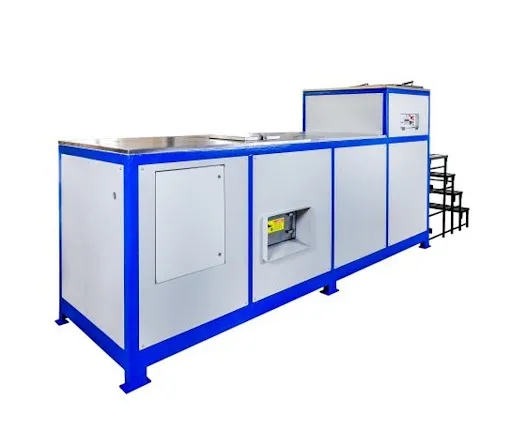
Builders, housing societies and facility managers in India often come across two terms when planning wet-waste processing: an organic waste converter and an organic waste compost machine. They are sometimes used interchangeably, sometimes as if they were different products. The confusion leads to wrong purchases, machines that sit unused, and compost that never reaches a garden. This article explains what each term usually means, where they differ in practice, and how to decide what your building actually needs.
What an Organic Waste Converter Usually Means
"Organic waste converter", or OWC, is the term most often seen in building approvals, environmental clearances and project tenders. When a new residential or commercial project is planned, an OWC is frequently listed as the equipment that will process the building's wet waste on-site. In practice, an OWC is any machine that converts food and garden waste into compost or a compost-like material. Many OWCs shred and mix the waste and reduce its volume and moisture, producing a semi-finished output that still needs several weeks of curing before it becomes usable compost.
What an Organic Waste Compost Machine Usually Means
An organic waste compost machine is the more everyday description used by buyers who want one clear result: compost. These are typically in-vessel, aerobic machines that control air, moisture and temperature so that microbes break the waste down quickly inside a closed chamber. Well-run machines of this type build up internal temperatures of around 60–65°C, which speeds up composting and helps control pathogens. The output still benefits from curing, but the machine is designed around producing good compost rather than only reducing waste volume.
Where the Difference Shows Up in Practice
| Organic waste converter (OWC) | Organic waste compost machine | |
|---|---|---|
| Where the term is used | Approvals, clearances, tenders | Everyday buying and operations |
| Main goal | Process wet waste on-site | Produce usable compost |
| Typical output | Often semi-finished, needs curing | Compost, with shorter curing |
| Common buyer | Builders and developers | Societies, hotels, institutions |
| Biggest risk | Installed for approval, then unused | Undersized for real waste |
The two terms overlap a great deal, and many machines fit both descriptions. What matters is not the label on the quote but the specification behind it.
Six Questions That Decide What You Need
- What comes out? Ask whether the output is finished compost or a semi-processed material, and how long it needs to cure.
- What is the real daily wet waste? Weigh it for one to two weeks, including peak days, rather than relying on design occupancy.
- How automatic is it? Fully automatic shredding, mixing and aeration keep daily labour low.
- How much bulking material does it use? Sawdust or coco peat is a running cost and affects output quality.
- Where will it sit? Check the footprint, power supply, drainage and space for curing.
- Who will run it? Training, a simple daily log and an annual maintenance contract decide whether the machine keeps working.
Which One Fits Your Situation?
New project needing approval: an OWC is usually specified. Make sure it is sized for full occupancy, not just the first phase, and that the society will receive training and an AMC at handover.
Existing society with an unused builder OWC: have it inspected first. Many can be revived with repairs, training and a proper routine. Replace it only if it is badly corroded or far too small.
Society, hotel or campus that wants usable compost: choose a fully automatic organic waste compost machine with built-in shredding, sized for your busiest day plus 20–30% extra.
Common Mistakes to Avoid
The most common mistake is buying a composting machine or OWC sized for an estimate instead of measured waste. Others include having no covered space for curing, cutting back on bulking material to save money, and letting the maintenance contract lapse. Each of these turns a working machine into a smelly, unused one within months.
Conclusion
Whether a quote says "organic waste converter" or "organic waste compost machine", judge it on what comes out, how much waste it handles, how automatic it is and how well it will be supported. Get those right and either label will serve your building well for years.
Smart Enviro Systems manufactures automatic composters for housing societies, hotels, hospitals and institutions across India, with more than 900 clients.