The past few years have been more than ever before; workplaces have changed more quickly. Flexible work hours, rotating teams, and temperate schedules have transformed how offices run their daily operations. Desks are lying empty, and collaboration zones are crammed during busy days. Smarter planning is required in companies to utilize space efficiently and enhance employee experience. The change has seen the layout strategy become closely related to desk booking software.
Why Traditional Office Layouts No Longer Work
- Fixed Desk CultureSeating restrictions inhibit the flexibility and leave expansive areas unused whenever the employee works off. Stagnant designs do not allow teams to change swiftly to evolving attendance and introduction patterns and demands.
- Limited Space VisibilityManagers find it difficult to monitor real-time occupancy or book meeting rooms effectively. Invisibility leads to double bookings, space waste, and confusion on hectic office days.
- Rising Operational CostsNot fully utilized desks lead to higher rent, electricity, and maintenance costs. Firms spend money on purchasing places that are poorly utilized by their employees, and hence minimize the ratio of total investment in the workplace.
How Desk Booking Software Optimizes Office Layout
Changes in layout planning that result in technology transforming layout planning into a strategic advantage are explained as discussed in the following sections.
Real Time Insights
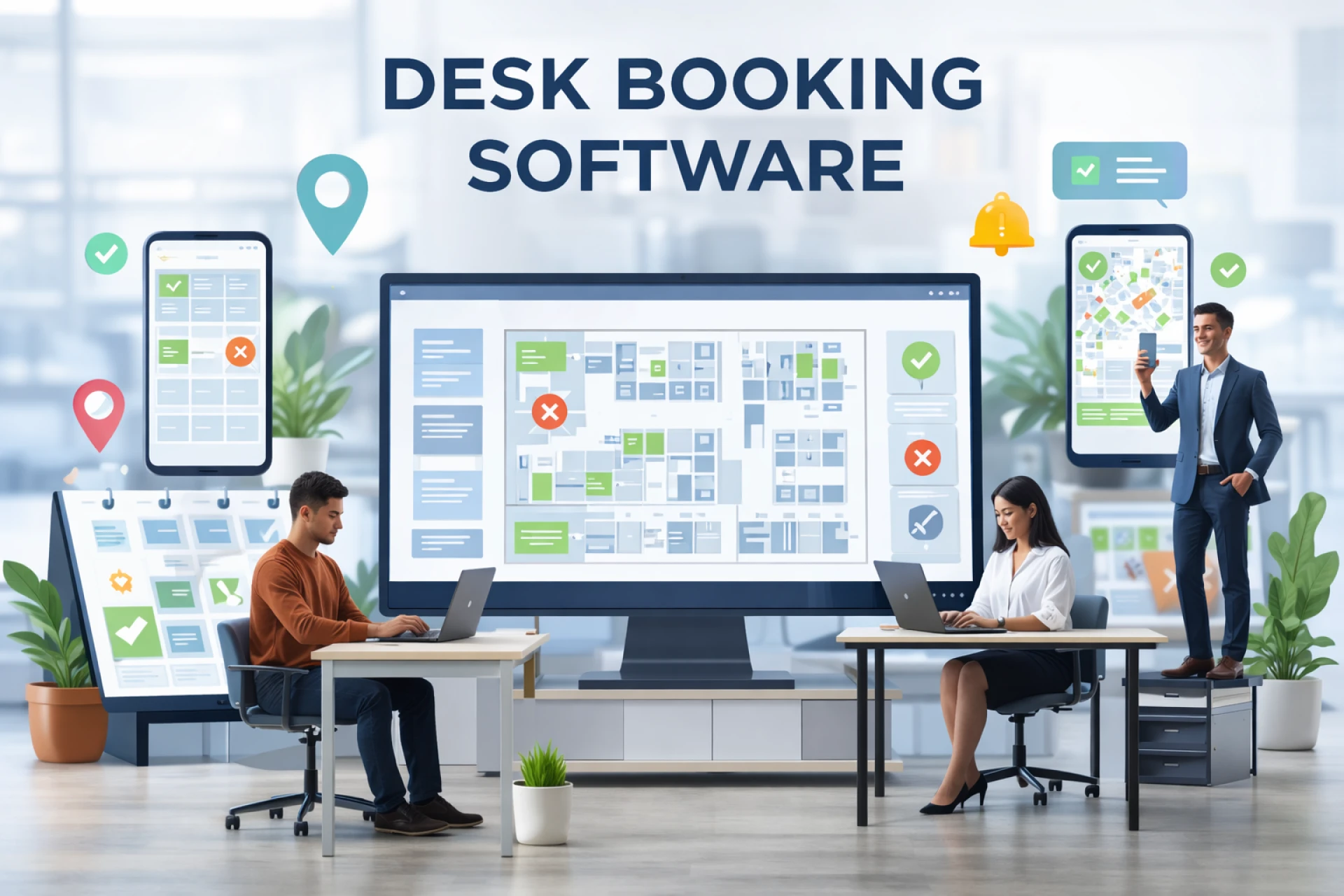
Smart office planning is based on precise information. The current desk booking software can provide live occupancy data, help teams understand space utilization trends, and make it easier for employees to book meeting rooms, reducing confusion.
It will facilitate improved planning by:
- Live occupancy tracking
- Space heatmaps
- Usage reports
- Booking visibility
Evidence-based corrections save space and enhance the precision of planning. Leaders have the courage to draw layouts based on reality rather than assumptions.
Flexible Seating Models
Workspaces always perform well when chairs are adjusted to everyday requirements. Smart desk booking system promotes hot desks, neighborhoods, and shared workstations aligned with hybrid schedules, dynamism, and team structures.
This flexibility acts in:
- Hot desk options
- Team neighborhoods
- Shared workstations
- Rotational seating
Dynamic seating is effective in not using or taking up too much space, and yet keeping order. It is easier to work as a team without disorganisation or discomfort at the workplace.
Enhanced Collaboration Zones
Teamwork improves as workers locate the appropriate areas quickly. The accessible smart systems enable teams to plan schedules and ensure to book meeting rooms with the ability to match desk choice and group location to project requirements and room closeness.
Enhanced collaboration is achieved through:
- Team proximity booking
- Meeting coordination
- Project seating clusters
- Shared workspace planning
Sharing in the areas of cooperation is a less-frictional approach and enhances cooperation. Layouts are developed to facilitate communication rather than to draw lines between departments.
Data Driven Redesign
Office planning is strategic when there are decisions based on actual usage patterns. Analytics point to unused areas, busiest days, and plan inefficiencies, which are often off the agenda of conventional methods.
Strategic insights will support the modifications through:
- Space reallocation
- Desk reduction plans
- Collaboration expansion
- Quiet zone creation
Redesigning smarter increases productivity and satisfaction. The layout adaptations follow the employee behavior in a way that provides a balanced environment, which allows various work styles.
Scalable Growth Planning
Expansive businesses need flexible infrastructure. A stable desk booking system enables a business to grow, combine floors, or even change seating capacity without disrupting operations or employee experience.
Scalability is achieved through:
- Multi-location support
- Capacity forecasting tools
- Floor plan updates
- Growth analytics insights
Long-term efficiency is guaranteed through strategic planning. Responsive systems allow growth and maintain the workplace as user-friendly and forward-looking.
Conclusion
Office settings have been changing in tandem with the evolving work culture and business objectives. Rational planning will provide the balanced spaces that help foster productivity and teamwork without extraneous complexity.
Companies that adopt digital work tools are placing themselves in a position of long-term effectiveness and flexibility. Desk booking software can be implemented thoughtfully to make a sustainable workplace transformation feasible.