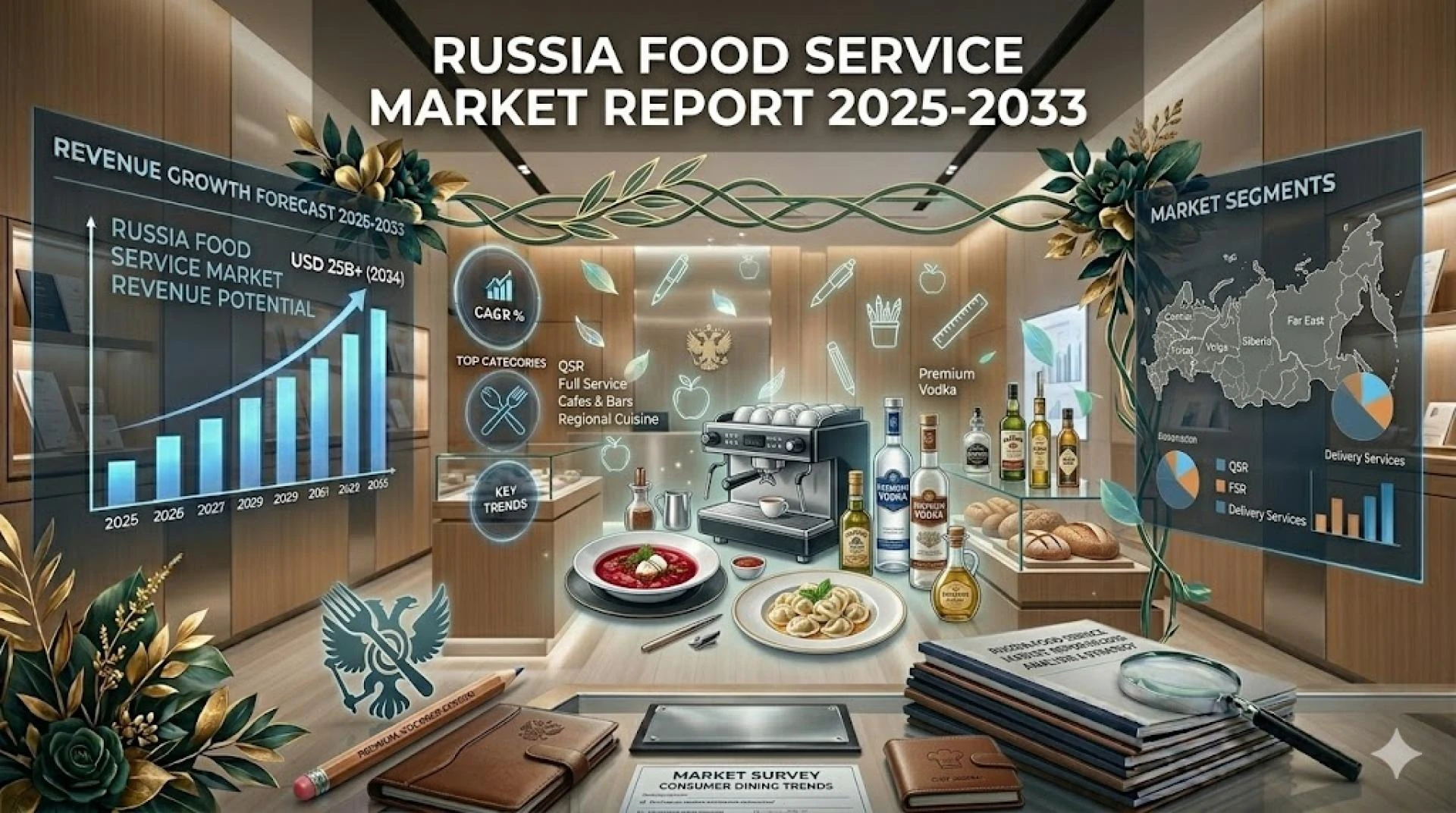
The culinary landscape in Russia is undergoing a profound transformation. Valued at USD 29.21 Billion in 2024, the Russia food service market size is projected to reach a staggering USD 56.48 Billion by 2033. This growth, representing a compound annual growth rate (CAGR) of 7.30%, is fueled by a cocktail of shifting consumer behaviors, technological integration, and a renewed focus on local innovation.
Whether you are an investor, a restaurateur, or a food enthusiast, understanding the dynamics of this market is essential. Below, we explore the key drivers, segments, and outlook of the Russian dining industry.
What is the Current Size and Growth Potential of the Russia Food Service Market?
The Russia food service market is currently in a high-growth phase. As of 2024, the market stands at USD 29.21 Billion. Experts from the IMARC Group predict that by 2033, this figure will nearly double to USD 56.48 Billion.
The Russia food service market is expanding due to a 7.30% CAGR (2025-2033), driven by demand for high-quality dining, health-conscious plant-based options, and the rapid rise of digital delivery platforms. The market is evolving from traditional models to technology-driven and experiential dining concepts.
Key factors contributing to this trajectory include:
- Convenience Culture: A fast-paced lifestyle is driving the demand for Quick Service Restaurants (QSR) and reliable food delivery.
- Health and Wellness: There is a notable surge in demand for nutrient-dense, organic, and gluten-free options.
- Digital Transformation: The integration of mobile apps, self-ordering kiosks, and automated systems is streamlining operations.
Which Market Segments Are Dominating the Russian Food Industry?
The market is segmented by type, outlet, and location, each catering to specific consumer needs.
What Role Do Cafes, Bars, and Full-Service Restaurants Play?
Cafes and Bars remain a cornerstone of Russian social life. They offer everything from specialist coffee and tea to juice and dessert bars. On the other hand, Full-Service Restaurants provide an immersive experience, featuring diverse international cuisines such as Asian, European, and Middle Eastern.
How are Quick Service Restaurants (QSR) and Cloud Kitchens Changing the Game?
The Quick Service segment is thriving on the need for speed and affordability, focusing on bakeries, burgers, and meat-based cuisines. Meanwhile, Cloud Kitchens - which operate exclusively via delivery - are the newest disruptors. They allow brands to reach wide audiences with minimal overhead costs, perfectly aligning with the modern consumer's preference for at-home dining.
Sample Request For Your Business
How Are Changing Consumer Preferences Influencing Menu Innovation?
Today’s Russian consumer is more adventurous and health-conscious than ever before. This shift is forcing food service providers to get creative.
Menu innovation in Russia is currently defined by "culinary creativity" and "sustainability." Restaurateurs are blending traditional Russian flavors with global techniques (molecular gastronomy and fusion) while prioritizing ethical sourcing and eco-friendly packaging to meet the demands of environmentally conscious diners.
Major trends include:
- Culinary Creativity: Chefs are experimenting with textures and fusion cuisines to attract younger, experience-seeking individuals.
- Plant-Based Demand: The rise of vegetarianism and veganism has made plant-based "meat" and dairy alternatives a menu staple rather than a niche offering.
- Sustainability: Consumers are supporting businesses that use biodegradable packaging and source ingredients from local, sustainable vendors.
What Impact Does Technology Have on the Russia Food Service Market?
Technology is no longer just a "bonus" - it is a necessity for survival in the Russian market.
Digital payment systems and mobile ordering apps have transformed the user experience. Establishments are increasingly adopting:
- Automation: Self-ordering kiosks reduce wait times and labor costs.
- Digital Menus: These allow for real-time updates and more engaging visual marketing.
- Enhanced Delivery Logistics: Specialized platforms are optimizing routes to ensure food arrives fresh and hot.
The integration of these technologies is a primary driver for the increased market share of Chained Outlets, which have the capital to invest in sophisticated tech stacks compared to independent ventures.
How is the Competitive Landscape Shifting for Major Food Chains?
The Russian food service landscape has seen significant shifts due to global geopolitical changes, leading to the rebranding of iconic chains.
The competitive landscape in Russia is characterized by the rebranding of international chains into local entities, such as Rostic’s (formerly KFC) and Stars Coffee (formerly Starbucks). Leading players are focusing on expanding product lines, refining supply chains, and maintaining quality while offering affordable alternatives to international brands.
Notable developments include:
- Rostic’s: In April 2023, the chain successfully replaced KFC, maintaining the familiar menu to ensure a smooth transition for customers.
- Domino’s Rebranding: Following an acquisition by Anton Pinskiy and Timati, the brand is undergoing a transformation while staying rooted in the local market.
- Retail Expansion: Giants like Magnit, which operates over 30,000 stores, are moving into the food service space by offering ready-to-eat (RTE) meals and in-store cafeterias.
Which Regions in Russia Offer the Most Growth Opportunities?
Geography plays a vital role in market dynamics, with different districts showing unique preferences.
- Central District (Moscow): This is the heart of the market, characterized by high-end dining and a dense concentration of international brands.
- Northwestern District (St. Petersburg): Known for its proximity to Europe, this region sees a high demand for Scandinavian and European-influenced cuisines.
- Volga and Urals Districts: These areas are witnessing a rise in casual dining and a mix of traditional Russian dishes with modern global trends.
- Siberian District: Rapid urbanization in cities like Novosibirsk is driving the growth of meat-centered and hearty comfort food outlets.
Why is Sustainability Becoming a Core Strategy for Russian Food Businesses?
Ethical consumption is no longer a trend; it is a long-term market shift. Food service operators are adopting eco-friendly practices to align with the values of their patrons.
Evidence of this shift includes:
- Local Sourcing: Reducing the carbon footprint by working with regional farmers.
- Waste Reduction: Implementing energy-efficient cooking and strict food waste management.
- Innovative Packaging: The introduction of products like sugarcane-based (Bagasse) clamshell boxes is helping businesses move away from single-use plastics.
What is the Future Outlook for the Russia Food Service Market Through 2033?
The future looks bright, albeit competitive. The market is expected to reach USD 56.48 Billion by the end of the forecast period.
The outlook for the Russia food service market is positive, with a forecasted CAGR of 7.30%. Future growth will be defined by the expansion of food retail chains, the proliferation of cloud kitchens, and a continued emphasis on "Instagram-worthy" experiential dining that combines food with entertainment.
Key takeaways for the future:
- Event-Driven Growth: Major industry events like FOOD Expo 2025 will continue to serve as catalysts for innovation and networking.
- Hybrid Models: Expect to see more "Retail + Food Service" models where supermarkets become major dining hubs.
- Niche Markets: Specialty bars (juice, smoothie, and dessert) will likely see higher growth rates as health awareness peaks.
Final Thoughts
The Russia food service market is a resilient and adaptive sector. By balancing traditional culinary roots with cutting-edge technology and a focus on sustainability, the industry is well-positioned to meet the evolving demands of the 21st-century consumer.