Healthcare is not limited to doctors, nurses and other medical professionals. Behind every hospital, diagnostic centre and healthcare organisation, there is a team responsible for administration, operations, finance, patient services and management. As healthcare organisations become more structured, the need for professionals who understand both management and healthcare operations has become increasingly important.
For graduates interested in the business and administrative side of healthcare, management education can be a useful career-development option. An online postgraduate management programme may also appeal to people who want to continue learning while managing work or other responsibilities.
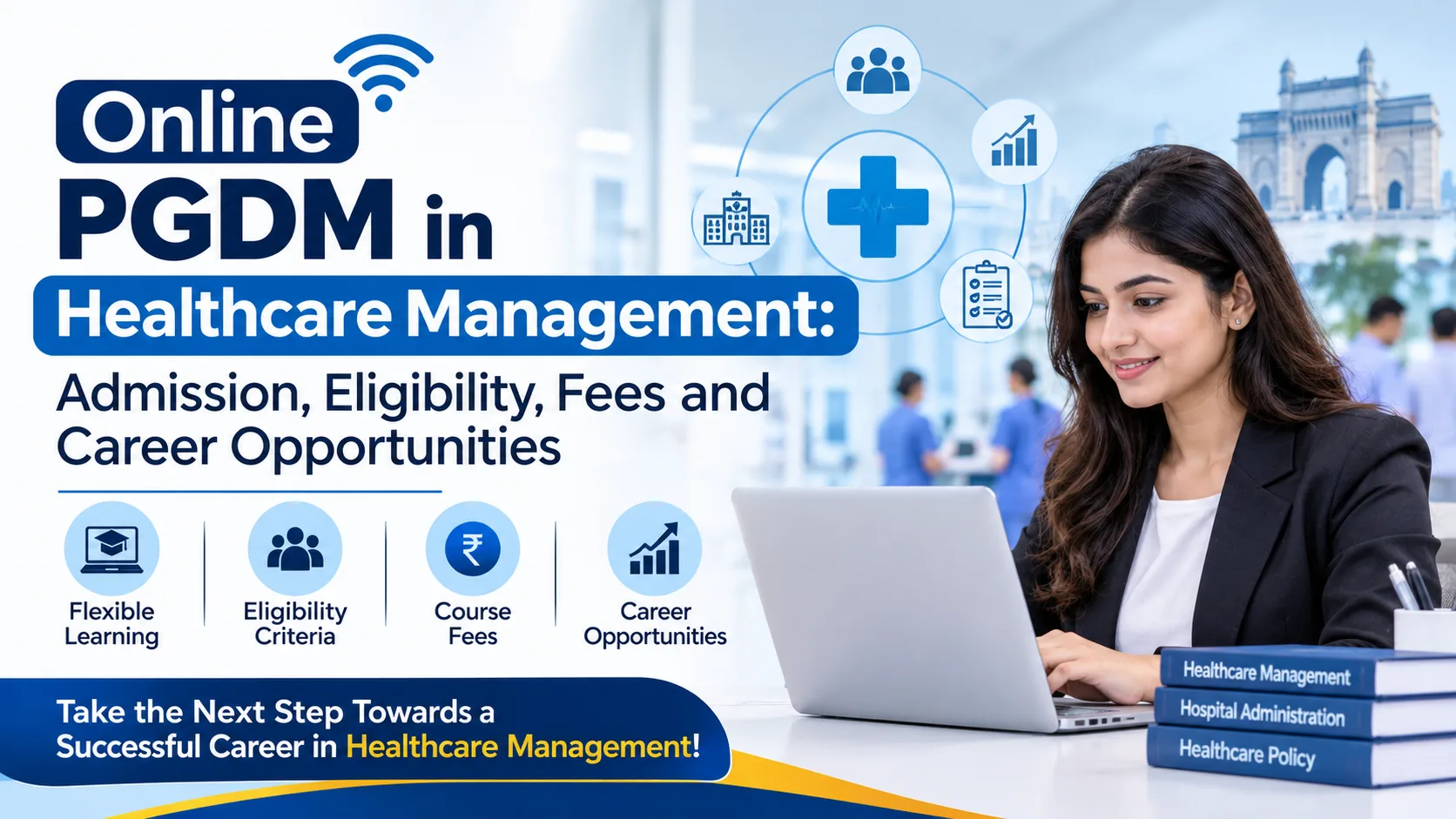
If you are researching Online PGDM in Healthcare Management admission, it is important to understand the course structure, eligibility requirements, duration, fees and career opportunities before selecting an institution. This guide explains the key factors graduates should consider when exploring healthcare management education.
What Is an Online PGDM in Healthcare Management?
An Online PGDM in Healthcare Management is a postgraduate management programme focused on the administrative and operational aspects of the healthcare sector. It combines management concepts with subjects related to hospitals, healthcare services and healthcare organisations.
The programme may introduce learners to areas such as:
- Hospital and healthcare administration
- Healthcare operations management
- Human resource management
- Healthcare finance and budgeting
- Marketing of healthcare services
- Healthcare quality management
- Patient service management
- Healthcare laws and regulations
- Healthcare information systems
The exact subjects depend on the institution and its approved curriculum. Students should always review the official syllabus before enrolling.
Unlike programmes focused mainly on clinical practice, healthcare management education is generally concerned with how healthcare organisations are planned, coordinated and managed.
Why Consider Healthcare Management After Graduation?
Graduates from different academic backgrounds may be interested in healthcare management because the sector involves several professional functions beyond direct patient care.
For example, hospitals require people to coordinate departments, manage resources, support patient services, monitor administrative processes and maintain operational efficiency.
An online healthcare management course after graduation can be worth exploring for students who want to understand these responsibilities and develop management knowledge relevant to healthcare organisations.
Some possible reasons to consider this learning pathway include:
1. Learn About Healthcare Administration
Healthcare organisations have complex administrative requirements. Students can develop an understanding of how departments coordinate activities, manage resources and support daily operations.
2. Develop Management Knowledge
Management education can introduce graduates to planning, leadership, communication, decision-making and organisational behaviour. These skills are useful across different professional environments.
3. Understand Hospital Operations
Hospital operations involve several interconnected activities, including patient registration, appointment coordination, department management, record handling and service delivery.
Understanding these processes can help students explore the administrative side of healthcare.
4. Explore a Different Healthcare Career Direction
Students with an interest in healthcare do not necessarily need to choose a clinical career. Healthcare management offers an alternative area focused on administration, coordination and organisational responsibilities.
Online PGDM Healthcare Management Eligibility: Who Can Apply?
Before beginning the application process, students should understand the Online PGDM Healthcare Management eligibility requirements.
Eligibility criteria can vary between institutions and programmes. In many postgraduate management programmes, applicants are expected to hold a bachelor's degree from a recognised university. Some institutions may also specify minimum marks, relevant work experience or additional admission requirements.
Graduates from different academic backgrounds may be considered, depending on the programme's admission policy.
For example, potential applicants may come from backgrounds such as:
- Bachelor of Commerce (B.Com)
- Bachelor of Business Administration (BBA)
- Bachelor of Arts (BA)
- Bachelor of Science (B.Sc)
- Bachelor of Pharmacy (B.Pharm)
- Healthcare and allied health science qualifications
- Other recognised undergraduate programmes
However, these examples should not be treated as universal eligibility rules. Students must check the specific programme requirements before applying.
Documents Commonly Required for Admission
Depending on the institution, applicants may be asked to provide:
- Graduation marksheets
- Degree certificate or provisional certificate
- Class 10 and Class 12 certificates
- Government-issued identity proof
- Recent passport-size photographs
- Updated resume, if required
- Work experience documents, if applicable
It is advisable to keep scanned copies of academic documents ready when exploring online admission.
Online PGDM Healthcare Management Course Duration
Course duration is another important factor when comparing postgraduate programmes.
The Online PGDM Healthcare Management course duration is determined by the institution, programme structure, study format and academic requirements. Some postgraduate management programmes run for one year, while others may have a two-year structure. Certain executive programmes may follow a different schedule.
Students should not assume that every online PGDM has the same duration.
Before taking admission, ask the institution:
- What is the official programme duration?
- How many semesters or academic terms are included?
- Are there live online classes?
- Are recorded lectures available?
- Are examinations conducted online or through designated centres?
- Is there a project or practical component?
- What is the maximum permitted time to complete the programme?
Understanding these details can help students select a course that fits their academic plans and personal commitments.
Online PGDM Healthcare Management Fees: What Should Students Expect?
The Online PGDM Healthcare Management fees can differ significantly depending on the institution, course structure, faculty support, learning platform and academic services.
Some programmes may offer instalment options, while others may require payment according to a fixed schedule. Students should compare the complete programme cost instead of looking only at the advertised tuition fee.
Before paying an application or admission amount, request a written fee breakdown covering:
Tuition Fees
This is the main academic fee charged for the programme. Confirm whether the amount covers the complete course or only a particular semester.
Registration and Application Charges
Some institutions collect separate registration or application fees during the admission process.
Examination Fees
Examination charges may be included in the programme fee or collected separately. Ask about the number of examinations and applicable payment requirements.
Study Materials and Learning Resources
Check whether digital study materials, recorded lectures and other learning resources are included.
Additional Charges
Ask whether there are separate charges for projects, certificates, re-examinations or other academic services.
Students should also check the refund policy, instalment schedule and payment deadlines before confirming admission.
Important: There is no single standard fee for every online healthcare management programme. Always obtain the latest official fee structure directly from the institution.
How Does Online Learning Work?
Online education provides an alternative to attending regular classroom sessions. Depending on the programme, students may access lectures, learning materials, assignments and academic support through an online platform.
Common features of online learning may include:
- Live virtual classes
- Recorded lectures
- Digital study materials
- Online assignments
- Virtual discussions
- Faculty interaction
- Online assessments, where permitted
The exact facilities depend on the institution.
Before enrolling, students should understand the class schedule, attendance requirements, examination method and availability of academic support. These details are especially important for working professionals who need to manage study time alongside their existing responsibilities.
Subjects You May Study in Healthcare Management
The curriculum of a healthcare management programme may combine general business subjects with healthcare-related topics.
Healthcare Administration
This area introduces students to the administrative structure of healthcare organisations and the responsibilities involved in managing departments and services.
Hospital Operations Management
Students may learn about operational planning, resource coordination, workflow management and service efficiency in hospital environments.
Healthcare Finance
Healthcare finance introduces learners to budgeting, financial planning, cost management and the financial requirements of healthcare organisations.
Human Resource Management
Healthcare organisations depend on different professional teams. Human resource management helps students understand recruitment, workforce planning, employee coordination and organisational behaviour.
Healthcare Marketing
Healthcare marketing focuses on understanding patient needs, communicating services and developing responsible marketing strategies for healthcare organisations.
Healthcare Quality Management
Quality management introduces learners to service standards, process improvement, patient experience and organisational performance.
The actual subjects should always be confirmed through the institution's official syllabus.
Career Opportunities After Healthcare Management Education
Healthcare management education may help graduates explore administrative and management-related roles in the healthcare sector. Actual job eligibility depends on the qualification awarded, employer requirements, relevant experience and individual skills.
Possible career areas include:
Hospital Administration: Supporting administrative activities, coordinating departments and assisting with hospital operations.
Healthcare Operations: Helping manage daily workflows, service coordination and operational processes.
Patient Services: Supporting patient registration, communication, service coordination and administrative assistance.
Healthcare Quality Management: Assisting with quality documentation, process monitoring and improvement activities.
Healthcare Business Development: Supporting business planning, service promotion and organisational growth activities.
Healthcare Consulting Support: Assisting with research, operational analysis and administrative projects for healthcare organisations.
Some positions may require additional qualifications, work experience or specialised knowledge. Completing a programme does not automatically guarantee a particular job or salary.
How to Choose the Right Online Healthcare Management Programme
Before selecting a programme, graduates should compare more than the course name or advertised fee.
Consider these important factors:
- Programme recognition: Check the institution's recognition and the applicable approval status for the exact programme and academic session.
- Qualification awarded: Confirm whether the programme awards a PGDM, postgraduate diploma, postgraduate certificate or another qualification.
- Curriculum: Review whether the subjects match your career interests.
- Eligibility: Confirm that your undergraduate qualification meets the admission requirements.
- Course duration: Understand the complete academic schedule.
- Fee structure: Request the total fee, including additional charges.
- Learning format: Check live classes, recorded sessions and examination arrangements.
- Career relevance: Compare the course content with the roles you want to explore.
These checks can help students avoid confusion between different postgraduate qualifications that may have similar names.
Explore Healthcare Management Education After Graduation
Graduates who want to understand the management side of healthcare can explore different postgraduate and professional learning options.
Before applying, compare the programme's eligibility, curriculum, duration, fees and recognition. It is also important to verify the exact qualification and admission availability with the institution.
Students interested in exploring healthcare education and related programmes can visit Scope College to learn more about its educational offerings and contact the institution for current course information.
Explore Scope College:
https://scopecollege.co.in/
Conclusion
Healthcare management combines business knowledge with an understanding of how healthcare organisations operate. It can be an interesting educational direction for graduates who want to explore hospital administration, healthcare operations, patient services and related management functions.
Before applying for Online PGDM in Healthcare Management admission, students should carefully review the programme's eligibility, course duration, fees, curriculum and recognition. They should also confirm whether the qualification matches their academic and career goals.
For graduates considering an online healthcare management course after graduation, comparing official programme information and admission requirements is the best way to make a well-informed decision.