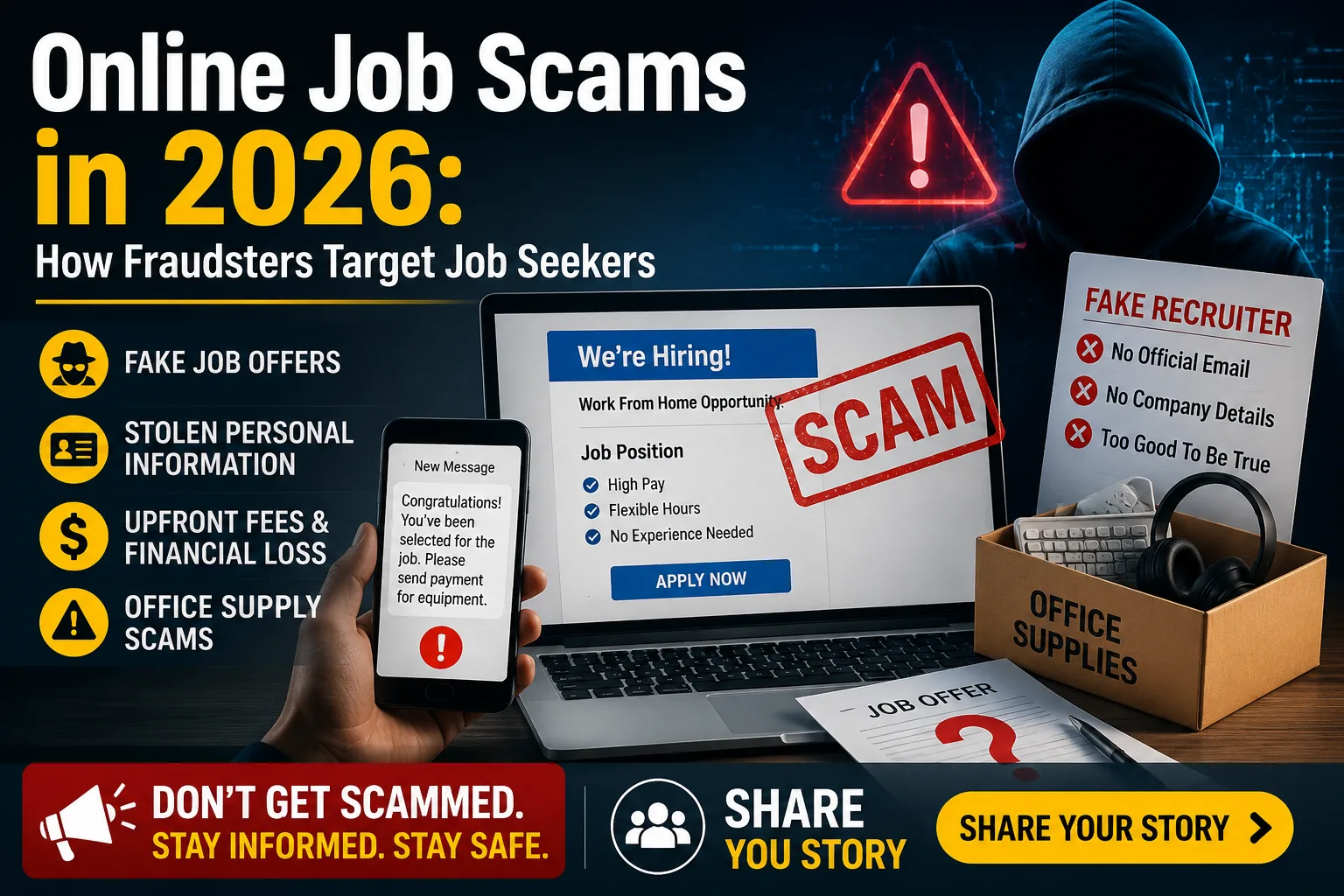
Every day, thousands of job seekers fall victim to job scams online — losing money, personal data, and valuable time to criminals who have mastered the art of deception. In 2026, these schemes are more sophisticated than ever, using AI-generated job postings, fake company profiles, and psychological pressure to exploit people at their most vulnerable. If you're actively job hunting, this guide could save you from becoming the next victim
What Are Job Scams Online and Why Are They Growing in 2026?
Job scams online are fraudulent schemes where criminals impersonate employers, recruiters, or staffing agencies to steal money or personal information from job seekers. The explosion of remote work, AI-generated content, and social media recruiting has given scammers powerful new tools to appear credible.
The FTC and consumer protection agencies report consistent year-over-year growth in job recruitment scams, with victims losing hundreds of millions annually. Economic uncertainty pushes candidates to act fast — and scammers exploit exactly that urgency.
How Do Job Recruitment Scams Actually Work?
Most job recruitment scams follow the same predictable structure:
The Attractive Offer — You receive an unsolicited message about a high-paying remote role requiring little experience. The salary sounds generous. The flexibility sounds perfect.
The Fake Interview — Instead of a video call on Zoom or Teams, the "interview" happens over WhatsApp or Telegram via scripted text messages. No real human interaction takes place.
The Conditional Hire — You receive a professional-looking offer letter complete with your name, start date, and salary. Excitement overrides caution.
The Extraction — Now the damage begins. The scammer requests your Social Security number for a "background check," asks you to purchase equipment from a specific vendor, or instructs you to receive and forward payments — making you an unknowing money mule.
The Vanishing Act — Once they have what they need, they disappear. The job never existed.
What Are Office Supply Scams and How Are They Used in Hiring Fraud?
One of the most financially damaging tactics within job scams online are office supply scams — and most victims never see them coming.Here's how they work: after you're "hired," your new manager instructs you to purchase specific software, equipment, or supplies from a designated vendor before your start date. They promise full reimbursement in your first paycheck — which never comes.
In some cases, they send you a check in advance. You deposit it, purchase the supplies, and forward the remaining funds. Days later, the check bounces. Your bank holds you liable. The vendor was fake. The supplies never arrive.
Warning signs of office supply scams during hiring:
- Employer insists on a vendor you must use exclusively
- You're asked to pay before signing any official contract
- Payment is requested via gift cards, wire transfer, or crypto
- A reimbursement check arrives before you've done a single day of work
Legitimate employers never ask new hires to spend personal money on equipment through unverified third parties.
Where Can I Find a Job Scammer List to Protect Myself?
A job scammer list is a public database of fraudulent recruiters, fake companies, scam email addresses, and deceptive job postings reported by real victims. Using one before engaging with any new employer is one of the smartest things a job seeker can do.
How to use a job scammer list effectively:
- Search the recruiter's name, company, email address, and phone number before responding to any offer
- Check if the job posting language matches listings flagged on scam databases
- Report any scams you encounter so others benefit from your experience
- Revisit the list regularly — new scammers are added constantly
Platforms like ScammersList.com maintain actively updated records. Every report submitted by a victim strengthens the database and potentially saves dozens of future job seekers from the same trap.
Which Red Flags Should Every Job Seeker Know?
Protecting yourself from job recruitment scams starts with recognizing the warning signs early:
- Unsolicited contact from a recruiter you never applied to
- Interview conducted entirely over text via WhatsApp, Telegram, or Google Chat
- Requests for personal documents before any formal offer is signed
- Upfront payment requests — for equipment, training, or background checks
- Email domains that don't match the official company website
- Offers that require no real qualifications for unusually high pay
- Pressure to decide immediately without time to verify anything
If you spot even two or three of these signs together, disengage and report the contact to a job scammer list platform immediately.
What Should You Do If You've Already Been Targeted?
If you've been caught in job scams online, act fast:
- Stop all communication with the scammer immediately
- Call your bank — report any transactions and request reversals where possible
- File a report with the FTC at reportfraud.ftc.gov and the FBI's IC3 at ic3.gov
- Place a fraud alert on your credit if personal documents were shared
- Submit the scammer's details to a job scammer list platform to protect others
- Seek support — fraud victims often experience real emotional distress; talking to someone helps
You are not alone, and you are not at fault. These operations are professionally run and deliberately designed to deceive even careful people.
Share Your Story — Help Others Avoid Job Scams Online
Your experience has power. By sharing what happened to you, you can prevent the next person from losing their savings, their data, or their confidence to job recruitment scams and office supply scams.
ScammersList.com is a community-driven platform dedicated to exposing fraud and protecting job seekers everywhere. Reach out through any channel below:
📞 Call or Text: 703-606-7030 📧 Email: [email protected] 🌐 Submit Online: https://scammerslists.com/share-story
You choose what to share. Even a name, email address, or phone number can make it onto our job scammer list and stop someone else from being defrauded.
Frequently Asked Questions About Job Scams Online
Q1. How can I tell if a job offer is a scam?
Look for unsolicited contact, interviews over messaging apps, upfront payment requests, and offers that seem too good for the qualifications required. Always verify the employer independently before sharing any personal information.
Q2. Can job scams happen on LinkedIn?
Yes. Scammers create convincing fake profiles and company pages on LinkedIn to run job recruitment scams. Always verify a recruiter's profile history and cross-check the company on its official website.
Q3. What are the most common job scams online in 2026?
The most common include fake remote job offers, money mule recruitment disguised as payment processing roles, office supply scams requiring upfront equipment purchases, and credential harvesting schemes that collect personal documents under the guise of background checks.
Q4. Is it safe to give my bank details to an online employer?
Never share bank account information until you have verified the employer through multiple independent sources and signed a formal employment contract through official company channels.
Q5. What should I do if I sent money to a job scammer?
Contact your bank immediately, file reports with the FTC and FBI IC3, and submit the scammer's details to a job scammer list platform. Act as quickly as possible — speed matters in fraud recovery.
Q6. Are work-from-home jobs more likely to be scams?
Remote positions are disproportionately used in job scams online because they are easy to fake with no physical location to verify. Extra caution and independent verification are always warranted for remote job offers received out of the blue.