Online classes are no longer a temporary solution. In 2026, they are a permanent part of higher education in the United States. Yet as campuses have returned to normal operations, many students are asking the same question: which learning format actually works better—online classes or on-campus learning?
The answer is more complicated than many people expect. Recent research shows that both approaches can produce strong academic results when designed well. The real difference often comes down to flexibility, engagement, support systems, and how well a learning format matches a student's lifestyle.
Why Online Learning Hasn't Disappeared
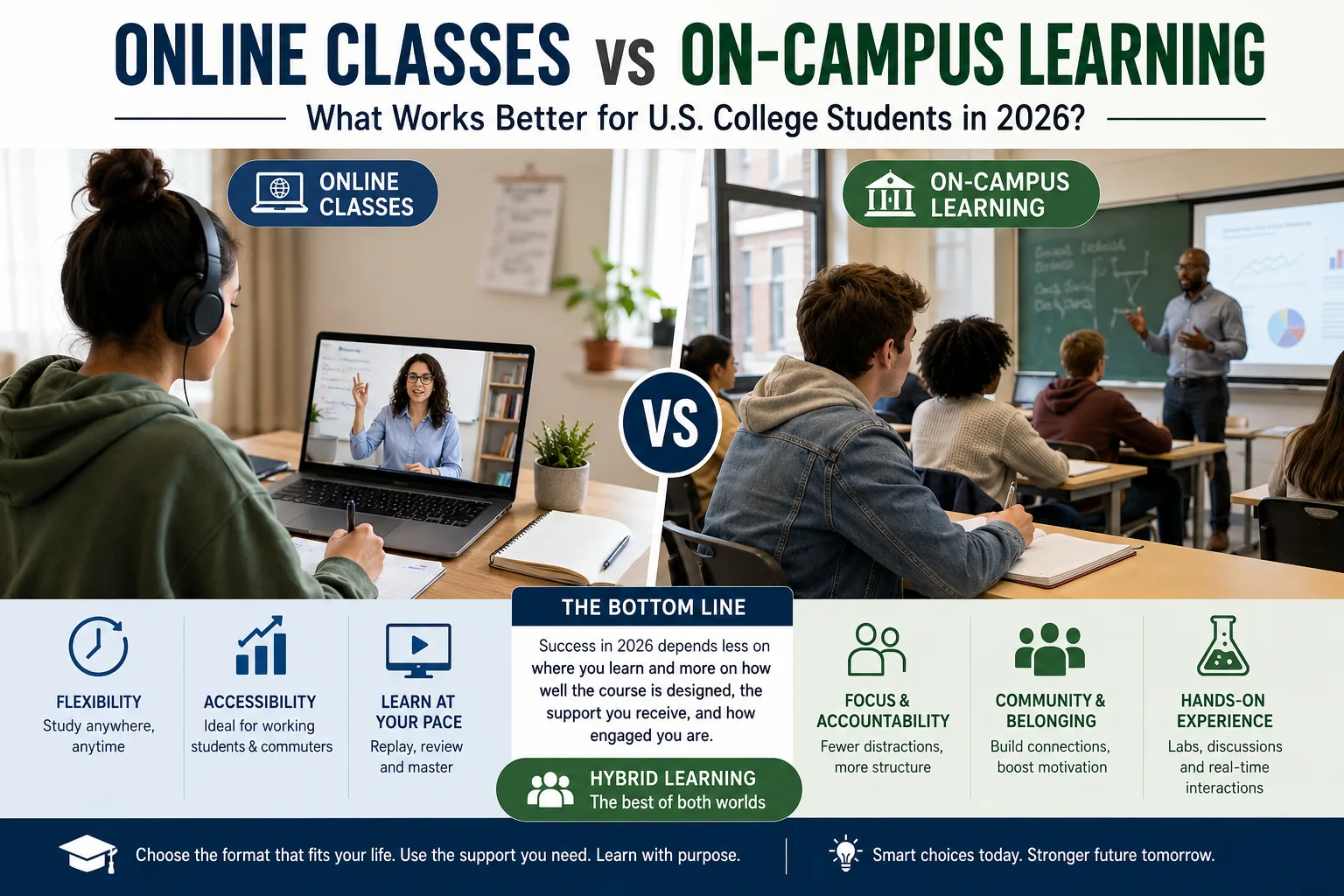
Even years after the pandemic, online education remains a major part of college life. Millions of students continue to take at least one distance-learning course because it offers something traditional classrooms cannot always provide: flexibility.
For working adults, parents, commuters, and students with demanding schedules, online learning removes many barriers. Instead of arranging life around class times, students can often arrange learning around their lives.
Imagine a nursing student working evening shifts while caring for family members. Attending a fixed lecture schedule may be nearly impossible. Online classes allow that student to watch lectures, complete assignments, and participate in discussions during available hours. Without that flexibility, earning a degree might not be realistic at all.
Research reviewed in the study found that students increasingly value this freedom, especially when balancing employment and academic responsibilities. The convenience of accessing materials anytime and anywhere continues to attract learners across different age groups.
Why Students Still Prefer Campus Experiences
Despite the growth of online education, many students are moving back toward face-to-face learning experiences.
The reason isn't necessarily academic performance. Studies show that grades and exam results are often similar across learning formats when courses are properly designed. Instead, students frequently cite focus, accountability, and social connection as the biggest advantages of on-campus learning.
A physical classroom creates structure. Walking to class, sitting with peers, and interacting directly with instructors can help students stay engaged. It becomes harder to multitask, ignore coursework, or postpone assignments.
Campus life also provides benefits that rarely appear in course outlines. Conversations before class, study groups, mentoring opportunities, and student organizations all contribute to a stronger sense of belonging.
Research consistently links this feeling of connection to higher student persistence and graduation rates. Students who feel part of a community are generally more likely to stay enrolled and complete their degrees.
The Rise of Hybrid Learning Models
Many colleges have discovered that the debate between online and on-campus learning doesn't have to produce a single winner.
Hybrid learning combines elements of both formats. Students complete certain activities online while participating in face-to-face sessions for discussions, laboratories, group projects, and hands-on experiences.
When designed carefully, hybrid models can offer the best of both worlds.
Instead of spending classroom time listening to information that could be delivered through recorded lectures, students use in-person sessions for deeper interaction and problem-solving. This approach often makes class meetings more valuable while preserving the flexibility students increasingly expect.
The research suggests that hybrid programs perform particularly well when institutions invest in instructional design, faculty training, and technology infrastructure. Without proper planning, hybrid learning can become confusing. With thoughtful design, however, it can create highly engaging educational experiences.
Where Students Struggle Most
One of the most important findings from the research is that learning challenges are not tied to a specific format.
Poorly designed online courses can create feelings of isolation and confusion. Students may struggle when courses rely heavily on recorded lectures with limited interaction or feedback. Without regular communication, learners can quietly fall behind before anyone notices.
At the same time, traditional classroom settings have their own weaknesses.
Large lecture halls can leave students feeling anonymous. Some learners hesitate to ask questions in front of hundreds of classmates. Others struggle with rigid schedules that conflict with work, caregiving responsibilities, or health concerns.
In other words, a weak educational experience can occur online or on campus. The quality of course design often matters more than the delivery method itself.
The Growing Importance of Academic Support
One clear trend emerging from the research is the increasing role of tutoring and academic support services.
Studies highlighted in the report found that online tutoring can significantly improve student performance, confidence, and engagement. Students receiving structured tutoring support often achieve higher grades and better learning outcomes.
This is particularly important in online environments where students may need more opportunities for direct interaction and clarification.
For learners seeking additional guidance, platforms like Expertsmind.com that connect students with verified subject experts can serve as valuable supplemental resources when coursework becomes challenging. The key is using these services to deepen understanding rather than simply finding answers.
The most successful students tend to combine classroom instruction with reliable academic support, regardless of whether they study online or on campus.
What Actually Works Best in 2026?
The research arrives at a practical conclusion: there is no universal winner.
Online learning works exceptionally well for students who need flexibility and independence. On-campus learning remains highly effective for those who thrive on structure, social interaction, and direct engagement. Hybrid models often deliver a balanced experience that captures strengths from both approaches.
What consistently influences success is not the learning format itself but the support surrounding it. Responsive instructors, well-designed courses, tutoring resources, accessible technology, and strong study habits all have a measurable impact on outcomes.
The most effective educational experience in 2026 is not defined by a classroom location. It is defined by whether students receive the guidance, resources, and support they need to learn effectively.
As colleges continue refining online and hybrid programs, the distinction between digital and physical learning environments is becoming less important. What matters most is finding the approach that fits a student's goals, responsibilities, and learning style.
The future of higher education is not online or on-campus. It is flexible, personalized, and supported by systems that help students succeed wherever learning happens.