
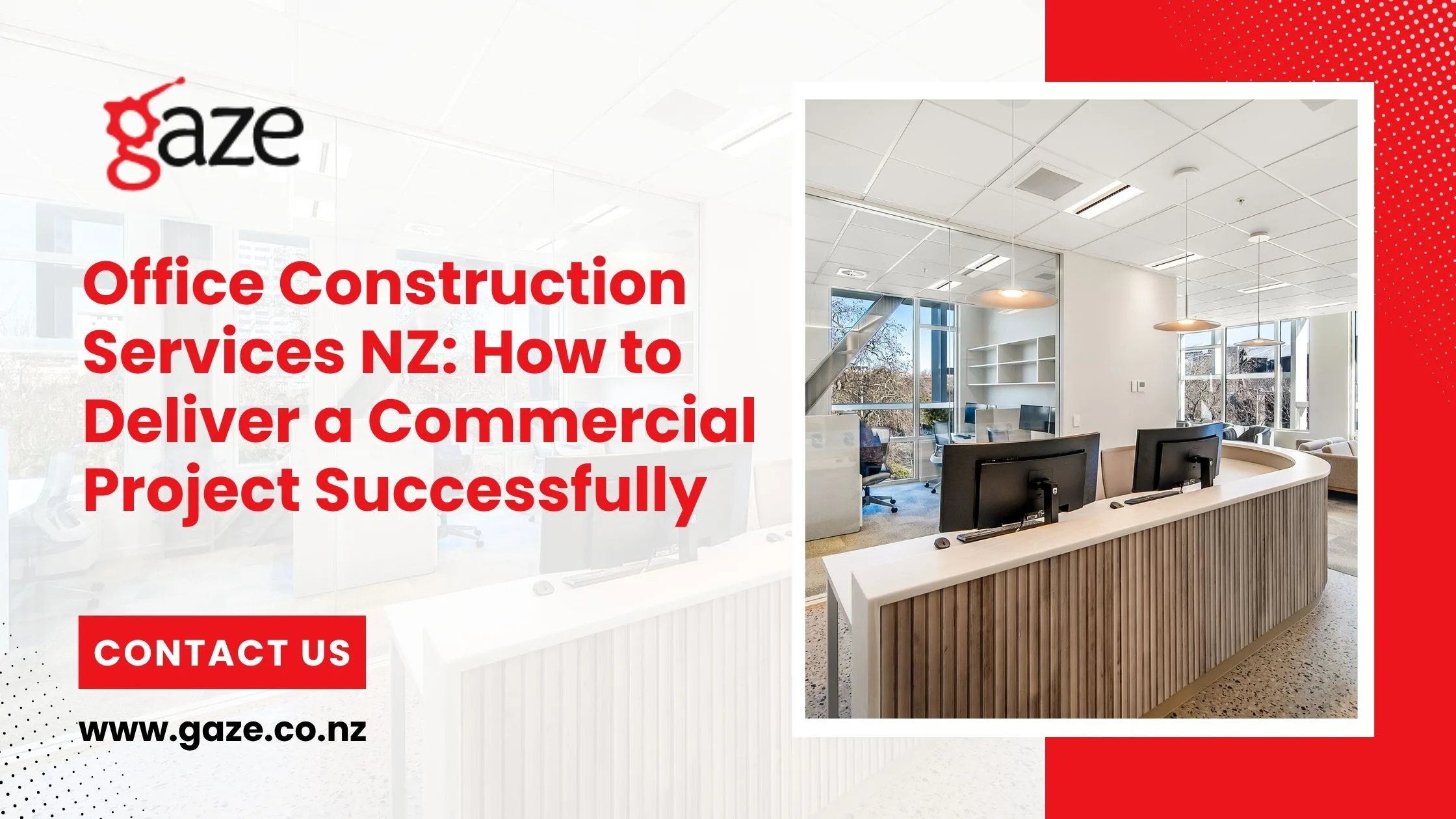
Office construction services in NZ cover the planning, budgeting, procurement, construction coordination, and quality management needed to deliver a commercial workplace project. Effective construction project management services connect these stages, helping keep the project aligned with its scope, programme, budget and quality requirements.
Introduction
A commercial office project involves more than turning a design into a finished space. Decisions made during planning can affect costs, timing, procurement, construction and the outcome.
A structured delivery process helps bring these elements together. It gives project stakeholders clearer visibility of what needs to happen, when it needs to happen, and how progress should be managed.
For businesses undertaking an office construction, refurbishment or fit-out in New Zealand, understanding the delivery process can make project decisions easier and more informed.
What do office construction services include?
Office construction can involve several connected services, depending on the project’s requirements.
These can include:
- Project planning and scheduling
- Construction cost and budget management
- Quantity surveying
- Procurement and contract management
- Site management and coordination
- Quality assurance and control
- Risk assessment and mitigation
- Commercial construction
- Office fit-outs and renovations
- Seismic strengthening where required
The value of an integrated approach is that these activities are managed as connected parts of one project rather than as isolated tasks.
Why is construction project management important?
Construction Project Management Services help coordinate the different activities involved in delivering a commercial project.
The process begins with understanding the project scope and establishing a practical programme. It then continues through budgeting, procurement, construction, monitoring and completion.
This ongoing management can help identify potential issues earlier, maintain communication between stakeholders and keep the project focused on its agreed objectives.
For complex workplace projects, this coordination is particularly important because multiple consultants, contractors, suppliers and decision-makers may be involved at different stages.
How does a commercial construction project progress?
1. Start with clear project planningGood delivery begins with a clear understanding of what the project needs to achieve.
Project scoping, feasibility studies, communication planning, risk assessment and pre-design site or building assessments can help establish the foundations for the project.
A preliminary programme can then provide a roadmap for the work ahead.
2. Establish and manage the budgetCost management should continue throughout the project rather than being treated as a one-time exercise.
Budget estimates, cost breakdowns, cash-flow forecasting and value engineering can help maintain financial visibility as the project develops.
Quantity surveying can provide further financial oversight through cost analysis, procurement support, contract administration and reporting.
3. Plan procurement and contractsProcurement decisions can have a direct effect on project delivery.
Tender preparation and evaluation, contract negotiation, subcontractor selection and supplier management form part of the procurement process.
Managing these areas within the wider project plan helps keep commercial and construction requirements aligned.
4. Coordinate construction and site activitiesOnce construction begins, effective site coordination becomes essential.
Site management can involve on-site supervision, coordination, health and safety management, environmental compliance and communication with relevant stakeholders.
For office refurbishments and fit-outs, planning construction activities carefully can also help minimise disruption to occupied workplaces.
5. Monitor progress, cost and qualityConstruction delivery requires continuous monitoring.
Regular progress reviews, cost tracking, change management and project reporting help maintain visibility throughout the project.
Quality assurance should also continue throughout delivery rather than only being considered at the end. This provides an opportunity to identify and address issues as the project progresses.
What makes a strong project delivery approach?
A practical approach brings several areas together:
The aim is not simply to complete construction. It is to maintain control and visibility across the project lifecycle.
Where does seismic strengthening fit into construction?
Some commercial property projects may also require consideration of seismic performance.
Construction and seismic strengthening services can include structural assessments, risk analysis, retrofit design and implementation, non-structural improvements, and strengthening strategies.
The process can begin with an assessment, followed by detailed scoping, design and engineering, regulatory compliance, construction and final inspection.
This means seismic considerations can be incorporated into the wider delivery process rather than treated as an unrelated activity.
What are the benefits of integrated project delivery?
An integrated approach can provide several practical benefits:
- Better cost visibility: Budgets and project costs can be monitored throughout delivery.
- Clearer decision-making: Accurate project and cost information supports informed decisions.
- Earlier risk identification: Potential issues can be assessed and addressed before they affect delivery.
- Stronger coordination: Project teams, contractors and stakeholders have clearer communication.
- Consistent quality: Quality assurance remains part of the process from planning through completion.
- Better project control: Programme, scope, cost and quality can be monitored together.
These principles form an important part of how Gaze Commercial approaches commercial project and cost management.
Conclusion
Successful office construction requires more than managing the physical build. Planning, cost management, procurement, construction coordination, risk management, communication and quality assurance all contribute to effective delivery.
For businesses planning a commercial office construction, refurbishment or fit-out in New Zealand, bringing these elements together from the beginning can create a clearer and more controlled project pathway.
A structured delivery approach helps turn project requirements into practical action while keeping attention on the factors that matter throughout the construction process: scope, cost, programme, quality and communication.
Frequently asked questions
1. What are Office Construction Services NZ?They can include commercial construction, office fit-outs and renovations, project management, cost management, procurement, site coordination and quality control, depending on project requirements.
2. What do Construction Project Management Services NZ cover?They can cover planning, scheduling, risk management, procurement, site management, financial management, stakeholder communication and quality assurance from project initiation through completion.
3. Why is cost management important in commercial construction?Cost management provides ongoing visibility of project finances through budgeting, cost tracking, forecasting, value engineering and financial reporting.
4. When should project management begin?It should be considered from the early planning stage. Project scoping, feasibility, risk assessment and preliminary programming can establish a clearer direction before construction begins.
5. Can construction projects include seismic strengthening?Yes. Where required, commercial projects can incorporate structural assessments, retrofit design, strengthening works and related implementation as part of the wider delivery process.
Follow Us on Social Media
Facebook: https://www.facebook.com/GazeCommercial/
Instagram: http://instagram.com/gazecommercial/
Pinterest: https://br.pinterest.com/GazeCommercial/